

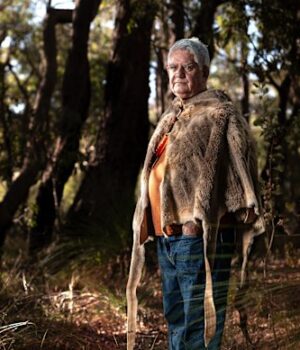
source : the age
Former Aboriginal affairs minister Ken Wyatt says comments by One Nation leader Pauline Hanson about Indigenous people being “primitive” come from ignorance and a refusal to connect with Australia’s First Peoples.
The West Australian former politician, who was the first Indigenous Australian to hold the Aboriginal affairs portfolio, says he was deeply saddened by the senator’s description of Aboriginal people as “the most primitive race on Earth”.
Hanson’s comments, which included her view that Indigenous Australians had “achieved nothing”, were aired in a September 2025 podcast that was recently reported in the media.
“I was sad that a woman who has been in the Australian parliament for as long as she has can hold such a view,” Wyatt said.
“It’s disappointing that we can still reach for language that reduces an entire people, their cultures, knowledge and achievements to a single dismissive description after all the years Australia has spent trying to understand its history more honestly.
“There are non-Indigenous people who live in low socioeconomic circumstances but we would never call them primitive. It’s easy to say it’s racism, but I see it as ignorance and a lack of understanding.”
In an open letter to Hanson, obtained by this masthead, Wyatt urged her to “talk with Indigenous Australians where they live and across the extraordinary diversity of this continent”.
“Do not restrict those conversations to national leaders, politicians, commentators or those whose views might reinforce your own,” Wyatt writes.
“Talk with people in metropolitan Australia, regional centres, country towns, remote communities and homelands.”
Wyatt said Hanson should educate herself about the role of Aboriginal labour in rural Australia before she attended an upcoming WA Pastoralists and Graziers Association annual conference next month in Perth, where she will give a keynote speech.
Other speakers listed are Senator Jacinta Nampijinpa Price and former Northern Territory Chief Minister Adam Giles, now chief executive of the Gina Rinehart-owned Hancock Agriculture.
Hanson has flagged that she will address a number of concerns raised by the West Australian farming sector, including a ban on live sheep export, and compliance with environmental protection and Aboriginal heritage laws.
Wyatt told this masthead the senator should learn some history about rural development in WA.
“What’s important to recognise is that the agricultural industry was built on Aboriginal labour,” he said.
“In the South West, a lot of fencing, clearing of land, harvesting, seeding and manual labour was often done by Aboriginal workers and families living on those farms.
“The cattle industry in the Pilbara and Kimberley was built on the back of Aboriginal labour. When they walked off in protest at poor conditions and no wages, it had a profound impact on pastoral stations.
“It’s written in early diary entries that show Aboriginal families contributed to the development of farming properties and agricultural businesses.”
Wyatt said failed reform of the state’s Aboriginal cultural heritage laws in 2023, which saw new provisions repealed after just five weeks, was a missed opportunity to introduce provisions that would clarify landowner rights.
“There was an attempt to streamline it, and to recognise the existing use of land without having to go through the current impediments that some farmers are now facing,” he said.
“What instead happened was the WA government reverted back to the old act.”
In his open letter, Wyatt told Hanson: “If you’re concerned about red tape, or native title, or impediments that relate to the agricultural industry, have conversations with the traditional owners.”
“I don’t know of any significant Aboriginal group who is a native title holder, or is a holder of land, being a significant impediment when common discussions occur and agreement is reached. The greatest opportunity is to work together.”
Wyatt said Hanson’s habit of putting all Aboriginal people in one category was false.
“There is no single Aboriginal Australia. There never has been. [It] comprises many nations, languages, histories, cultural traditions and systems of knowledge,” he said.
“The circumstances of one remote community may bear little resemblance to those of an Aboriginal family living in metropolitan Perth or Sydney.
“The priorities of an Elder in Arnhem Land may be very different from those of a young Aboriginal entrepreneur establishing a business in Brisbane.”
Wyatt held the Indigenous portfolio in the Morrison government from 2019 to 2022.
He said he often had amicable discussions with Hanson during his parliamentary career.
“I think what she’s done now is gone to very strong populist views about immigration and Indigenous issues,” he said.
He agreed with Hanson that difficult questions about Indigenous Australia should be discussed.
“We should ask why after decades of government expenditure unacceptable gaps remain in health, education, employment, housing and justice,” Wyatt said.
“We should ask whether programs are achieving what they were established to achieve and whether the considerable resources committed by governments are producing meaningful improvements in people’s lives.
“Accountability is important in every part of Australian society. The difficulty arises when the failure of a policy, organisation or individual becomes the basis for diminishing an entire people and their culture.
“When something fails we should examine why it failed rather than turn that failure into a judgement about an entire people.”
However, Wyatt reminded Hanson that Indigenous Australians have leading roles in businesses, community organisations, universities, statutory bodies and major institutions.
“They serve on boards, run companies, conduct research and participate at every level of Australian public life,” he said.
“Some of these institutions are highly successful and some are not. Some have strong governance while others need to improve.
“That should not surprise anyone because no sector of Australian society has perfect governance.
“The important question is not whether Indigenous governance should be scrutinised. Of course it should.
“The deeper question is whether Australia recognises the leadership, authority and capability that already exist within communities and whether governments are prepared to work with that capability rather than continually designing solutions for communities from a distance.”
Wyatt warned against “fearmongering, rather than resolving tensions and reaching solutions by having conversations.”
He said his advice to Hanson was simple: “Pauline, talk to Indigenous Australians across Australia. Go to them. Sit with them. Ask the difficult questions and allow them to ask difficult questions of you.”
Start the day with a summary of the day’s most important and interesting stories, analysis and insights. Sign up for our Morning Edition newsletter.
 Victoria Laurie is a senior reporter and feature writer who has written for Good Weekend, The Australian, The Bulletin, The Monthly, HQ, Australian Geographic and The Weekend Australian Magazine.

