Source : Perth Now news
Social cohesion is a legitimate aim but one that risks overlooking forms of racial discrimination, a national inquiry has been told.
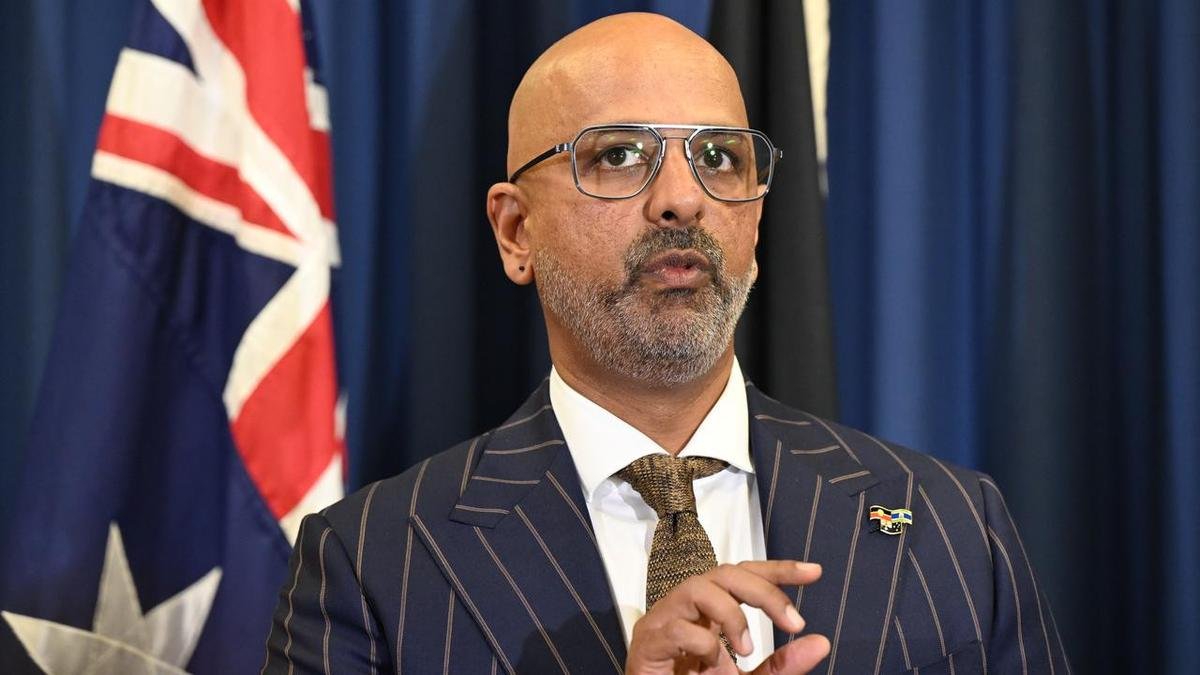
Appearing before the anti-Semitism royal commission on Thursday, Race Discrimination Commissioner Giridharan Sivaraman recalled a conversation he once had with a senior government official.
“Stop talking about racism because you’re disrupting the social cohesion,” Mr Sivaraman said he was told.
The comment captures a wider problem with how a well-intentioned goal of social cohesion can paper over experiences of discrimination, he said.
Mr Sivaraman likened social cohesion policies to those used to justify racial assimilation, claiming some groups had come to distrust the term.
“If it’s obscuring, then it’s not actually solving the systemic or structural problem that you need to fix,” he told the inquiry.
“If your experience of policies or laws or programs under the term social cohesion are ones where you’re excluded … or you have to assimilate … you won’t trust the institutions you’re engaging with.”
Mr Sivaraman made the comments during the commission’s final block of public hearings, which are exploring how social cohesion can be achieved to tackle anti-Semitism.
He also told the inquiry reports of anti-Semitism, most notably in the workplace, had risen sharply since the October 7, 2023 attacks on Israel.
“Workplaces ended up being a really consistent theme that came up as an area where people felt disadvantaged,” Mr Sivaraman said.
“(They felt) they couldn’t express their identity, felt they were in danger of losing their job, felt there wasn’t a safe space to have difficult conversations.”
The October 7 attacks by terror group Hamas killed 1200 people and resulted in 250 more being taken hostage, according to Israeli tallies.
Israel’s subsequent military campaign in Gaza has killed more than 70,000 people in the Palestinian enclave, and been labelled a genocide by a United Nations commission, which the Israeli government disputes.
Later on Thursday, the inquiry heard conflicting views over where legitimate criticism of Zionism ends and anti-Semitism begins.
The definition of Zionism is contested, but interpretations include a belief in the Jewish people’s right to self-determination and the movement leading to the establishment of Israel.
Rita Jabri Markwell, principal policy adviser to the Australian Muslim Advocacy Network, argued Zionism should be treated as a political ideology rather than a protected characteristic.
“It’s not a race or religion,” she said.
Under examination from counsel assisting Richard Lancaster SC, she was presented with evidence given to the commission by Jewish witnesses who described Zionism as inseparable from their religious and cultural identity.
Ms Markwell argued courts had increasingly taken her view and warned treating Zionism as protected risked excluding Jewish Australians who reject the ideology.
“The mere fact that there is a portion of Jewish people who do not accept that it is central to their identity indicates that it is an ideology,” she said.
The inquiry continues.