Source : THE AGE NEWS
Australian biotechnology company Syngenis Labs has received a $363,000 research and development tax refund, adding another shot of non-dilutive capital to its genetic medicine ambitions.
At the heart of the business are complex RNA and DNA molecules, including chemically modified oligonucleotides for potential therapeutic and diagnostic applications. Oligonucleotides are short, laboratory-made RNA or DNA sequences that can be directed at disease at the cellular level, silencing harmful genetic messages. They sit behind a fast-growing class of medicines targeting cancer, neurological conditions and rare genetic disorders.
The refund lands shortly after the company closed an oversubscribed $4 million pre-IPO raise through Euroz Hartleys and as it works towards an ASX listing later this year. Paid under the Federal Government’s R&D Tax Incentive, the rebate covers eligible scientific and technical work carried out across Syngenis’ oligonucleotide development programs during the past financial year.
The company says the cash will be ploughed back into its RNA and DNA programs, laboratory capability and manufacturing expansion. Its research has focused on improving synthesis yields, coupling chemistry, purification, analytical testing and manufacturing repeatability. That technical grunt becomes more valuable as modified oligonucleotides grow harder to manufacture, purify and characterise – creating what Syngenis sees as a potential moat in its specialist chemistry.
‘We are building an Australian capability that can take a potential therapeutic or diagnostic candidate into regulated manufacturing.’
Syngenis Labs managing director Thomas Hanly
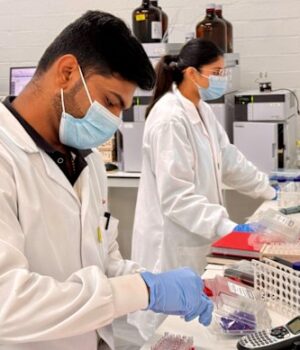
Syngenis already produces research-grade oligonucleotide material to Good Laboratory Practice (GLP) standard at its Bentley Technology Park laboratories in Perth. The company describes the operation as revenue-generating and says it is scaling towards clinical-grade production, providing a commercial base for its next growth leg.
The bigger game is to stretch that model across the genetic medicine pathway. The company wants to build an Australian route spanning AI-assisted discovery, synthesis, laboratory validation and ultimately regulated manufacturing. Rather than rolling the dice on a single therapeutic candidate, Syngenis is spreading its chips across those stages.
Syngenis Labs managing director Thomas Hanly said: “The $363,000 refund gives us additional non dilutive capital that we can put straight back into the business, particularly into our RNA and DNA development programs, our laboratory capability and the continued build out of our manufacturing platform.”
The refund leaves more shareholder capital for science and infrastructure rather than overheads, while helping fund the next major commercial step. Perhaps the most significant investment from the recent raising will be construction of Syngenis’ Good Manufacturing Practice (GMP) facility, targeted to become operational early in 2027, providing clinical-grade production, the regulated standard required to manufacture material for human clinical trials.
Once complete, the company expects the facility to position it among a very small number of laboratories in Australia able to manufacture human-grade oligonucleotide products suitable for clinical trials. It also plans to expand into specialised chemistries including phosphorodiamidate morpholino oligomers (PMOs), synthetic molecules designed to bind to specific genetic messages and alter how proteins are produced. Syngenis says PMOs are produced by only a handful of manufacturers globally.
The company says GMP certification could also open a potentially higher-value stage of drug development by allowing Syngenis to participate further along the path towards clinical trials. The refund will help fund the equipment, technical personnel and facility infrastructure needed to get there.
The move could open a potentially higher-value stage of drug development, allowing Syngenis to participate further along the path towards clinical trials. It could also enable biotechnology and pharmaceutical customers to progress from early-stage research into the clinic through its integrated platform.
At the front end sits Syngenis’ proprietary Discovery AI. The company says it identifies targets, designs candidate RNA and DNA sequences and screens them before they reach the laboratory. Management says the platform has already designed its first therapeutic candidate, providing an early indication that the technology is moving from theory into practical drug development.
Syngenis is also developing a second artificial intelligence engine designed to simulate clinical trials before patients are enrolled. The company says the technology could help developers identify risks, refine study designs and reduce development costs before expensive human testing begins.
Keeping more of the genetic medicine value chain on home soil is another part of the Syngenis play. Management says rather than sending significant amounts of advanced oligonucleotide work offshore, it wants to build the expertise and infrastructure to keep more of it in Australia, allowing customers to potentially progress programs without multiple offshore providers.
With an oversubscribed pre-IPO raise behind it and another $363,000 of non-dilutive funding in the bank, Syngenis is building towards an ASX listing later this year and the bigger commercial prize of GMP manufacturing early in 2027. Discovery AI may write the genetic blueprint, but Syngenis is building the laboratory muscle to turn that digital code into medicine.
Is your ASX-listed company doing something interesting? Contact: mattbirney@bullsnbears.com.au