

Source : Perth Now news
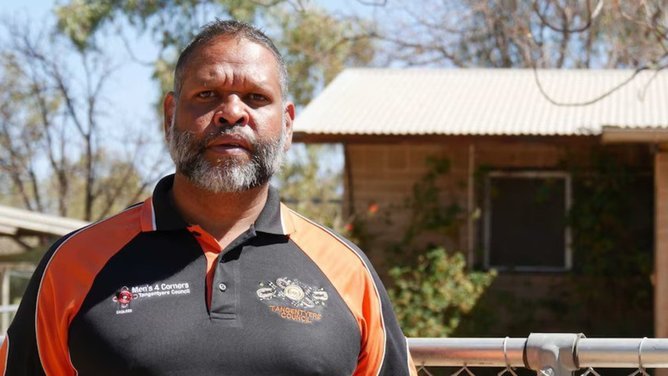
The head of Alice Springs’ town camp authority has defended his organisation against accusations of neglect following the alleged murder of Kumanjayi Little Baby, putting the blame on Northern Territory government bureaucracy.
In an interview with ABC’s 7.30 program, Tangentyere Council chief executive Walter Shaw said he is “restricted” by territory contracts in terms of what the council’s “aspirations would like to be” regarding the upkeep of housing across the 16 fringe communities.
The comments follow intense national focus on the 16 camps after the recent alleged abduction and murder of five-year-old Kumanjayi Little Baby from a camp residence.
Public outrage mounted further following the tragedy, after widely released media images revealed the dilapidated state of the home she was taken from.
“I think the events of what’s taken place with the tragedy around Kumanjayi Little Baby should enact change,” Mr Shaw told 7.30.
Residents in the camps face ongoing issues including broken locks, failed plumbing, overcrowding, and uninvited, intoxicated visitors.
Tangentyere has not published an annual report on its website for four years.
However, Mr Shaw dismissed claims of secrecy, stating the council remains transparent.
“We’ve released our finances to the rest of Australia, the rest of the world, and that is as transparent as we can be,” he said.
Family members of town camp residents have expressed frustration over living standards.
Kumanjayi Little Baby’s grandfather, Robin Japanangka Granites, told 7.30 that camp houses are completely dilapidated.

“They are all dirty, the grasses are so thick and so tall, you can see markings in the paint, holes in the roof, holes in the cement,” Mr Granites said.
“Everything is just been like it’s from World War I or II. That’s how damaging it is for us to live in town camps. I’d rather (Tangentyere) doing more than what they’re doing right now.”

Mr Shaw, who has led the council for more than 15 years, stated that maintenance tasks are delayed by a complex, multi-layered leasing system.
Under the current framework, the Commonwealth leases the land to the NT government, which then funds Tangentyere for basic upkeep.
Mr Shaw said individual repair jobs require lengthy approvals from the territory government.
“I can see that some of our houses on town camps are quite shocking,” Mr Shaw said.
“But when it’s out of my hands to allow for a house to be upgraded and brought up to standardised living conditions, governments have to take responsibility with regard to how we all manage our houses, whether it be on town camps or remote communities.

NT Housing Minister Steve Edgington conceded that government processing times delay repairs, admitting the current framework requires systemic reform.
“From some of the reports I’ve seen, we are taking too long to some of those reports,” Mr Edgington said.
He added that stories of broken locks and unsafe homes “is not acceptable, and I don’t accept it”.
While the minister confirmed Tangentyere is meeting its current reporting requirements, he noted that decades of underinvestment would take time to reverse.

NT Police Commander James Gray-Spence defended local policing, stating officers frequently use sweeping powers to curb alcohol disturbances in the camps.
To resolve the bureaucratic delays, Tangentyere Council is proposing a transition to an independent community housing model.
Mr Shaw believes taking full control of the camps would eliminate red tape, projecting a potential handover within three years if federal and territory leaders agree.
“Our aspiration is to move towards a community housing model and that being adopted so that Tangentyere would eventually take that social responsibility on,” Mr Shaw said.
The federal government said remote housing upgrades remain a priority under the NT Remote Housing Package, in line with Closing the Gap commitments to support community-controlled organisations.