

Source :- THE AGE NEWS
David Noble had long left the Brisbane Lions when they won back-to-back premierships. Same with Peter Schwab. Neil Balme had been out of Geelong for eight years for their last flag. Their contributions to those clubs are still being felt today.
Noble, Schwab and Balme are among the 150 to 200 industry figures since the turn of the century who have been on subcommittees tasked with the job of finding senior coaches. Their role is one of the most important for a club, capable of setting them up for a dynasty, or failure.
This masthead has compiled each club’s subcommittees, stretching back to the start of the expansion era in 2011, to find those with the best records in unearthing successful coaches – and their tips to pick the right candidates.
We have not limited success to just winning premierships. Coaches who have taken their sides to a grand final or multiple preliminary final appearances and have longevity can also be considered as having enjoyed prosperous tenures, even if they did not achieve the ultimate.
Coaching subcommittees typically consist of the chief executive, football manager and a board member – usually, but not always, the football director. Most also include a respected external figure – sometimes from another sport – and a non-football person with experience in psychology, leadership or recruitment.
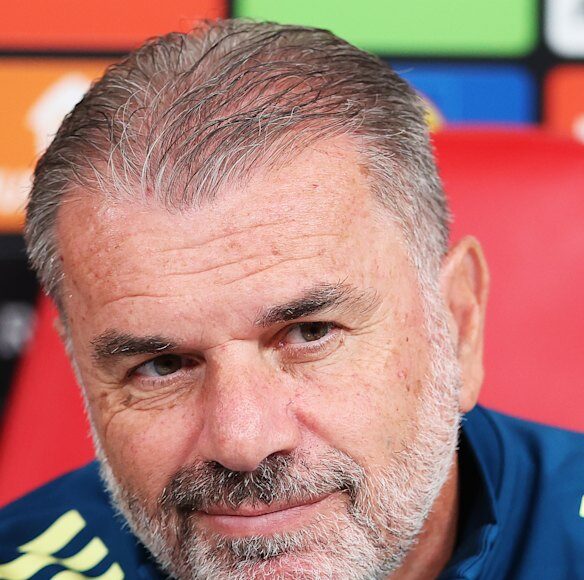
The net has been cast wide. Former Tottenham and Socceroos boss Ange Postecoglou (Brendon Bolton at Carlton), former Hockeyroo and Olympian Danni Roche (Alan Richardson at St Kilda) and netball international Simone McKinnis (Brad Scott at Essendon) have all been involved.
Just as being a champion footballer does not lead to success in the box, being a premiership coach does not necessarily transfer to identifying coaching talent. Four-time flag winner Leigh Matthews, the late Robert Walls, Paul Roos and David Parkin all had misses.
Walls, though, backed in an untried Ross Lyon at St Kilda, Roos helped Melbourne find Simon Goodwin in his Kirribilli agreement, and Parkin was involved in the selection of Ken Hinkley, who led Port Adelaide to four preliminary finals in his 13 years at the helm.
Of the six serving coaches to have lifted the cup, only one – Luke Beveridge – was chosen by a premiership coach, John Worsfold. Some of the figures with the best records in finding coaches did not lead their teams to glory.
Noble, a former football boss at Adelaide and Brisbane, has arguably had the most success. He oversaw the process in 2017 that delivered Chris Fagan to the Lions. Before that, he recommended Don Pyke and the late Phil Walsh to the Crows.
Schwab was on Noble’s panel at the Lions, and also gave the nod to Hinkley, but also featured in the selection of the late Dean Bailey and Justin Leppitsch at Melbourne and the Lions respectively, neither of whom led their teams to finals.
Balme was part of a six-person panel that took a chance on the then untried Chris Scott, a dual-premiership winner as coach who is equal 10th for most games won.
Carlton’s four-person panel, announced on Thursday, includes chief executive Graham Wright, who approached Sam Mitchell in 2021 to coach Collingwood and then presided over the appointment of Craig McRae.
Untried v Experience
While the competition is trending towards the first-timer, rarely has there been the calibre of coach like John Longmire and Adam Simpson available.
The data points to the untried. Since 2004, only Mick Malthouse, in 2010 with Collingwood, has won a flag with a club that was not his first. Of the 60 preliminary finalists since 2011, only four were coached by men at a second club – Malthouse (2011), Lyon (Fremantle 2013 and 2015) and Michael Voss (Carlton 2023).
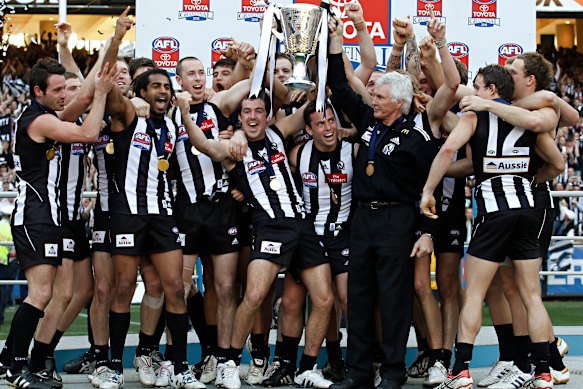
Balme is neither here nor there on the matter. What he wants to see is all candidates being put through the process, regardless of senior experience, so a club can learn as much as they can about a contender. A coach who thrived at one club may not be as well suited in a different environment.
Longmire, for example, has coached exclusively in the non-traditional market of Sydney – who, unlike Carlton and Essendon, do not have long-suffering supporter bases prepared to vent in large numbers when things go awry.

“You’ve got to treat them exactly the same,” Balme said. “Your club is different to where they were. You have to look at that and know what you need compared to what they’ve done elsewhere.
“You don’t know what motivates a coach who has coached somewhere for 20 years and wants your job now. Does he want it to say he’s still a coach? Does he want it to make a million bucks a year? Does he really care if your club goes somewhere in the next five years?
“The only way you can ask him that is to go through a process to make sure he’s the man for the job.
“I can’t see why anyone would complain about that. If they really want the job, you’d just go through the process, I’d have thought.”
The tactician v the relationship builder
Ideally, a coach is strong in both areas but, if one has to be prioritised over another, which trait is more important?
In Fagan, the Lions found a father-figure type who may not have been as highly regarded tactically as his predecessor Leppitsch but had the personality traits needed for a rebuilding club desperate to avoid a repeat of the “go home five” exodus in 2013.
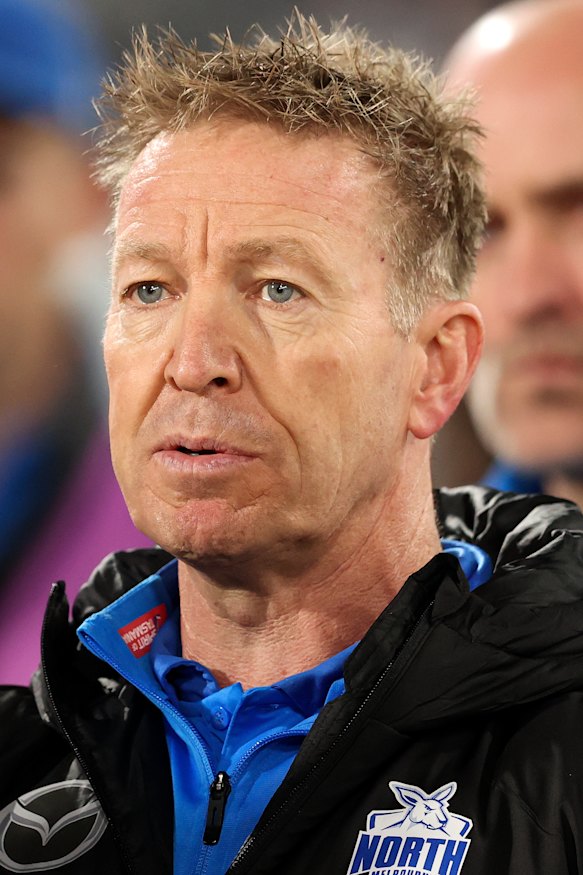
At Carlton, Voss was loved by his players and staff, but widely criticised externally for not moving the Blues from a contest-heavy game plan to the turnover-based style of 2026.
One school of thought is that the head coach must be tactically strong, so he can give his assistants direction. Balme came through an era where the coach needed to be an expert in strategy, but says that is no longer as important. A well-rounded coaching panel can complement the head coach, he said.
“Nowadays when you have a coaching group, it’s a balance of what you’ve got,” Balme said. “I think it’s more important to have that connection. Having said that, you still need the expert strategy somewhere, but you might rely on one of your other coaches to help you.”
Schwab, too, leans towards the coach with strong emotional intelligence.
“If you can’t connect with your players, you won’t survive,” Schwab said. “You can’t just be a tactical genius. You can get the tactical nous in. If you’re missing an area as a coach, what’s the area they’re lacking, and let’s bring in that support.”
Know what you need
The Blues and Bombers have churned through just about every type of coaching profile without becoming a regular contender or, in Essendon’s case, winning a final.
They have tried the Messiah/premiership coach (Denis Pagan, Mick Malthouse and John Worsfold), the untried outsider (Brendon Bolton, Ben Rutten and Matthew Knights), the favourite son (Brett Ratten and James Hird), the interim (Ratten and David Teague) and the experienced coach from another club (Michael Voss and Brad Scott).
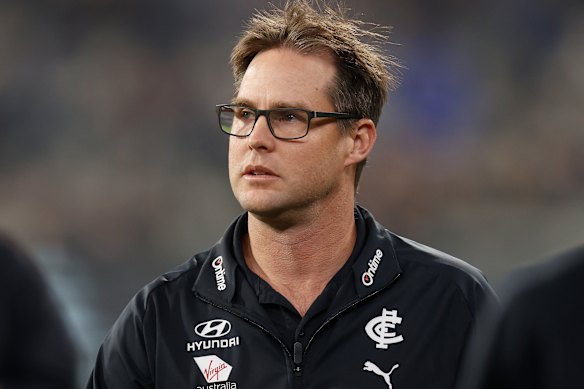
Though it’s natural to want to avoid making the same mistake twice and overcorrecting, Noble and Balme both said each appointment should be treated on its merits. If a subcommittee knows what it wants, they said, it reduces the likelihood of their view being clouded by history.
“The critical thing was the assessment on the environment,” Noble said. “Are you clear on the understanding of what that looks like, how it’s performing? There are lots of environmental measures that you’re looking at.”
“Have you got a mature group? Is the club moving to a phase of drafting? How far away from success do you think you are? What are the type of behaviours experienced that the coach will need to lean into when they come in?”
Balme said the past should not influence clubs.
“It gets back to sitting down and working out what you need, a bit of what you don’t need, and judge that independently of what you’ve done before,” Balme said.
Noble’s mock coaching exercise
The “16 to 17” applicants the Lions had in 2016, Noble said, were whittled down to a shortlist of four, then three after Ratten’s withdrawal.
Panellists were required to complete a detailed, weighted assessment on each candidate on areas such as match day ability, relationship and culture building, and leadership, Noble said.
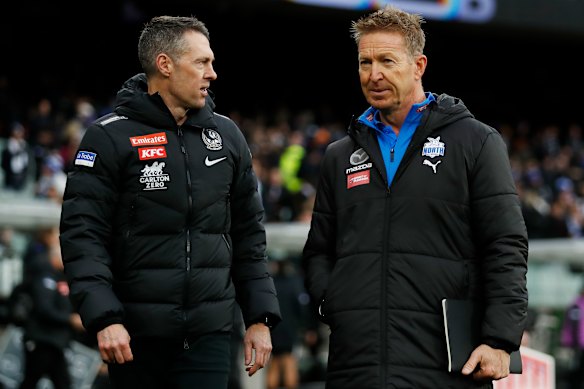
In his processes, Noble showed applicants video of a quarter from that club’s game that year and asked them to pretend to be the coach. The candidate could use the panellists as assistants or the runner to simulate how a game situation would be managed.
The point of the exercise was to test how a prospective coach would respond in real time, rather than through a presentation.
“My thought was how do we find a way where we can add some pressure in the interview where it will give us some legitimacy on what we’re likely to get, so the coach doesn’t walk in through the door, and we get something different from the interview,” Noble said.
“We did the same with Walshy, Don, and Fages. Here’s some vision, you’re the coach, please show us how you’re going to coach through this portion of the game, and what we’re likely to get in the outcome of that.
“We don’t tell them before they come. It’s fairly cold. We’ll give you a couple of minutes to prepare. How do you want to set that up? Are we going to be line coaches?
“What are you seeing? What are your instructions to a player through a runner? What are you looking at?
“As far as stats, how are you calibrating the information that you’re subjectively seeing with the data that is coming through? Those sorts of areas around those behaviours that you’re more likely to see in reality, rather than in a presentation.”
As much as he knew the skills and traits required to succeed as coach, Noble’s own coaching career was ill-fated, winning just five of 38 games with North Melbourne.
“It’s totally different,” Noble laughed of the skill transferral. “Sitting in the chair brings with you a whole new level of experiences.
“Until you get in it, it’s like talking to a first-game player. You can try to tell them what it’s likely to be, but you don’t get that experience until you’re in the hot seat.”
Process matters, doesn’t it?
The Swans have not gone to market with their coach this century, yet they’ve still been one of the competition’s modern powerhouses.
Since 2010, Longmire is the only premiership coach not to have gone through the conventional selection process. Goodwin, like Longmire, was installed as part of a succession plan, though he was put through a process run by the then Melbourne CEO Peter Jackson with Todd Viney, Josh Mahoney and Roos. Gold Coast, St Kilda and North Melbourne headhunted their current coaches and thus must overcome the odds with Damien Hardwick, Lyon or Alastair Clarkson respectively.
Noble is a big believer in running a thorough process. In his recruitments, he required panellists to write detailed reports marking each candidate against the criteria and why. On each occasion, he said, there was little debate required to finalise their selection.
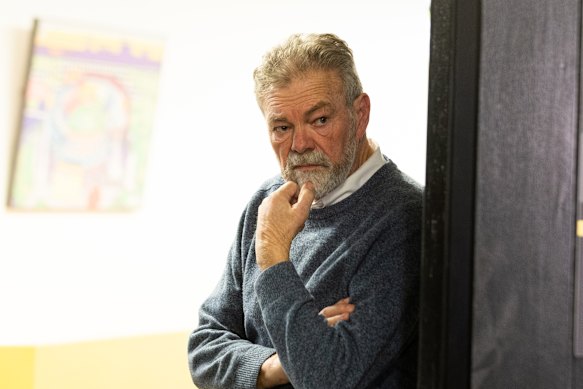
“The process dismantles the element of luck for me,” Noble said. “It deflects from the thinking, ‘This guy has been around for a long period; therefore he must be a good coach’. The luck diminishes the stronger your process is.”
By parting ways with their coaches in May, Carlton and Essendon have plenty of time. There is no need to rush.
“It’s a huge job, a very significant job,” Balme said. “Footy clubs have a responsibility to fans, community and the game, itself. It’s a very important decision. It’s certainly worth spending a lot of time doing it.”
Keep up to date with the best AFL coverage in the country. Sign up for the Real Footy newsletter.