source : the age
Decades before the company he founded was thrust into the public eye after a child alleged she had been raped by a carer, Levi Te Namu left more than 100 creditors in the lurch overseas before moving to Australia to build his empire.
The jet-setting chief executive’s lavish lifestyle was funded by millions in Queensland government contracts for his residential care business, Lighthouse Child and Family Services, which shared investors with another provider singled out by the state for profiteering.
The rape allegation, made by a girl with an intellectual disability, turned a spotlight on the company and the debate about who should run, and profit, from the state’s struggling child safety system.
Child safety has become a hot-button political issue after the number of children in Queensland residential care soared from 650 at the end of 2015 to more than 2800 by March this year.
As that number swelled, so did the state’s financial burden. In 2025, the government spent $1.2 billion on residential care services – six times what it spent in 2015.
And there was no shortage of businesses on hand to profit. Among them was Te Namu’s Lighthouse, which quickly became one of the biggest companies of its kind after launching in 2022.
But before he made millions from Queensland’s child safety system, Te Namu was a builder in New Zealand’s regional North Island city of Tauranga, where he operated a company with his future father-in-law, Donald Cutworth.
Compared to his Australian-based business, Miden Construction was a small operation, with just a few builds on the go when the global financial crisis hit.
In 2008, just four years after Te Namu had bought it, the company went under, owing more than $500,000 to various contractors and suppliers and leaving four houses unfinished.
While most of those companies have either gone under themselves or been sold, this masthead has spoken to several people who were owed money by Te Namu, with one recalling he disappeared, leaving them to deal with liquidators.
Of the $509,600 owed to creditors, just $93,000 was clawed back. Of that, $65,000 was spent on liquidators’ fees.
Te Namu did not answer direct questions about Miden Construction.
Almost 20 years later, he was winning lucrative state contracts to look after Queensland’s most vulnerable children.
Te Namu started Lighthouse while working for the not-for-profit Uniting Care with his now business partner Joshua Hillman.
To kickstart the business, the pair turned to Micheal Zarafa and Dominic Porter – the high-flying businessmen behind controversial residential care service All Care Australia – for seed money. Zarafa and Porter invested in Lighthouse in 2022.
A Melbourne nightclub operator, Porter’s internet footprint is a mix of party boy and proud dad.
In one shot, he’s partying with rapper Travis Scott. In the next, he’s wearing matching Christmas Grinch shirts with his wife and kids.
Porter made headlines when armed criminals broke into his home and shot at him, a month after his bar in Melbourne’s ritzy South Yarra was firebombed during the city’s “bar wars” earlier this year.
Zarafa and his wife, Vedrana Zarafa, were major funders of R&B festival Souled Out, which had Jhene Aiko and Vince Staples lined up for its 2025 shows in Melbourne, Sydney and Brisbane before it was cancelled a week before the event.
Porter’s wife, Kaitlyn Porter, was also a shareholder in the company behind the festival, and the sole shareholder and director of the company that invested in Lighthouse, D Porter Investments.
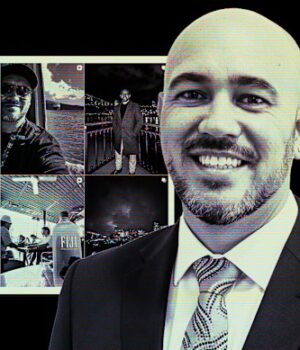
Once Lighthouse was up and running, Te Namu’s Instagram page began to look something like Porter’s – Disneyland, New York, Japan, cruises, and various fast cars occupied his grid.
And the two were becoming closer in business too, with Te Namu and wife Jessica investing in the South Yarra club The Albion, run by Porter.
By late 2024, Lighthouse and All Care Australia were two of the largest residential care providers in south-east Queensland, with Porter telling CEO Magazine that ACA had more than 1000 employees across the country.
Then the winds changed. In May 2025, while announcing a $20 million commission of inquiry into the child safety system, the Queensland government said it was auditing one residential care provider that had paid out $5.25 million to three shareholders the previous year.
“This same organisation receives tens of millions of dollars from the state government to run residential care services, with financial statements also revealing they increased their management fees by 1000 per cent,” it said in a statement.
Porter told this masthead ACA was that service provider, and that the company stopped receiving referrals from the government around the same time, but he did not respond directly to questions about the fee increase.
In opposition, the LNP promised to shake up residential care models. Now in government, it is moving away from individualised placement and support, usually delivered through for-profit providers like ACA, to outsourced delivery contracts, usually using not-for-profit providers, which they claim give children better stability.
However, Porter said he thought Child Safety Minister Amanda Camm was using businesses like ACA to avoid accountability for the state of the system.
“I believe for-profit providers have been scapegoated to distract from the government’s own expenditure across the residential care system, particularly expenditure involving the not-for-profit sector,” he said.
Porter said the government pulling away from companies like ACA led to reports of children sleeping on the floor of child safety offices when there was nowhere appropriate for them to go.
“My view is that Amanda Camm’s narrative has been misleading, hypocritical, and extraordinarily incompetent,” he said.
Camm was on leave when this masthead sent questions to her. Acting minister Ros Bates said the government was fixing a broken system and “mov[ing] away from unlicensed residential care providers that exploded under Labor”.
Te Namu and Hillman bought ACA in December 2025, after it had been audited and singled out by the government. Paperwork lodged with ASIC showed Lighthouse could have accessed $24 million in loans to help buy the business and residential care homes it owned.
Te Namu would not say how much money had been borrowed by the company, and said the repayments were commercial-in-confidence.
In February, ACA was transferred to another company owned by Te Namu and Hillman, called Best Life Group.
The ACA website has since been taken down, and Te Namu said he had no plans to revive it. He said ACA was still servicing some children when the company changed hands, but he was now focused on Lighthouse.
An email seen by this masthead showed the police investigation into the rape allegation ended when the girl involved did not want to provide a formal statement and withdrew the complaint, and Te Namu said the man involved no longer worked at Lighthouse.
Meanwhile, workers at other agencies have told this masthead that large numbers of children in state care are being moved out of Lighthouse residential homes.
On October 5, Te Namu said the organisation was caring for 12 children, after operating 41 houses at its peak. He said case referrals to Lighthouse had slowed before the rape allegation.
In Queensland, providers can operate without a licence, but must comply with minimum standards. Te Namu said the company had been fighting to get a residential care licence since April, and a decision from the department was delayed from July to October.
The rape allegation was made on August 21 and reported in the media on August 26.
“On 26 August, the department confirmed that the application remained under the licensing delegate’s consideration. It refused the application on 1 September, 2026,” Te Namu said.
A department spokesperson said Lighthouse was considered unsuitable for a licence under the Child Protection Act.
Start the day with a summary of the day’s most important and interesting stories, analysis and insights. Sign up for our Morning Edition newsletter.