
Source : Perth Now news
Nations are so deeply divided over climate change that the most consequential agreement to emerge from the United Nations’ COP summits might not be adopted if proposed today.
The 2015 Paris Agreement, which committed nations to limit global warming, would be so politically polarising it would have little chance of success, Australian National University climate change economics professor Frank Jotzo says.
“If you tried to negotiate the Paris Agreement now, that would probably not be possible,” he says.
“UN negotiations are so obviously stuck in unbridgeable divides between different countries.”
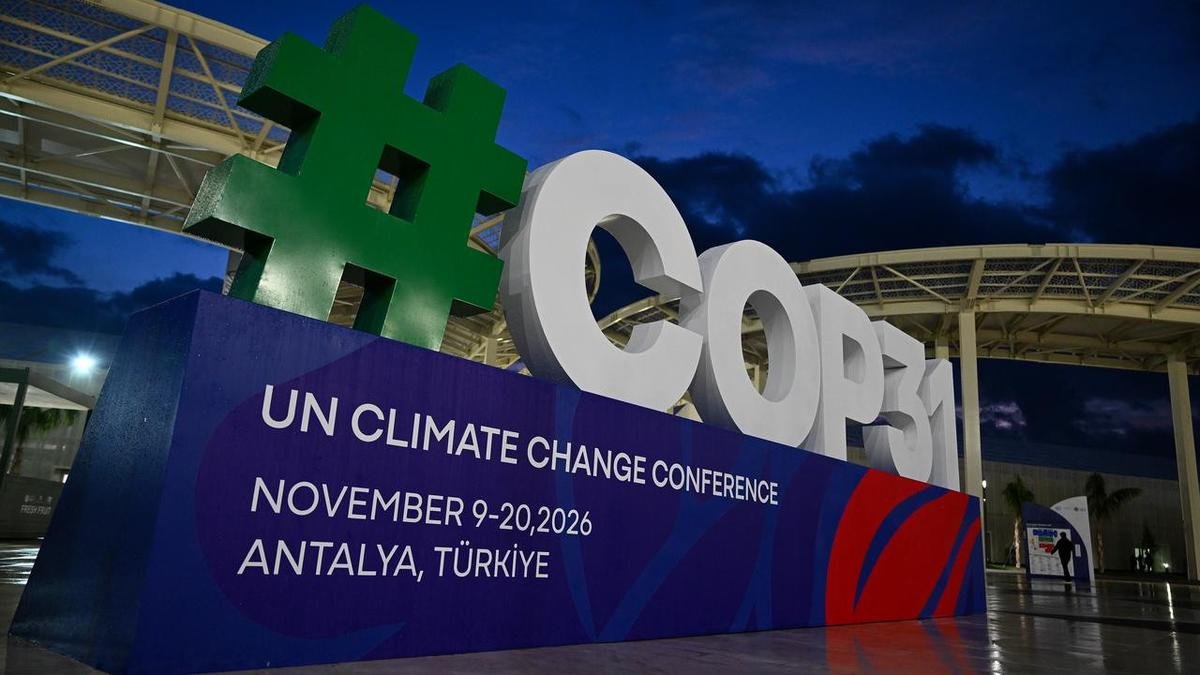
His assessment comes days after the COP31 summit in Antalya, Turkey, failed to reach an overarching agreement despite stretching two days past its negotiating deadline to become the longest UN climate summit to date.
Barriers to consensus included disagreements over climate finance, carbon capture and storage, and what participants call the “f-word”: fossil fuels.
But the split between nations that demand an unambiguous commitment to a fossil-fuel transition and those that oppose it might not signal the end of the discussion.
Smaller groups of like-minded countries are already planning separate summits to pursue their goals, experts say, even though the approach could challenge, change or even doom future COP summits.
The 2026 summit was unorthodox from the start, with a deal between Turkey and Australia making Turkish Environment Minister Murat Kurum COP president and Australian Climate Change Minister Chris Bowen its president of negotiations.
In October, Mr Bowen announced the pair would seek to produce a final statement from the two-week event, known as a cover decision, to capture the world’s ambitions for climate action.
The pair released a comprehensive draft decision early in the event’s second week, with 144 provisions over 18 pages, encompassing everything from multibillion-dollar climate finance targets to a transition away from fossil fuels.
But within days, a second draft halved the number of pages and removed both provisions, sparking protests from environmental groups.
Negotiations continued past the conference’s scheduled close on Friday but a third draft failed to win support on Sunday afternoon, Turkish time, and Mr Kurum conceded defeat, making COP31 the first to end without a cover decision since 2009.
Its failure was not unexpected, University of Queensland international relations professor Matthew McDonald says, given increasingly polarised views about renewable energy, carbon capture and storage, and moves away from coal, oil and gas.
“It is obviously a disappointment for Australia,” he says.
“I felt a little bit sorry for the Australian negotiators in the end because I just think it was a really difficult (task).”
The United States’ absence from the summit contributed to global divisions, Prof McDonald says, and neither Prime Minister Anthony Albanese nor Mr Bowen mentioned a transition away from fossil fuels in their opening speeches, potentially emboldening nations opposed to the measure.
“Electrification was (Bowen’s) way of talking about decarbonisation by stealth,” he says.
“That was his political move to try to get past using the f-word.”
While both Mr Bowen and UN climate change executive secretary Simon Stiell called the failure to reach agreement disappointing, others can see green shoots emerging.
More than 30 countries rejected the Antalya Pact, including the European Union members, the UK, Vanuatu, Norway and the Marshall Islands.
Australian Conservation Foundation advocacy head Gavan McFadzean says their opposition demonstrates a determination to pursue clear action against global warming.
“The fact that weak language didn’t get up is a sign that a whole bunch of nations are really pushing for demonstrably stronger climate action around the world,” he says.
“They said no, we’re not going to allow the fossil fuel industry and its national champions … to successfully lead a coup over the COP process designed to deliver climate action.”
Some nations have already begun to seek more ambitious climate action outside the UN’s consensus-based negotiations.
The Santa Marta Process, which emerged from the first International Conference on Transitioning Away from Fossil Fuels in Colombia in April, attracted representatives from 57 countries including Australia.
Ireland and Tuvalu will co-host a second conference in the Pacific in July 2027 and Mr McFadzean says the COP31 outcome could encourage more nations to attend.
“This is a watershed moment from which things could actually melt down and the international diplomatic COP process could really lose a lot of relevance,” he says.
“Or it could also be a moment of reckoning where those countries and forces that want to see more rapid climate action, economic reform and a transition away from fossil fuels are really able to seize the day and move forward with courage and ambition.”
Independent MP Nicolette Boele, who attended COP31, says it would be unfair to dismiss achievements at this year’s summit or write off future UN climate events.
“The layperson who’s outside the COP bubble will probably (think) it looked like a failure but from inside the bubble, there was progress,” she says.
Nations adopted 46 decisions at COP31, including measures on climate adaptation, carbon trading and finance for developing nations.
More than 90 countries signed a pledge to increase electricity’s share of final energy demand to 35 per cent by 2035, known as the 35-by-35 pledge, and Australia announced a deal with South Korea to accelerate decarbonisation.
None of COP31’s achievements should be underestimated, Ms Boele says, although she still questions if there was a path to agreement.
“The one thing I go to bed wondering is would it have been different if we took our own road map to transition off fossil fuels to the COP … like Ireland, the Netherlands, France, Germany and Denmark?” she says.
“If we had shown that leadership, would it have made a difference? I don’t know.”