
Source : the age
Three major factors are driving Australia’s immigration intake to record highs. All of them start in the centre of Australia’s largest cities.
The CBDs and surrounding suburbs of Melbourne and Sydney are where universities are filled with international students, as well as bars, offices and delivery services that thrive on the backs of foreign workers – and where most backpackers first land.
Australia’s permanent migration intake has barely changed over the past decade, hovering around 200,000 a year under Labor and the Coalition.
But the temporary intake has exploded. Last financial year, more than 1 million visas were delivered to students, working holidaymakers, and skilled migrants. There are now more than 3 million temporary visa holders in Australia, effectively creating an underclass of migrant workers who now count for more than 16 per cent of the working-age population.
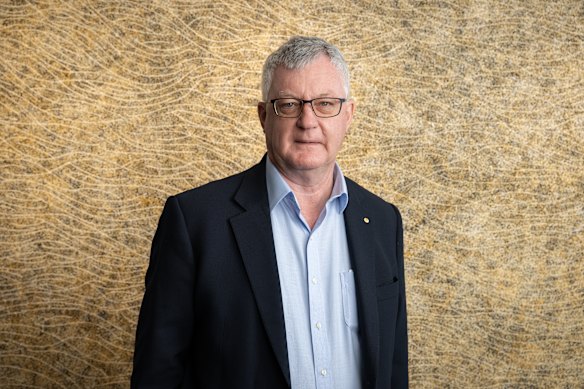
Martin Parkinson, former head of the Department of the Prime Minister and Cabinet, says voters would never have agreed if the government had explicitly said it was going to have a guest worker program. “What we ended up with was this underclass of the permanently temporary,” he says.
Like many poor policies, the situation is not the result of a single piece of legislation, but a patchwork of shifting regulations that are now very difficult to unravel.
On July 1, 2014, parliament’s attention was not on the prime minister’s courtyard. It was on Christmas Island, 5000 kilometres from Canberra, in the middle of the Indian Ocean: 153 Tamil asylum seekers had just been handed over to the Sri Lankan navy.
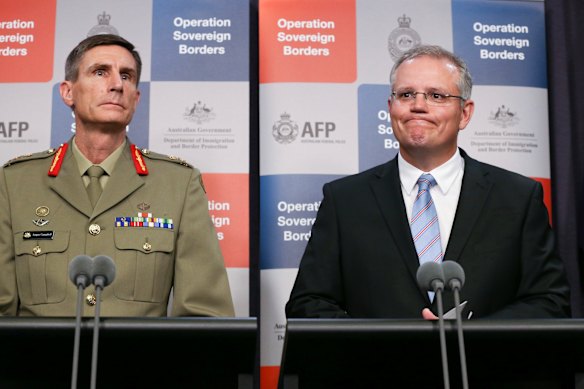
Immigration minister Scott Morrison was in the midst of Operation Sovereign Borders, a military-led forced deportation scheme of asylum seekers that would decimate the people-smuggling trade and rocket secrecy over “on-water matters” to the top of the national agenda.
But behind the headlines, a little-known legislative instrument was implemented that would have a much larger impact on Australia’s immigration program.
Business lobby groups had spent years criticising the Rudd-Gillard Labor governments over their crackdown on skilled worker visas. The Australian Hotels Association and the National Farmers Federation wanted the minimum income threshold for skilled migrants reduced. They had built on the lobbying of Neville Roach, the former managing director of Fujitsu Australia, who argued in the 1990s that Australia had to get workers into jobs as quickly as possible.
The Howard government under immigration minister Philip Ruddock balanced this campaign for speed by implementing thresholds on the minimum incomes migrants could earn and tying them to inflation.
“I was not prepared to expand skilled migration by weakening the very criteria that made it valuable,” says Ruddock. “The answer was to sharpen the targeting and hold firm on minimum thresholds.”
On July 1, 2014, Morrison froze the threshold at $53,900. It would stay there for the next decade.
By 2016, the temporary skilled visa program almost tripled, growing from 98,000 to 260,000 by allowing more workers to fill jobs that paid below-average wages. Morrison was contacted for comment.
In May of that year, a government review by Deloitte partner John Azarias recommended pegging the threshold to wage growth. The Coalition government ignored it, driving cheaper workers into more jobs.
By the time it was unfrozen in 2023, 90 per cent of Australian full-time jobs were paid more than the minimum threshold.
Parkinson, who led a review into the immigration system in 2023, says the threshold freeze was a key driver behind the surge in lower-skilled migrants into Australia.
“The subsequent introduction of labour market agreements provided even greater flexibility to undermine the previous arrangements, allowing for the payment of wages below the Temporary Skilled Migrant Income Threshold and easing other requirements such as English language,” says Parkinson.
Labor’s former home affairs minister Clare O’Neil unfroze the threshold in 2023, taking it above $70,000 and re-pegging it to inflation. But the damage had been done.
Once they were in Australia, many workers stayed by jumping between visas. The backlog of bridging visas exploded.
When bridging visas were introduced in 1994, they were designed to fill brief administrative gaps. They have now overwhelmed the department, leaving Home Affairs unable to process visas in time and keeping temporary migrants in Australia far longer than initially expected.
“I remember a meeting in the Department of Immigration in 1993, where we discussed whether we should have bridging visas at all or not,” says Abul Rizvi, a former deputy secretary of the Department of Immigration.
“The conclusion was that there will always be circumstances where we need a bridging visa [for exceptional reasons], but we should never allow the number of people on bridging visas to get much above 10,000. Well, we now have over 400,000 people on bridging visas.
“This is just eye-watering stuff.”
Successive governments cannot say they were not warned. In 2011, immigration researcher Peter Mares said in a lecture delivered in the Senate that Australia was in danger of mirroring Germany through its use of Gastarbeiter, referring to migrant guest workers mostly of Turkish origin who could work in Germany, but did not have political rights, fuelling social and cultural isolation.
Mares said Australia “called for labour power and people came”.
“[But] we are in danger of focusing on the Arbeitskräfte – the labour power – and losing sight of the Mensch – the human being,” he said. “The problem is that human beings cannot be reduced to units of production in the mining industry or export dollars for the education sector.”
In Melbourne and Sydney, those workers brought in on skilled visas now staff offices, restaurants and hospitals. They are often supported in those roles by international students who are working while studying. They gravitate towards the centre of our biggest cities for work and for play.
“Density creates the vibe,” says Howin Chui, the head of business development at Castle Group, a property developer that also runs venues. Chui says his venues in the centre of Sydney would struggle to survive without international students as both staff and customers. “People like to go to one place where they can get everything.”
During the COVID pandemic, the government also removed any restrictions on student work hours (previously capped at 40 hours). Businesses became increasingly reliant on cheaper labour even as the pandemic receded. Students can now legally work 48 hours a fortnight, and illegally a lot longer, making Australia more attractive to those who also want to be able to send money home to their families while studying.
In 2013-14, the number of student visas granted was 292,000. Last financial year, that number exceeded 371,000.
“Over the last two decades, the Australian government has cut its contribution to universities to a point where they only cover around a third of the cost of educating a student,” says Parkinson.
“So essentially, how we cover that is through student fees, domestic and international. Fees from international students also help replace the shortfall in government funding for research. So if you suddenly remove the international students, you are basically going to threaten the financial viability of the university sector, with consequences for student access and support, staffing and Australian research.”
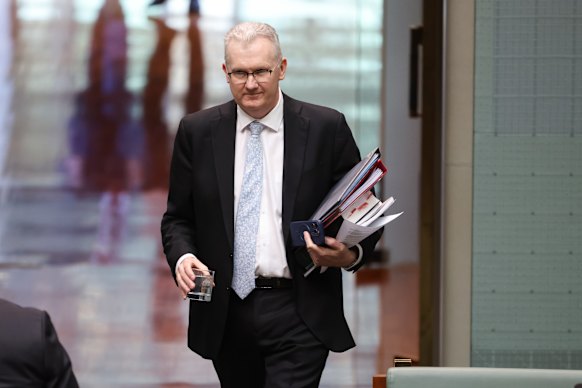
The challenge for Home Affairs Minister Tony Burke is keeping universities alive without taxpayers footing the bill.
That’s left him targeting partners and parents, who will be restricted from being able to join students on visas, as well as students who hop from one course to another. Ruddock has urged him to go further, arguing international students should have to leave Australia after completing their degrees, then reapply for visas to re-enter the country. Burke will also take out a chunk of the 300,000 backpackers in the country by introducing a ballot system.
Until Pauline Hanson’s One Nation put them back at the top of the news cycle this year, many of the other recommendations in Parkinson’s review met the fate of countless other inquiries: filed away in the cupboard, gathering dust.
Burke disputes this, arguing he has been working on solutions since he was appointed Home Affairs Minister in 2024, but accepts that politics is the prism through which the media and the public may view the immigration policy overhaul.
Hanson has proposed cutting international student places by 40 per cent, a figure that Universities Australia has warned will see campuses shut down and research decimated.
Now even Burke’s modest changes may have more far-reaching consequences than initially anticipated, as tighter regulations combine with anti-immigration sentiment to drive more people out of the country and stop more people from coming in.
The government had planned to bring net overseas migration down from 300,000 to 225,000 a year.
“Net overseas migration is now poised to significantly undershoot,” Timothy Hibbert from Oxford Economics said on Wednesday.
“It is forecast that NOM will fall to 160,000 in 2028-29, slowing the national population growth rate to 0.95 per cent – the lowest figure since 1993.”
Australia has a long history of migration boom and bust.
“Migration: Crisis Point” screamed the headline in this masthead on September 10, 1967.
The crisis former editor Max Suich raised in these pages was not about too many migrants; it was about too few.
“The large and rapidly growing number of immigrants who are leaving Australia should not be tolerated,” Suich wrote. “This leak can be plugged.”
By the end of the next decade, the leak had not just been plugged; the ship had been refloated. The White Australia policy had been abandoned.
The country welcomed Tran Hue Hue, who, after fleeing Vietnam, survived five months marooned on a coral reef by eating seagulls. In Melbourne, a decade later, they celebrated Eritrean refugee Kongit Abdulmalik Mohammed joining Melbourne University’s medical faculty as one of the state’s top-scoring high school students.
And in Sydney, Chui’s father Andy Chui and uncle Terrence Tang emigrated from Hong Kong to open Tang Dynasty: the Hurstville institution that would go on to serve generations of Australians. His mother, Annie Tang, became the deputy mayor of Kogarah, and Australia would go on to have the longest unbroken period of economic growth in the developed world.
Chui has opened half a dozen venues under his Urban Agency banner, including the Hong Kong-style Kowloon Cafe and the modern Australian-adjacent Touch Wood at the Sydney Fish Market.
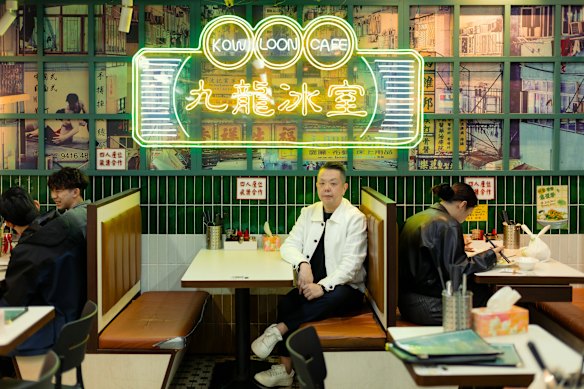
“My Western friends think I’m too Asian. My Asian friends think I’m too Westernised,” laughs Chui.
Urban Agency merged with Castle Group, a developer started by Sri Lankan migrant Ritchie Perera that is building hundreds of new homes across Austral and Rouse Hill in the outer suburbs of Sydney.
Chui says many migrants feel like they have to prove themselves. “I think one of the strongest things that we have inside us is building the community and building the people around us,” he says.
When his father founded Tang Dynasty, it was one of the few yum cha restaurants in Hurstville. Now the suburb is filled with food from Xinjiang to Beirut.
“I think we’re the only country that I’ve been to where you can enjoy culture and food with such diversity,” says Chui.
“You can’t go to Hong Kong and have a nice kebab.”
Start the day with a summary of the day’s most important and interesting stories, analysis and insights. Sign up for our Morning Edition newsletter.