

source : the age
It was a fortnight before Christmas 2012 when Drummoyne mum Melina Maceri posted on Facebook about a side-hustle she was running from her garage. “Georgia & I have just launched our online boutique,” she wrote to her 200 friends as part of a festive greeting.
“Please like & support us.” And they did. In the millions.
That one-time backyard operation has since expanded beyond a weekend stall at Glebe and Kirribilli markets to become a global retail giant that brought in more than $540 million in revenue last financial year alone and has become one of the most omnipresent brands in Sydney.
Oversized hoodies, bikinis and barely-there dresses have turned White Fox into an extraordinary international success story and cultural phenomenon, making childhood sweethearts Georgia Moore and Daniel Contos billionaires along the way.
But for all their wealth, and despite their mastery of social media to leverage their brand’s exposure, the couple remain largely an enigma among their rich-list peers thanks to a shroud of secrecy that surrounds their affairs.
While they fiercely guard their privacy (the couple did not respond to requests for comment and rarely give interviews), their once humble start-up from suburban Sydney has not been without controversy over the years.
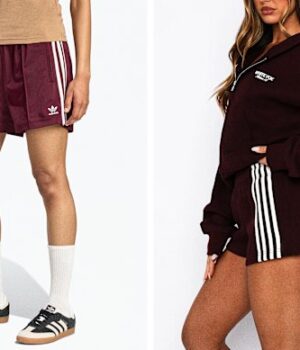
It now faces its biggest battle as one of the world’s most recognisable sports brands sues for breach of trademark. German giant adidas has accused White Fox Boutique of selling items allegedly “deceptively similar” to its iconic three-stripe logo. White Fox is defending the case, which will play out in court next year.
Humble beginnings
Moore’s rise in the world of fashion was fast and audacious. She went from being Maceri’s stall partner to her daughter-in-law in 2022 when she married Maceri’s son Daniel, by which time the couple had cemented their place among Sydney’s wealthiest rag traders.
“We do everything together – even sit opposite each other in Daniel’s office (I have abandoned my office),” Moore told online publication Wedded Wonderland before the couple were married at a private residence in the eastern suburbs.
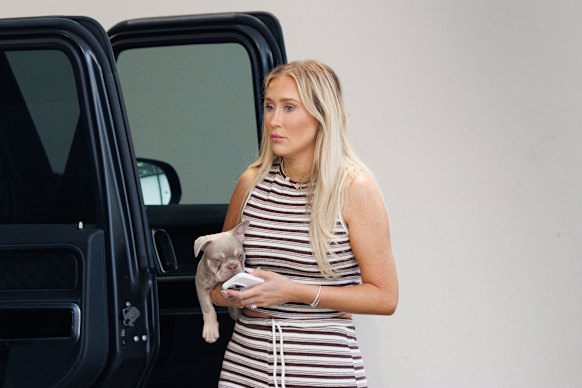
The pair met at St Andrews Cathedral School and started dating when Moore was 16 and Contos was 17. Both had considered careers in property before Moore and Maceri launched their weekend clothing stalls. Daniel joined soon after, scaling up the operation.
A year after their online launch, Instagram fashion influencer Antoinette Marie shared a photo of herself wearing a T-shirt tagged with the brand @whitefoxboutique to her 870,000 followers.
The post went viral, inundating Moore and Maceri with orders to be filled from the makeshift warehouse on the ground floor of the waterfront Drummoyne home Maceri shares with her husband Gary Contos.
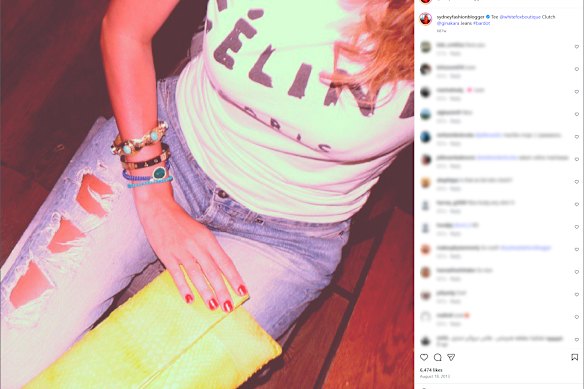
It was a watershed moment not just for the exposure the Sydneyfashionblogger Instagram account brought, but it showed the sales power of social media.
Moore already had a taste of this. When she was struggling to sell a dress on eBay, she posted a photograph of Kim Kardashian wearing the same one. Moore’s post went nuts, and she was convinced influencers and social media were the key to success.
Building an online army
And they have been. White Fox has 2.5 million Instagram followers and 1.6 million on TikTok as well as a legion of influencers called “creatives” selling their products to tweens, teens and 20-somethings worldwide.
They run promotions giving away prizes from Range Rovers to Hermès Birkin bags and engage influencers through their White Fox University program, where students with at least 2000 social media followers apply to become ambassadors and receive free clothes and discount codes.
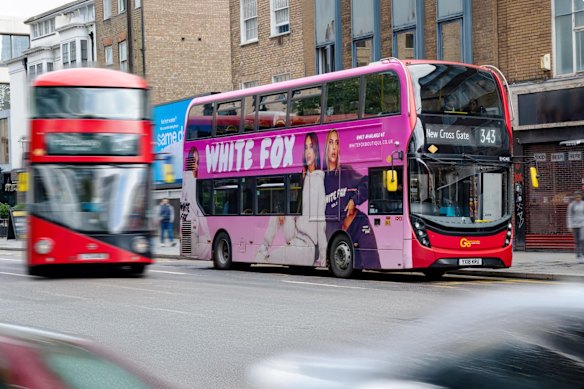
Attention-grabbing White Fox ads featuring glamorous young women adorn countless buses in Sydney, and White Fox’s signature pink has been emblazoned across billboards in New York’s Times Square and on London’s famous black taxis. The brand is ubiquitous, despite not having a single storefront.
Sydney University consumer psychologist Dr Christina Anthony says the couple’s secrecy is likely a tactic to “create a bit of a scarcity and intrigue”.
Their marketing strategies have been “very clever” and she says it is difficult to name another brand that has used social media and influencers so effectively for so long.
“They really drew on students and the Gen Z generation to promote their product and be their marketing army,” Anthony says.
The brand’s success had made their wealth skyrocket. Having made their debut on the Australian Financial Review’s Young Rich List in 2023 worth an estimated $100 million, this year they were worth $1.3 billion.
Glitches along the way
But the adidas lawsuit has not been the only hiccup along the way.
In 2022, one of the brand’s influencers, Kerri Gribble, was publicly dropped for allegedly fat shaming OnlyFans star Mikaela Testa. The following year Moore posted a pic of herself atop a mountain of clothing orders, prompting a backlash on social media accusing the company of contributing to excessive waste and landfill.
In April, the national advertising regulator slapped White Fox with a breach notice after Ad Standards upheld a complaint about a TikTok clip where influencers were “encouraging heavy drinking and getting each other drunk”.
White Fox posted a clip filmed during Coachella, where the company rented a Palm Springs luxury villa. The “Starstruck Festival House” hosted influencers, including Sydney fitness entrepreneur Tammy Hembrow and Love Island winner Yana Marks, alongside a handful of UK Love Island stars.
The clip had influencers, dressed head-to-toe in White Fox, outlining their plans for the festival: “My mission is to get Chloe as drunk as possible,” one said. Another said:“My mission for the day is to have as many tequila shots as possible, and force Sammy to have as many tequila shots as possible.”
White Fox never responded to Ad Standards, but quietly removed the clip from its socials.
Friends and neighbours were reluctant to speak on the record even when offering the most glowing of character assessments: nice, hard-working and down-to-earth being the most common descriptions.
Mega property portfolio
That penchant for privacy, however, wasn’t enough to shield them from the spotlight in November 2021 thanks to their $34.55 million purchase of a Vaucluse trophy home.
It was just the start of their home binge. In quick succession, the couple added three neighbouring houses for $25 million, $37 million and $29 million to create one site to build their mega-mansion. Designed by Stafford Architecture it is to be known as Casa del Sol.
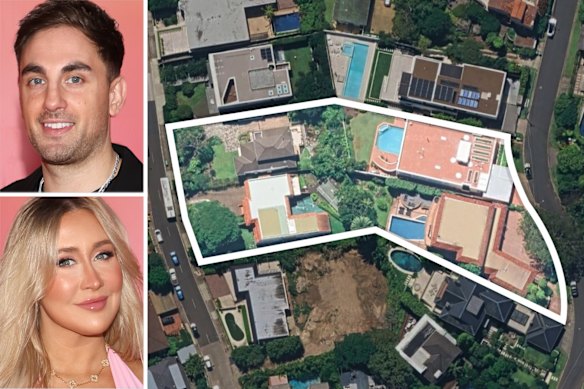
Having coughed up $125.55 million for land, they also purchased an in-betweener to live in up the road for $26 million.
It was a monumental step-up in terms of real estate from the federation worker’s cottage in Drummoyne they purchased as first home buyers in 2017 for $2.9 million up the road from Daniel’s parents.
Dwarfing the couple’s residential portfolio is their industrial property interests.

What started with a Newtown warehouse for $3.13 million a decade ago has since expanded to include another warehouse in Newtown, two in Rosebery, and another in Marrickville, all before this month’s acquisition of a site in Alexandria for a reported $87 million, taking their total warehouse holdings to more than $188 million.
The family’s desire for privacy extended to their large-scale business affairs, which did not wash with the corporate regulator.
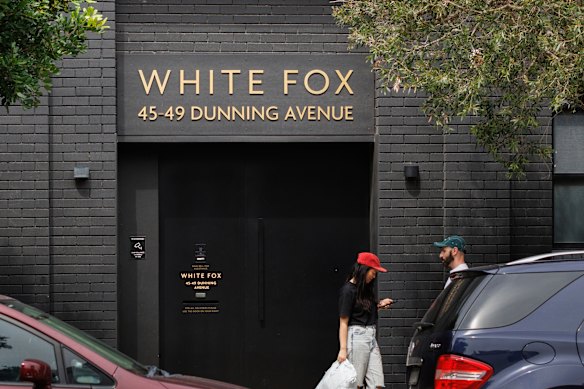
By 2023, given the obvious trappings of extreme wealth and success of the White Fox brand, questions were raised over why the company had never lodged any annual reports with the regulator, as required by a large company.
Last October, ASIC issued a $187,800 fine to White Fox for failing to lodge detailed annual reports.
White Fox never responded publicly to the fine, but paid it. Six months later it lodged its first detailed annual report for the 2022 financial year. Days later, annual reports for each year since were also lodged.
On show was the sort of exponential growth from which corporate dreams are made. In five years revenue soared 728 per cent from $65.5 million in 2021 to $542.5 million.
All while the direct-to-customer nature of the business means there are no retail costs by way of stores or margins, and the number of employees has risen only from 180 to 246.
Marketing is one of the most substantial costs, up from $10.9 million in 2021 to $52.47 million last year.
The Trump bump in the road
One of the few significant upsets to their bottom line was delivered by US President Donald Trump, courtesy of his tariffs in April last year. The result showed up on White Fox profits, down from the high of $104 million in 2024 to $93.8 million last year.
There have been handsome dividends to the company’s shareholders: Daniel and Georgia Contos; and Melina Maceri. In 2023, the couple claimed a $20.7 million dividend, and in 2024 another $76.6 million.
Meanwhile, as White Fox readies itself for the legal battle over adidas’ claim, the branded hoodies continue to proliferate, boosted in some measure by the increasing number of White Fox knock-offs being sold from market stalls around Sydney.
The Morning Edition newsletter is our guide to the day’s most important and interesting stories, analysis and insights. Sign up here.
