

Source : INDIA TODAY NEWS
Management education in India stands at the threshold of a considerable transformation, for the business leaders of tomorrow shall inherit an economy whose demands are no longer confined to the established principles of commerce, administration and enterprise. The arrival of artificial intelligence, the changing character of employment, the growing importance of entrepreneurship and the uncertain course of global business have compelled institutions to reconsider what they teach and, perhaps more importantly, how they prepare their students.
advertisement
The premier business school, once regarded chiefly as a place where the aspiring executive acquired the instruments of management, is now being called upon to cultivate judgement, adaptability, intellectual independence and a sense of ownership.
As India prepares its next generation of business leaders, the question is no longer merely what a management graduate knows, but how well he or she can navigate a world in which knowledge itself is being constantly redefined.
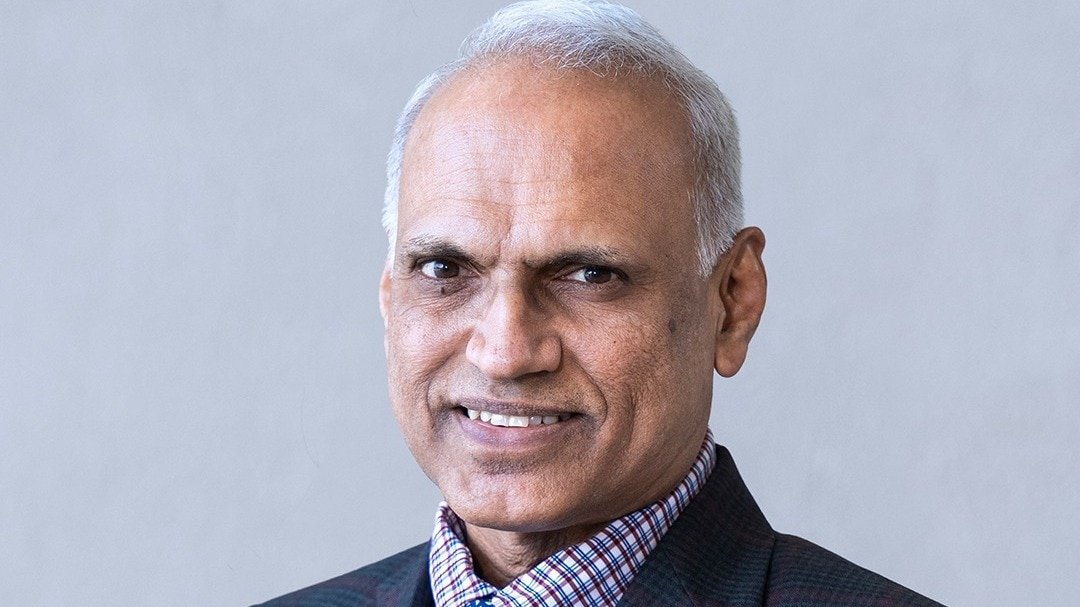
In an exclusive interview with India Today, IIM Visakhapatnam Director Chandrashekhar M spoke at length about the changing landscape of management education in India, the evolving role of the country’s premier business schools and how they are preparing the next generation of business leaders to navigate an increasingly uncertain, technology-driven world.
Q1. Management education is undergoing considerable change, particularly with the growing influence of artificial intelligence. How do you see business studies evolving over the next five to ten years? What should students do to prepare themselves for this transition?
Chandrashekhar M: We are at what I would describe as a hinge moment in history. Never before have we been impacted by something that has come at us so quickly and with such consequence as artificial intelligence. Even a simple Google search that we used to perform now goes through AI before providing us with an answer.
Given the pace of developments, everything needs to be designed for chaos, ambiguity and affordability. Students must develop the ability to expect the unexpected and remain prepared for developments that can take any direction.
Earlier, graduates would receive considerable on-the-job training before taking up their responsibilities. When I joined Hindustan Aeronautics Limited in 1983, we were trained on the shop floor and given time to understand how things worked. Today, that luxury is diminishing. Companies expect graduates to be productive from day one.
Therefore, students must build these capabilities even before entering the workplace.
I would identify three important areas.
First, they must learn to read the tea leaves. They should be able to anticipate developments, understand emerging situations and remain composed when confronted with uncertainty.
Second, while technological tools such as AI and machine learning will continue to evolve, the human element will remain important. Collaboration, cooperation, empathy, emotional resilience, ethics, conflict resolution and consensus-building will become increasingly necessary.
Third, students must develop the ability to question the outputs generated by AI, collaborate with others to examine the underlying assumptions and implement decisions gracefully. Generating an output is one thing; ensuring that a decision is accepted and implemented across an organisation is another.
Q2. What is IIM Visakhapatnam doing differently to prepare students for these emerging challenges? What distinguishes the institute from other management schools?
Chandrashekhar M: From the beginning, we decided that entrepreneurship and an entrepreneurial mindset would be among our principal areas of focus.
A graduate essentially has three broad choices: employment, higher education or entrepreneurship. Whatever path an individual chooses, the underlying principle should be to think like an owner.
Consider a simple example. If somebody gives me Rs 100 and asks me to purchase something from the market, I should not merely ask what I am supposed to buy. I should also consider the quantity, quality and the most efficient use of that money.
I must treat those Rs 100 as my own resource. That is the sense of ownership we want to develop among our students.
It involves developing the ability to question, exercise discernment and assess whether resources are being allocated appropriately.
This approach has also helped us develop our entrepreneurship ecosystem. Since establishing our incubator in 2020, we have supported the creation of 210 startups. Around 70 per cent of these are women-led ventures, while 25 per cent are social-impact enterprises.
I would say that our entrepreneurial culture, entrepreneurial mindset and the ventures that have emerged from this ecosystem constitute a particularly satisfying and distinguishing feature of IIM Visakhapatnam.
Q3. Some emerging business schools are introducing undergraduate programmes with international immersion and experiential learning from an early stage. Are established institutions such as the IIMs required to reconsider their approach to management education?
Chandrashekhar M: Most IIMs are now entering undergraduate education, and several have already done so. We also have plans to introduce an undergraduate programme.
Institutions are experimenting with different models of learning. One is asynchronous learning, where students access recorded material and learn at their own pace. The second is synchronous learning, where teaching happens live, even when students and faculty are in different locations. The third is the conventional classroom model, where students and faculty are physically present together.
We are examining how to combine these approaches.
However, learning must also be accompanied by practical exposure. Students should have opportunities to engage with communities and gain experience through international institutional collaborations.
For example, one of our faculty members conducts a course in collaboration with a professor at the Ted Rogers School of Management, Toronto Metropolitan University, Canada. Students from both institutions attend the same online classes, although their assessments are conducted separately.
We are also exploring collaborations with international universities. Our Dean of Academics is in the Netherlands discussing possibilities with Wageningen University & Research and another institution with which we have entered into memoranda of understanding.
We want to bring international immersion, rural attachment, internships and campus-based learning into our undergraduate programme. We are taking time to develop the model, but we hope to introduce it in the coming January or June, subject to the institute’s plans.
Q4. NEP 2020 places considerable emphasis on experiential learning, flexibility and multiple entry and exit options. How far have these provisions been implemented at IIM Visakhapatnam?
Chandrashekhar M: We are already implementing the principles of NEP.
One of the most important provisions is giving students greater mobility and choice in their education.
In the undergraduate programme we are planning, students will have the option of exiting after the first year with a certificate, after the second year with a diploma, after the third year with a degree and after the fourth year with an honours degree.
The advantage is that students are not compelled to follow a single uninterrupted academic path. If someone needs to discontinue education because of financial or other considerations, the credits they have earned remain intact.
They can return after a break and continue their studies.
IIM Visakhapatnam is also running a modular MBA programme for students of National Institutes of Technology and Indian Institutes of Information Technology. Students can pursue a diploma during their time at these institutions and, after graduation, continue their studies with us to obtain an MBA degree.
This is an example of how the principles of student mobility and multiple entry and exit can be implemented.
The larger objective is to ensure that whatever a student has learnt does not go to waste. The credits remain available, and students can build upon their previous learning whenever they are ready.
It is a valuable provision because it reduces undue pressure on students and allows them to learn at their own pace.
Q5. What would you consider the most important quality that management graduates must develop to remain relevant in the changing professional environment?
Chandrashekhar M: I would return to the idea of ownership.
Students must develop the ability to think independently, assess situations, question information and use resources responsibly. They should be able to work with technological tools without surrendering their own judgement.
They must also understand that organisational decisions involve people. It is not enough to arrive at the right answer. One must be able to bring people together, build consensus and implement decisions in a manner that takes different stakeholders into consideration.
That combination of technological capability, human understanding and a sense of ownership will be important for the future.
– Ends
SOURCE :- TIMES OF INDIA


