

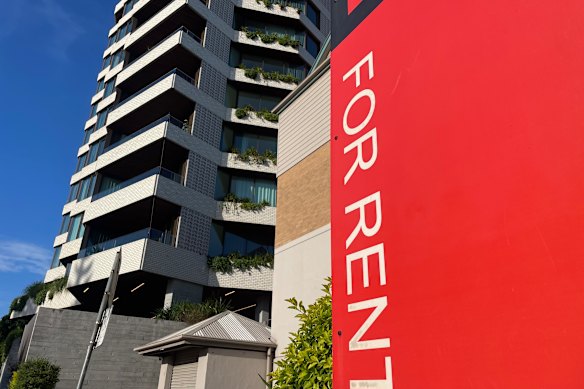
Source : the age
Boomers have become the landlord generation with new figures revealing they hold a record share of rental homes, as negatively geared property owners run-up $16 billion worth of losses on their investments, an all-time high.
But in a sign the federal government’s plans to wind back negative gearing and capital gains tax concessions may hit the wider population, new figures from the tax office reveal there has been a lift in the number of young “rentvestors” hoping to build their wealth through the property market.
Treasurer Jim Chalmers used last month’s budget to argue tax reforms were aimed at bringing the “dream of home ownership with the reach of more young Australians”. The May budget restricted negative gearing to new builds and returned CGT concessions to the pre-1999 system of taxing inflation-adjusted increases in asset values.
The property sector this week told a Senate inquiry that rents could climb up by to $9 a week because of the impact of the proposed changes on landlords. The government argues the increase is less than $2 a week, with the reforms to put downward pressure on home prices, making them more affordable to young buyers.
The annual taxation statistics, covering the 2023-24 financial year, confirm the surge in rental properties held by people in their 60s.
In 1999-2000, when the Howard government introduced its 50 per cent CGT concession, there were about 1.2 million landlords. Of that group, 170,000 were at least 60 years old, while almost one-in-10 were under the age of 30.
By 2023-24, however, over-60s accounted for 27.5 per cent of 2.3 million landlords, holding interests in 642,000 properties. Under 30s now account for just 4.3 per cent of all rentals, while the share held by those in their 30s has slipped from nearly a quarter in 1999-2000 to 18.5 per cent.
The government’s changes to negative gearing and CGT have come under attack by some who claim it will hurt young people who are “rentvestors” – those who are landlords but rent their own home. The tax office data shows total properties held by under 30s has climbed by 5000 to 100,168 over the past 12 months.
This has been driven by a noticeable lift in the number of under 30s holding a single rental, which climbed to 88,258 in 2023-24 from fewer than 84,000 in 2022-23. It is still short of the 96,269 people under 30 who had a single rental in 1999-2000.
Over the past year, the number of over 60s with one property grew by more than 20,000.
Over 60s dominate the share of Australians with multiple properties. There are now a record 9241 people at least 60 with interests in six or more properties, a jump of 595 people in a single year. The number of under 30s with six properties lifted to just 101 from 93.
Since the turn of the century, the share of over 60s with six or more properties has climbed by 435 per cent.
The tax data also confirms that a majority of landlords are now negatively geared.
During the pandemic, when official interest rates fell to 0.1 per cent, positively geared investors out-numbered negatively geared for the first since the CGT concession was introduced.
But that reversed in 2023-24 as the impact of higher interest rates, and a lift in property prices, hit landlords.
Of the nation’s 2.3 million landlords, almost 1.3 million were negatively geared, a 13 per cent jump on 2022-23.
The single biggest expense for all landlords was mortgage interest, which soared almost $10 billion to $32 billion in 2023-24. During that year, the Reserve Bank pushed official interest rates to 4.35 per cent.
Interest was the largest expense for negatively geared investors, who reported a combined $16.1 billion in tax losses, the single largest loss on record.
Offsetting the losses, landlords collected a record $61.4 billion in rents, an 11.2 per cent increase on the $55.2 billion collected in 2022-23.
The government has argued that by allowing investors to negatively gear new properties, it is encouraging the supply of homes.
The Housing Industry Association on Wednesday said even if population growth fell to zero, Australia would still need to build 100,000 homes a year to make up for the nation’s long-run housing deficit.
The Coalition wants to restrict Australia’s net overseas migrant intake to the number of homes built per year, while One Nation wants to cap the intake at 130,000.
But HIA chief economist Tim Reardon said not only would restrictions on migrants make it more difficult to build properties, it ignored that demand for housing would continue to grow.
“Migration contributes to housing demand, but so do population ageing, household formation, relationship breakdowns, changing housing preferences and replacement demand,” he said.
Cut through the noise of federal politics with news, views and expert analysis. Subscribers can sign up to our weekly Inside Politics newsletter.
 Shane Wright is a senior economics correspondent for The Sydney Morning Herald and The Age.Connect via X or email.