

Source : the age
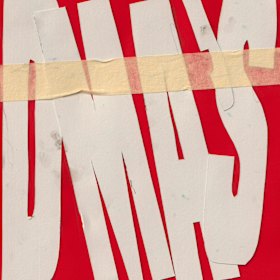
DMA’s, DMA’s
★★★★
Since the golden age of Australian indie rock kicked off in the 2010s, DMA’s have carved themselves a place as the balladeers of a generation. No other band lives as comfortably in the chasm between joy and pain that is nostalgia, channelling loneliness and vulnerability into universally uplifting experiences.
For Millennials only just remembering they can enjoy things unironically, DMA’s cut through with unapologetic sincerity – emotions on their sleeve, young men refusing to let the world harden them or embarrass them for being openhearted, joyful, loving, sad or scared. It’s pub-rock for a generation yearning for connection and community in a world that is increasingly isolating.
Just three years on from their last album, DMA’s sound older and wiser. How Many Dreams? was a rock-forward reflection on childhood growing up, on dreams realised and dreams forgotten. The self-titled DMA’s is more intimate and contained. It’s introspective and bittersweet, the euphoria and agony of finding your way and your people.
Hurracane is a folk-rock meditation on heartbreak and missed opportunity. The slightly anxious Killing Time is vivid and enthralling. My Baby’s Place and One & Only are wistfully wholesome, without cynicism or cringe. Dancing Luck is a certified tearjerker, and a showcase for Tommy O’Dell’s angelic voice. The fuzzy distortion of Heatin Park feels like coming out of a messy dream.
“Looking in the mirror, it just seems so surreal/ that the man who stands before me, has not told his proper story…” O’Dell sings on opener El Alamein, a surprising reflection from a band that has always felt like an open book. Turns out they still have so much more to share with us. Tom W Clarke
L’Rain, fata morgana
★★★★
Taja Cheek doesn’t like to be pinned down. The Brooklyn-born artist’s expansive psych-rock project, L’Rain, is often tagged as “experimental”, but she resists the label – and justifiably so. Her songs evince a natural pop sensibility that’s more enthralling than cerebral, even as they bubble and squirm like something birthed in a petri dish.
Taking its name from a coastal mirage, fata morgana is a real shape-shifter. Across its 40-minute runtime, the album cycles ravenously through noise, jazz, spectral folk, indietronica, thrash, dancehall and euphoric, gospel-tinged R&B.
Cheek, a curator at New York’s Performance Space, takes a gallerist’s approach to composition, selecting sounds from across a century of popular music and recasting them in her own image. It’s a style she’s termed “psychic collage” and, like a stream of consciousness, the results are manifold but cohesive.
Through a blend of samples, voice recordings, tape loops, horns, guitar and a veritable pirate’s treasure of analogue synths and organs (the credits list Moogs, Korgs, Wurlitzers, Arps and more), the songs map a vast interior landscape filled with her memories, doubts, hopes and visions.
“I feel limitless,” Cheek told an interviewer recently. On fata morgana, she summons an image of herself that’s as unconstrained as light refracted on the horizon. Annie Toller


