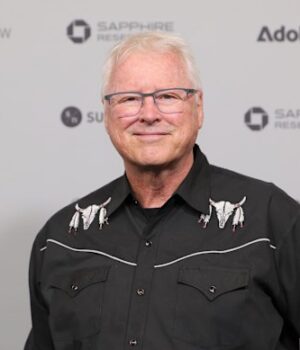
Source : the age
Dr Lisa Jones-Engel knows more about macaques than anyone else in the world. One of the most decorated scientists at the University of Washington’s primate centre, she spent much of her life working daily with the monkeys, which share about 96 per cent of their DNA with humans.
But in 2019 the Seattle-based primatologist had an epiphany: she decided that working with animals to be used in the research for new drugs was wrong, diabolically so. She quit her job and became chief scientist with PETA (People for the Ethical Treatment of Animals).
A new film called Sentient traces Jones-Engel’s journey, as well as that of the macaques, from the wild and breeding farms in Asia, to laboratories in the US and the UK, where they are used to test new medicines. About 40,000 are sent each year to the US alone.
Remarkably, only about 5 per cent of the drugs tested on animals – which, as well as monkeys, include mice and dogs, notably beagles – actually work for humans.
Many Australians would recognise the macaque as the small, cheeky monkeys you see throughout Bali. Jones-Engel describes them as “the perfect primate” and has no doubt they are sentient.
The documentary is directed by former Q&A host Tony Jones, who was inspired to make it in part by an episode of the program that featured ethicist Peter Singer, who argued that animal testing in the future will be considered in a similar way to how we now think of slavery.
As well as tracing Jones-Engel, Sentient features secretly filmed vision of what happens in animal testing laboratories, recorded by former workers. While the workers obviously care for the monkeys – their tenderness towards them is visceral – all the animals will end up dead once they have been through the trials process.
While some of what features in the doco is challenging material, Jones says it’s not in any way gruesome. “It’s a realistic examination of what the animals will go through in this process, but without taking you to the horrific stuff,” he says. “We’ve tried to concentrate on the relationships between the animals and the people who care for them or the people who do research work on them.”
Jones says the workers fall in love with the animals “and they think of them in the same way that you think of little children, particularly the monkeys and the baby monkeys”.
“You could see inside the testing laboratories how [the macaques] care for each other, how they grip each other, and hold each other in fear of what’s coming, and how they deal with their fellow animals who have been effectively poisoned during the testing process,” he says.
“You can kind of see real emotions in these animals, and I think it goes to the question of sentience. Sentience is a two-way street. Obviously, it’s the sentience of the people who are doing the work and the sentience of the animals they’re working on. So we’ve tried to be empathetic to both the animals and the people. I think more than horror, this film is about empathy.”
Sentient features interviews with several scientists at the University of Washington, which is where Jones-Engel spent most of her career. Many become emotional while talking about their work, and the animals. “They allowed us to come in and talk to them because they wanted the world to know that they don’t just do this kind of work and feel nothing; that it has quite profound effects on them and consequences in their real lives,” Jones says.
Massive breeding farms set up in part of Asia, such as Cambodia, supply thousands of monkeys a year to the UK and the US for use in animal testing.
Rather than the farms and labs providing the solution to the next pandemic, it’s more likely to be created in them, according to Jones-Engel. “They are like wet markets,” she says, which is, of course, where COVID began. “This is a cauldron. This is a recipe for viral recombination.”
The long-tailed macaque is one of the most expensive animals traded in the world; while the price varies dramatically, at the peak, under COVID, that was as much as $US60,000.
“Some people portray me as a scientist who became an activist, and that’s not what it is,” Jones-Engel says. “As a scientist, my job was to understand everything I could about macaques, about our relationship with macaques, about how diseases move back and forth with them. I was always asking questions.
“And the answers that I was getting were what made me change … to understand the answer to those questions, and say, this can’t go on.”
Towards the end of the film, alternatives to animal testing are explored, namely artificial intelligence and advances in science that mean artificial organs can be created in labs. There’s also an unexpected ally in Robert F. Kennedy Jr, who is pushing to phase out animal testing in the US.
Jones-Engel sees an analogy between what is happening in her former industry and fossil fuels – there is a lot of money and infrastructure tied up in the traditional way of doing things.
She is thrilled for these creatures to get their “moment in the sun” in the documentary, saying the chimpanzees had Jane Goodall and the gorillas had Dian Fossey.
Tony Jones describes Jones-Engel as “the Jane Goodall of the macaques”.
Knowledge carries obligation, according to Jones-Engel. “I had a debt to these animals, I had an obligation to these animals, and that’s what I’m doing. I’m carrying my understanding of who they are.”
Sentient is showing at Melbourne International Film Festival on August 11 and 13. Tony Jones and Dr Lisa Jones-Engel will appear in a Q&A on August 11 at 9.15pm. The film will be released nationally from August 27.