Source : the age
For some, Barcelona means cosy tapas bars and foaming glasses of freshly poured Cerveza. There’s nothing better. Or is there? If you’re in the city for a few days, then you can dig a little deeper into the gastronomic layers of Spain’s most adventurous food frontier.
Hiding down cobblestoned laneways are a growing number of ambitious young market-driven chefs working with local flavours to create something new (like a slow-braised stew of cockscombs). On the broad, elegant avenues are three-star Michelin temples that wrap you in luxury at price points far less than their northern European equivalents. In the atmospheric Gothic Quarter, there are warm, wine-driven tavernas on every corner, and gilded old patisseries with delicate pastries lined up like designer jewels.
Catalan cuisine has never fitted into a single mould. As a Mediterranean trading port for centuries, the city has always looked outwards, absorbing Roman, Arab and French influences into its culture (Barcelona is often referred to as the anti-Madrid, the most un-Spanish city in Spain). Alongside the impact of El Bulli’s avant-garde chef Ferran Adria and his molecular gastronomy in the 1990s, it gives local eating as many layers as an Antoni Gaudi cathedral spire.
Whether you choose to dine high, low, or somewhere between, you’ll get a true expression of the richness of Catalan cuisine. Check out these five different experiences, each one adding another layer of deliciousness to dining in Barcelona.
NEIGHBOURHOOD TAPAS
Bar Del Pla
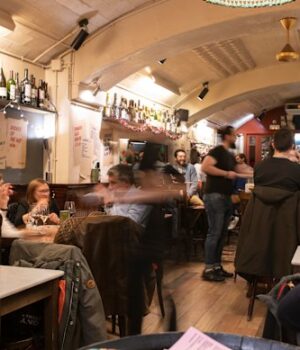
Let’s start on the street, with the always-packed, good-value neighbourhood taverna in El Born, near the Picasso Museum. Founded by Jaume Pla, Jordi Palomino and chef Jordi Peris in 2008, Bar del Pla feels like an old-school tapas joint, with its marble bar, solid wooden tables and tiled floor.
Whatever you eat here, it is from here. L’Escala anchovies, lined up on a plate. Patatas bravas – golden, fried potatoes topped with a creamy, garlicky aioli and spicy brava sauce. Croquetas. Meatballs and tiny cuttlefish. Suckling pig. And above all, pa amb tomaquet, the tomato-daubed bread so beloved of Barcelona. Wines are written up on a blackboard – local, natural and biodynamic, with 20 by the glass – and with five sommeliers on the team, the house wines are always good. The menu changes daily, but the good times go all year. Carrer de Montcada, 2 Barcelona, see bardepla.cat/en
Something similar? La Cova Fumada (the smoky cave), open 9am-3pm, is one of the oldest, most authentic tapas bars in Barcelona, renowned for its “bomba” meatball, grilled sardines, fried artichokes and cuttlefish with peas.
THE SWEET TRADITION
Pasteleria Mauri
To stay in your hotel for breakfast in Barcelona is to fail. Head straight to the local market and have what the locals are having. Or find the closest gem of an old, family-run patisserie nearby, such as Mauri. Founded in 1929 on Rambla de Catalunya in the Eixample and now run by the fourth generation of the Mauri family, it’s lined with gleaming counters of sugared sweetness. Highlights are the soft, spiral-shaped ensaimadas pastries, and the little gondola-shaped bread rolls filled with jamon and manchego cheese. Have both.
With its original modernist fittings, and ceiling murals, it’s a living, breathing piece of history, with the added bonus of cafe seating inside and out. By the second visit, you’ll know how to order at the counter, be given a charge card, find a table, order your drinks, and when done, take your card to the beautifully dressed older woman at the cash register to pay (not very much). Rambla de Catalunya, 102, Barcelona. www.pasteleriasmauri.com
Something similar: Seek out La Pastisseria Escriba on La Rambla, known for its exquisite mosaic façade and fine pastries from fourth generation chef Christian Escriba; and the historic La Colmena in Placa del’ Angel, delighting people since 1849.
MARKET-DRIVEN TAVERNA
Suculent
Rich and pulsing with life, the Rambla del Raval isn’t the most savoury area to hang out in – but it’s worth braving for Antonio Romero’s take on neighbourhood taverna food, built on deeply flavoured sauces and a big, healthy twist on tradition.
“This is where all the chefs come on their night off,” says the local diner on the next table in this homely, wood-lined, cosy restaurant. “It’s deeply Barcelonian.”
Having done time at the avant-garde El Bulli earlier in his career, Romero has deliberately toned down the futuristic creations in favour of maximum flavour. “I just want people to enjoy the flavours and to come back,” he says simply.
Nutty white asparagus sit up like mushrooms in a lush foam tonnato (tuna) sauce with anchovies and caperberries. Beetroot is teamed with smoked eel and beurre blanc; oysters are dressed with seaweed escabeche, and quail is boned, stuffed and rolled into something reminiscent of the classic French cuisine of yesteryear. Don’t expect the traditional tripe in the slow-braised callos a la Madrileno – Romero uses big, floppy cockscombs instead, making it so gelatinous your lips will stick together. Thank heavens for red wine, one of the great strengths of the restaurant. Stay for the cheesecake of your dreams, as light and as fluffy as a mousse. Rambla del Ravel, 45 www.suculent.com
Something similar? The informal and wine-focused Gresca, where chef Rafa Pena sends out contemporary Catalan dishes cooked with heart and attention to detail. See gresca.rest
CONTEMPORARY AMBITION
TRU Barcelona
TRU has the same smart contemporary fit-out, wood-fired kitchen, and wine bar mood you might see in Sydney and Melbourne. But it’s an intensely local, seasonal and personal view of Catalan tapas from chef Artur Martinez of Michelin-starred Aurt – and it’s new enough (since February 2026) to have Barcelona foodies abuzz.
The bread for the pa amb tomaquet is baked in-house and grilled over coals, and charcuterie and cheese are made by the chefs. Dishes are small but good to share, from a bowl of roast chicken rice to a highly seasonal dish of brotons and espigalls – the side shoots of a Catalan cabbage – with green romesco sauce.
“We want to highlight the value of traditional cooking without idealising everything just because it is old,” says Martinez. “Tastes have evolved.”
It’s these sorts of places you feel lucky to find when travelling; that open a door to how the local chefs can keep their food relevant without clinging to the cliches. Carrer de Corsega 232, Barcelona. See www.trubarcelona.com
Something similar? Franca, a 2025 opening from three young chefs who call what they do “traditional invented cuisine”. Try the warm salad of escudella (normally a meaty winter soup). See francabarcelona.com
THREE-STAR TEMPLE
Lasarte
There is no need for Michelin-star fine dining in a city that has good food at far more approachable prices. And yet. If you have the curiosity and the credit rating necessary, Lasarte is a dinner you won’t forget. The pioneering Spanish chef Martin Berasategui’s Barcelona flagship sits inside the elegant Hotel Monument on Passeig de Gracia and is celebrating its 20th anniversary this year.
Walking into this marble and glass temple is like entering a luxurious sanctuary, sheltered from the crowded streets. And then it begins. Wave after wave of highly precise, vibrant snacks land on the immaculately clothed table. Lively discussions ensue with renowned sommelier and maitre d’ Joan Carles Ibanez. And then the pay-off: the playful, precise, painterly dishes from the talented hands of Paolo Casagrande.
It’s a generous experience, the seamless service warmed by character and humour – that’s the Spanish personality coming to the fore – and it will surely deliver at least one dish you will not be able to stop thinking about, like the crustacean raviolo in its own heady essence with burrata and champagne, or the dry-aged pigeon with its parfait, pickles, root vegetables and toasted shiso. For me it was pastry chef Xavi Donnay’s interpretation of rhum baba, the spongy spheres fragrant with orange blossom. From $370 at lunch to $570 at dinner, it’s one for the bucket list. Calle Majorca, 259, Barcelona. See restaurantlasarte.com
Something similar: Disfrutar, opened by three former elBulli chefs and full of intellectually interesting ideas. Carrer de Villarroel, 163, Barcelona. See disfrutarbarcelona.com
The writer was a guest of Suculent and Lasarte restaurants.
… and then there’s the liquid gastonomy
Imagine a small, secret restaurant for just 12 diners that looks like the captain’s bridge of the Starship Enterprise. Now imagine sitting through a two-hour tasting menu of 15 cocktails – and no food.
One cocktail is a snowball you place in your mouth, all frosty honey and pine forest flavours. Another is served in a long hollow finger of porcelain that needs some careful attention to tip into your mouth without a plumbing mishap. Another looks like a fishpond, its surface floating with peppery nasturtium leaves. The dreamlike sequence finishes with an imploding bonbon that fills the mouth with fatty, nutty richness.
Instead of being a recipe for disaster, Esencia is a formula for wonder and amazement at the clean, cut-through botanical flavours, and of creativity and craft at the highest level. At SIPS in Barcelona, Marc Alvarez and Simone Caporale have taken the idea of a cocktail bar and shaken it to its foundations, then rebuilt it for the modern age.
At the front of their award-winning bar is Drinkery House, a darkly minimalist atelier in the Eixample district. It’s dotted with gleaming stainless-steel stations at which bartenders produce drinks that glow crimson, green and orange in the downlights. Esencia is at the back, through a transition that I have sworn not to reveal, and there is nothing quite like it in the world.
Each “diner″ is assigned a bartender who prepares a series of endlessly creative mini cocktails, in what is in effect the world’s first liquid omakase.
“We use the same method as chefs, to reduce the liquids and release the flavour,” says Alvarez, over a clarified cocktail that looks like lime and soda but tastes like Barcelona’s iconic crema catalana flan. “We also work as seasonally and locally as chefs.”
The Jerez mini cocktail, for instance, uses a mix of local sherries with hazelnut praline – nutty, golden, magical. “Sherry is part of our story and our tradition,” he says. “Hazelnut is the main flavour note created by the ‘velo de flor’ film of yeast during fermentation. We just amplify it.”
Alvarez, who ran the drinks program for Albert Adria’s avant-garde Barri Adria group for 10 years, says anyone can learn technique. “What you really need to learn is the sensitivity to the balance of the drink and the atmosphere, and respect for the guest.”
I leave buzzing with excitement, and to my amazement, with a clear head. Then I proceed to walk in entirely the wrong direction to dinner, turning a short journey into a 40-minute one. It was worth it.
$150 a person, reservations required. Carrer de Muntaner 108, Barcelona. See https://sips.barcelona/drinkery-house
The writer was a guest of SIPS Esencia.
– Jill Dupleix
 Terry Durack has been reviewing restaurants and seeking out new food experiences for three decades. Author of six books and former critic for London’s Independent on Sunday and the Sydney Morning Herald, Terry was twice named Glenfiddich Restaurant Critic of The Year in the UK, and World Food Media’s Best Restaurant Critic. Australian-born and a resident of Sydney, he brings a unique perspective on the global food scene to his travel writing.