
Source : THE AGE NEWS
There are two scenarios for oil prices as the conflict in the Middle East drags on. One is relatively benign. The other is ugly.
Sharemarket investors, distracted by the frenzy around artificial intelligence and the queue of mega initial public offerings, are optimistic. They’ve largely ignored the war and the oscillating state of negotiations to end it.
Some oil industry experts, however, aren’t as sanguine, with key figures predicting that it could be well into next year before oil flows normalise – even if there were an imminent peace deal and the Strait of Hormuz opened within weeks. In the meantime, they say, oil prices could hit $US150 a barrel, if not more.
The longer the war drags on, the more likely it is that the more pessimistic views will prevail.
Last week, the heads of the International Energy Agency, the International Monetary Fund, the World Bank and the World Trade Organisation said global oil inventories were being drawn down at a record pace, presenting a significant threat to the global economy.
If shipping flows didn’t return to normal, depletion of global oil inventories ahead of the peak summer demand in the northern hemisphere would present increasing risks for fuel security, market conditions and economic resilience, they said.
Sultan Al Jaber, the chief executive of the United Arab Emirates’ state oil company, ADNOC, said last week that oil flows through the Strait of Hormuz wouldn’t return to normal before the first or second quarter of next year even if the conflict ended now. It would take at least four months to get back to 80 per cent of pre-war flows, he said.
Another ADNOC executive, its vice president for sales and trading Philippe Khoury, said it could take a year for global oil supply chains to recover after flows normalised.
To date, the global oil market has lost something close to 1.2 billion barrels of oil because of the near-total closure of a strait through which about 20 million barrels a day of oil and oil products (about 15 million barrels a day of it oil) used to flow.
That’s been partly offset by increased flows through pipelines in Saudi Arabia and the UAE that bypass the gulf, increased production from the US, Russia and elsewhere, the release of about 400 million barrels of oil from national strategic stockpiles and the drawdown of the record level of oil that was at sea before the US Israeli attacks – a function of a pre-war surplus of supply over demand as well as circumvention of the sanctions on Russian and Iranian oil.
With only a trickle of oil making its way through the strait, limited spare capacity (perhaps 5 to 6 million barrels a day) in the pipelines, and the stocks released from the strategic reserves and floating storage likely to be exhausted within weeks, the more pessimistic outlook is that, without a peace deal, prices will soar.
Exxon’s senior vice president has said that, with global inventories approaching “unheard of” lows, and Iran still blocking about 12 to 13 million barrels a day of oil and oil products, the Brent Crude price could jump to $US150 to $US160 a barrel within weeks.
The case for optimism rests on an imminent end to the conflict, the immediate resumption of transits through the strait and a rapid normalisation of their volumes.
OPEC is likely to boost production to try to recover some of its lost income. There has been significant demand destruction (some of which may, or may not be, permanent) as businesses and consumers have reacted to the higher oil, gasoline and diesel prices.
Oil prices – currently around $US96 a barrel, could crash quickly back to their pre-war sub-$US70 a barrel level and possibly below $US60 a barrel because of the reduced demand. That’s the best-case scenario.
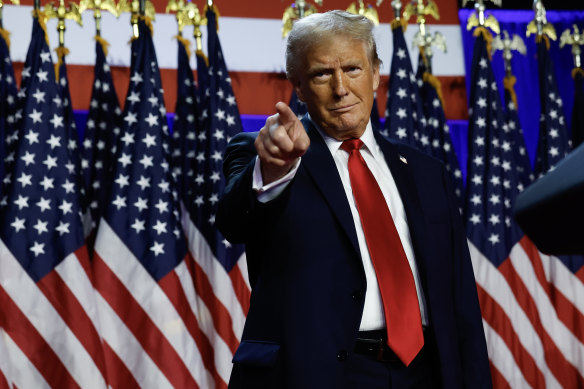
It also seems to be the scenario embraced by sharemarket investors, where the responses to Donald Trump’s regular but erratic updates on the progress of negotiations to end the war – one moment he’s posting on social media that it’s virtually a done deal and the next he is threatening Armageddon because of the lack of progress – have been quite muted.
The pessimistic scenario – a massive and prolonged surge in oil prices that would flow through to gasoline and diesel, along with more price spikes and even more severe supply shortages for fertilisers and other oil by-products – would lead to a global recession, potentially a deeply debilitating one if the existing oil supply and price shock morphs into an even bigger one.
While it is conceivable that the market reaction to a credible peace deal would see oil prices plummeting, equity investors and oil futures traders may be underestimating how long it will take to return the market to pre-war normalcy.
Clearing the strait of the tankers trapped within it would take weeks, there is damaged oil industry infrastructure in the region that will have to be repaired and those depleted strategic reserves will need to be replenished.
It’s also likely that flows through a re-opened strait will be lower than they were before the conflict, with shipowners and their insurers wary, and the costs of transit higher, now that Iran has demonstrated its ability to close the strait at will.
In other words, the best case if the conflict were to end within days would probably lie somewhere between where the optimists and pessimists sit. The immediate reaction might be a dramatic drop in oil prices, but the practical obstacles to normalising the market would likely make that relief fleeting.
The likelihood of significant global economic damage has increased with the apparent collapse of the negotiations to end the conflict over the weekend, and with Trump’s attention switching to other matters, like his, and America’s, birthday celebrations (the two seem to have been conflated by him) and the looming UFC fight on the White House lawn.
The longer the war drags on, the more likely it is that the more pessimistic views will prevail.
Having completely miscalculated how the attack on Iran would unfold – he thought it would be over within days, with the regime capitulating to his every demand – Trump has also completely misjudged how easy it would be to negotiate an end to the conflict and the re-opening of a strait that had never been closed before the US decided to attack Iran.
On Monday, he said he thought the negotiations had “started to get very boring”, and he didn’t care whether they had ended without a deal.
“I really don’t care. I couldn’t care less,” Trump told CNBC. That’s in tune with his recent statement that he didn’t care “even a little bit” about the impact of the war on everyday American households’ finances.
He may not care, but if the worst-case scenarios were to play out – and what’s already been the biggest oil shock in history continues and deepens, with oil prices soaring and the impact flowing through to gasoline prices and further into the cost of everyday goods – there’ll be plenty of people in America and the rest of the world who will care a lot.
The Business Briefing newsletter delivers major stories, exclusive coverage and expert opinion. Sign up to get it every weekday morning.
 Stephen Bartholomeusz is one of Australia’s most respected business journalists. He was most recently co-founder and associate editor of the Business Spectator website and an associate editor and senior columnist at The Australian.Connect via email.