Source : THE AGE NEWS
Matthew Lynn
The oil price is rising. The war in the Gulf shows little sign of ending any time soon. France is leading the eurozone into a fresh crisis, and the AI bubble may burst at any moment.
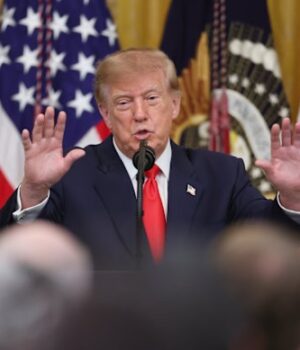
There is no shortage of reasons to worry about the global economy. And yet there is at least one piece of good news on the horizon: Donald Trump is likely about to become the lamest of lame duck presidents.
Usually, a powerless president of the United States would be a problem. But given the scale of the havoc he has wreaked over the last two years, a period of paralysis in Washington will be exactly what the markets need.
In the midterm elections on November 3, the Republicans look poised to suffer a defeat of epic proportions. On the prediction markets, which have shown an uncanny ability to call elections, there is already a more than 80 per cent chance that they will lose control of the House, and a 69 per cent chance that they will lose control of the Senate as well. The Democrats only need to gain four seats in the Senate to take control. That is hardly a very demanding target.
By the middle of November, Trump is highly likely to have lost control of the legislature. His approval ratings are in free-fall, hitting a record low of just 32 per cent this month. Voters are angry at his handling of both the economy and global affairs. He may well be impeached as soon as his political opponents take control of Congress, and regardless of whether that is successful or not, he will be tied up fighting off legal challenges.
Every president is essentially a lame duck as they approach the final stretch of their second term. Political capital evaporates, and campaigning for the succession breaks into the open. Yet even by those standards, Trump will be lamer than most.
In normal circumstances, that might be a problem. After all, the president of the United States is the most important figure in the global economy. In a crisis, the world looks to the White House for leadership. But this is Trump we are talking about.
In fairness, his second term does not deserve all of the hysteria that has surrounded it. He has helped the United States take global leadership in AI, ignoring the calls to slow the industry down with regulations. Wall Street is hitting record highs. The tariffs have not crashed global trade, despite some of the dire predictions, and will raise some extra revenue, at least if the courts don’t demand it all gets paid back. The US has done well, at least compared to Europe. The record is not all bad.
Even so, it has been a chaotic ride. The tariffs were imposed, many of them seemingly at random, and with little thought for their consequences, or for whether there was any legal basis for them. They have been ditched, reimposed and then changed again, often at bewildering speed, with little attention paid to the need for companies to reconfigure their supply chains.
Alliances with Europe have been torn up on a whim, and pointless threats have been made against Greenland. It is hard to work out whether the president is supporting Ukraine or wants to cut a deal with Vladimir Putin. Major backers have been allowed to strike deals regardless of whether they meet normal competition rules, and the president has started hustling stakes in major companies such as Intel, even when partial government ownership is an obvious conflict of interest.
Meanwhile, the Trump clan seem more interested in making lots of money for themselves than in making any policies that will stick beyond a few weeks. It has been a mess. Wall Street even came up with an acronym for it: Taco, for Trump always chickens out. It would be far better if the threats were not made in the first place.
The blunt reality is that a paralysed White House will be a big improvement. The tariffs may well gradually fade away as the legal basis for them is overturned by the courts and the president lacks the authority to reimpose them. The world’s biggest economy can get back to the basic principles of free and open trade. The labour market will start to get back to normal as the zero-tolerance clampdown on immigration stalls. The perpetual threat of trade wars will be lifted, allowing companies to get back to long-term planning again. Heck, there might even be peace with Canada, still one of America’s most important trade partners.
Sure, political paralysis is not great. But it is a lot better than total chaos.
In a crisis, the world looks to the White House for leadership. But this is Trump we are talking about.
In the background, the American economy will keep on running. Kevin Warsh, even though he was a Trump appointee, has proved a good choice as chairman of the Federal Reserve, and has been willing to raise interest rates, even against the wishes of the man who appointed him. Scott Bessent, the treasury secretary, has proved himself a smart operator, doing his best to keep bond yields under control, even as his boss spends like crazy.
They can keep the machine running. The US may be effectively leaderless for the next two years. Ironically, that will be an improvement. And it will give the global economy some space to heal – at least until a new president emerges.