source : the age
When drawn up last decade, plans to convert a 130‑year‑old heavy rail line in Sydney’s south-west into one for 21st-century driverless trains were grander. The renovations to stations would be bolder, and curved platforms and other parts of the track straightened.
By 2018, reality set in when it became apparent how challenging – and expensive – the idea of converting the rail line was. It was decided most of the existing 13 kilometres of track would be kept intact and work scaled back at stations including Marrickville, Dulwich Hill and Campsie.
The about-turn was partly aimed at limiting disruption from construction for up to 60,000 commuters who had used the T3 heavy rail line each day. That failed as a planned three- to six-month closure of the old railway turned into a year, and later about 18 months before becoming more than two years.
Another key reason was cost. Despite scaling back the design, retrofitting the heavy rail line for driverless trains has still been a major contributor to the hefty price tag for the metro sections between Chatswood and Bankstown, which cost nearly $23 billion combined. That is double the forecast of about $11.5 billion when plans were unveiled last decade. The bill for putting on pink-coloured replacement buses to ferry commuters along the corridor during the two-year rail shutdown alone is about $200 million.
With the final stretch opening on Friday, the engineering challenges, cost blowouts and long delays to opening the line make the chance of repeating the plan to convert other sections of the Sydney Trains rail network to metro standards more unlikely than before. As the Southwest Metro has illustrated, so-called brownfield projects can be harder than building an entirely new rail line from scratch over paddocks or beneath a city.
For residents whose commutes have been a frustrating experience for the past two years, the question now is whether the pain will be worth it.
At Campsie, café worker Aayusha Thakuri says the metro line’s opening could not come soon enough. For the past two years, the need to catch replacement buses has made a one-way trip into the CBD almost 90 minutes long on occasions. “It was really hard for us,” she says. “I just wasted my three hours travelling [for a return trip to the central city].”
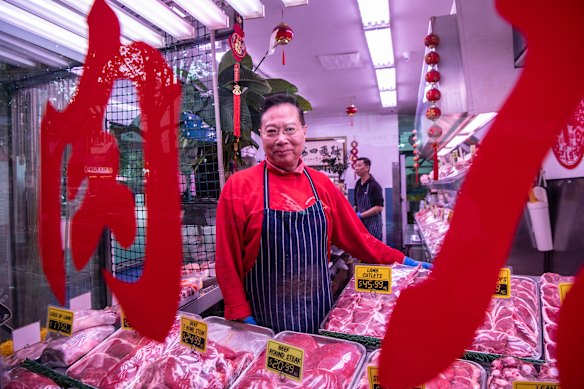
On Campsie’s main shopping strip, butchery owner Wren Zhang believes the metro line will deliver a “very good future” for the suburb he has called home for the past 35 years. While some residents oppose high-rise apartment buildings near the station, Zhang believes the projects will be good for business. “We need more people coming,” he says. “You can already see many people feel very interested in this area.”
Martin Locke, an adjunct professor at Sydney University’s Institute of Transport and Logistics Studies, is adamant the final stretch of the M1 metro line will prove popular among commuters.
“The key challenge now will be how do we realise value from upgraded transport links in the south-west corridor?” the former investment banker and infrastructure adviser says. “You need more than just residential development. This must link in with the broader strategic plan in terms of creating local jobs and clusters of economic activity.
“If you don’t realise the broader benefits, you miss out on a once-in-a-generation opportunity to lift the whole south-west area. It is not simply cutting the ribbon on it – you have to think about revitalising the long-term use of the land.”
Apart from relieving train crowding on the heavy rail network, a boost to economic activity along the corridor was cited as a justification for the project. A business case summary released a decade ago forecast the flow-on benefits of the metro line will add an extra 2442 jobs along the south-west corridor by 2036, which compares with an expected 17,435 additional jobs along the M1 line’s northwest section. Productivity gains are predicted to boost the annual income of workers in the south-west by $142 a person by 2036.
Unlike the south-west, Sydney’s north-west did not have an existing rail corridor before the new metro train line between Tallawong and Epping – along with a converted section eastwards to Chatswood – opened in 2019.
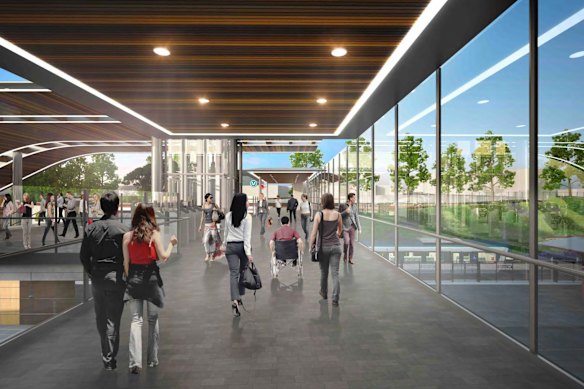
Eamon Waterford, chief executive of urban policy think tank and lobby group Committee for Sydney, predicts a significantly higher number of jobs will be created than forecast in the business case. “Economists love to think that they can properly map how jobs will move around,” he says. “The reality is it’s hard to predict what the future of Bankstown will be when all of a sudden it has a million people within 30 minutes by metro on its doorstep. That will induce new employment centres and new jobs types.”
Waterford says the primary purpose of the metro line running through part of the south-west is to connect it to the nation’s most “important economic arc” stretching through the central city to the north-west. In describing the south-west as one of Sydney’s multicultural heartlands, he forecasts an “explosion in profitable” cultural businesses there due to easier access for people in other parts of Sydney to get to live shows and other events.
What is assured is that suburbs along the metro line corridor will become more densely populated. The NSW government’s long-term blueprint to manage future growth in Sydney lists the area between Bankstown and the CBD as a high-housing growth corridor, anchored by major employment centres. “With a strong public transport network through the T8 train line and Metro Southwest, the corridor has significant potential for higher density housing,” states the Sydney Plan, which was released in August.
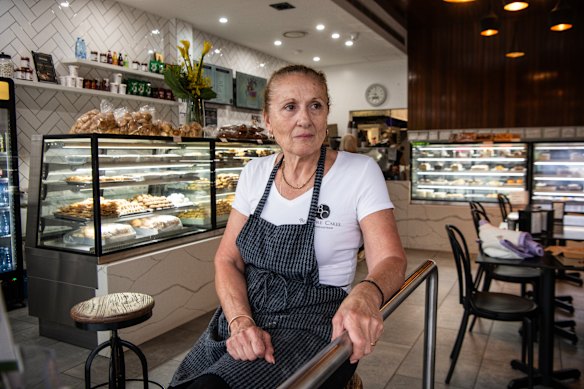
That prospect is opposed by long-time residents such as Anastasia Varsamas, who has owned Belmore Cakes for the last 25 years. She is fighting high-rise developments, partly because of concerns about a lack of car parking. “We’re a small community. I’d like for it to stay this way,” she says.
Her business has had a drop of at least 20 per cent in trade due to dwindling foot traffic during the two-year closure of the rail corridor. With the metro line finally set to open, she hopes it will entice more people into Belmore and her cake shop. “I’m really hoping it’ll improve business,” she says.
While south-west residents now look forward to fast, high-frequency metro trains, the difficulties that had to be overcome to reach this point cannot be overlooked, nor how easily the outcome could have been different.
Under planning early last decade, then Sydney Metro chief Rodd Staples and his team weighed up converting either the Inner West, East Hills or the Bankstown lines to handle driverless metro trains because they all fed into the City Circle line under the CBD.
In 2012, they decided the Bankstown line was the best choice because it offered more benefits to commuters and was not adjacent to other lines. The convergence of the Bankstown, East Hills and Inner West lines into one made the southern part of Sydney’s heavy rail line the most congested. By turning the Bankstown line into a separate metro line, the intention was to make the rail network more resilient while adding more passenger capacity.
In the years after their early work, the troubled project to convert the line was almost derailed on several occasions.
Under leader Luke Foley, Labor policy ahead of the 2019 election was to scrap the conversion. A year later, a parliamentary inquiry into the Southwest Metro project recommended in 2020 that the government ditch the Bankstown line’s conversion, arguing it was not value for money and the estimated benefits failed to outweigh the disruption to local communities.
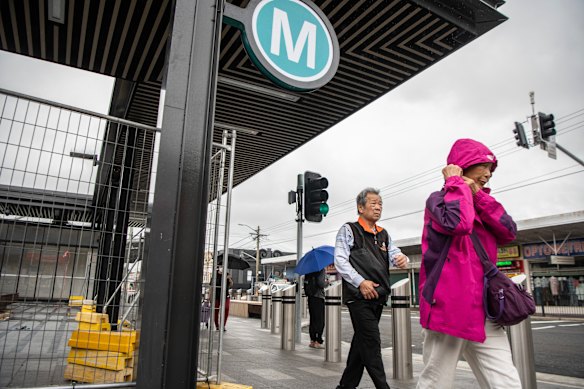
Even after reducing the scale of the work late last decade, there was serious debate within senior echelons of the Perrottet government about whether to ditch the project in late 2022, months before the following year’s state election, which it lost.
After winning the 2023 poll, the Minns Labor government commissioned a wide-ranging review of Sydney’s metro projects before later committing to converting the line and injecting an extra $1.1 billion to finish the job.
That wasn’t enough. Last year it was forced to tip in more, pushing the cost of what was formerly known as the Metro City and Southwest project to almost $23 billion, from a prior forecast of $21.6 billion. The government has not previously broken down the cost of the two sections, but this week Premier Chris Minns disclosed that the Southwest Metro cost $10 billion.
It is not the first conversion of heavy rail for driverless metro trains. The Epping-to-Chatswood heavy rail link was closed in 2018 to be converted to carry automated trains less than a decade after it was opened.
The difference with the south-west project is that contractors converting the relatively new Epping-to-Chatswood link were working with known assets, which meant they could be confident the plans they pulled from archives accurately showed what had been built.
“Whereas here on the south-west, this is a 130-year-old railway,” Sydney Metro customer and operations head Hugh Lawson says. “You’re digging into a platform that’s had 100 years of who knows what going on. As soon as we dug it up, a bit like other infrastructure projects, you encounter cables and pipes and things you didn’t expect.”
Moreover, contractors had to deal with curved platforms after the initial idea of straightening them was dropped.
Lawson says the idea of straightening platforms failed the “first test of practicality” because it would have required some stations to be shifted.
“In some locations … you would have had to move the entire station, the heart of the community, further down the track to somewhere where it was actually possible to straighten the track,” he explains.
“If you think about some of the curves we’ve got, and we’re hemmed in by cuttings and bridges and people’s houses, you can’t just straighten the track. It affects hundreds of metres, if not kilometres, of the line.”
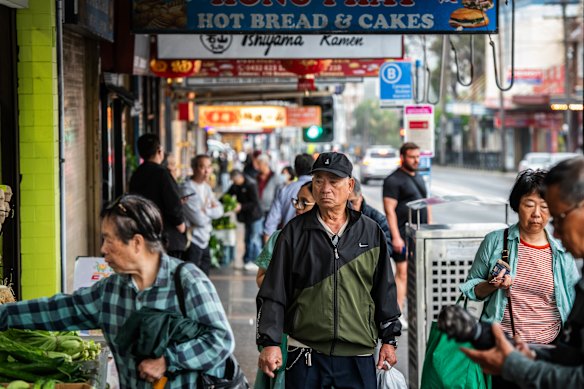
Lawson, who worked on the London Overground suburban rail network before joining Sydney Metro, expects locals to use the south-west line to make short journeys between suburbs along the corridor to visit doctors, family and shops, as much as to travel into the CBD. “Campsie is a great example of that. This station will be busy all day every day,” he says.
The opening represents well over a decade of work planning and building the M1 line’s city and south-west sections. “In a weird way, that 10 years of work is just getting to the start line of what it actually means and the changes it will deliver,” Lawson says. “The end of the project, if you like, is the start of the real living with the metro and the changes it will deliver. And those will happen over years and in some cases decades.”
Start the day with a summary of the day’s most important and interesting stories, analysis and insights. Sign up for our Morning Edition newsletter.