

Source :- THE AGE NEWS
Seattle: Tony Popovic is a famously meticulous guy. On his watch, the Socceroos have done everything they possibly could to prepare for this World Cup.
No detail, however small, has been overlooked – they spent weeks training in Florida to get used to the summer heat, they played a warm-up match against Mexico to understand how it feels to play a tournament co-host, and they played another friendly at midday, like this match was, just so they knew precisely how to structure their morning.
But you can run all the dress rehearsals you want. How much can they actually prepare you for the visceral truth of the real thing; the moment you’ve been building to for months and have been thinking about for every waking moment?
It’s one thing to do the preparation, but it’s another to be ready. For this, the Socceroos just weren’t. Under the midday sun in Seattle, against a team that was, they melted.
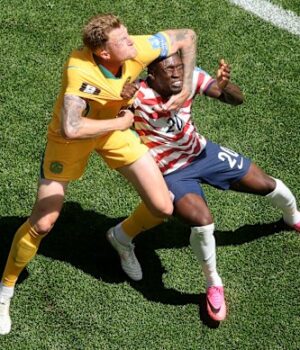
After one of the great Australian World Cup victories, this was a brutal comedown. The Americans were too strong, too quick, too committed, too clever, too much, too everything.
The Socceroos, meanwhile, were not enough anything – at least not in the bitterly disappointing first half that lost them the game.
As a soccer nation, we envy the United States, or at least we should. We face so many of the same challenges – a domestic league competing for attention against bigger sports, a national team trying to earn more respect from the rest of the world – but they are further along in identifying and implementing solutions. We would love to host a World Cup like them, to be able to turbocharge the growth of the game, like this tournament will surely do.
Our capacity to match their rate of improvement is limited by resources, and one of those resources is time. Their best players are where we would like our best to be in four years from. If nothing else, this was an experience that will lead to growth – or at least we can only hope it was, because otherwise, what was there to take from this?
Mauricio Pochettino’s tactical plan for the USA was clear: drag the wingbacks out of position, isolate one of their pacy forwards against Australia’s centre-backs, get in behind and profit from the chaos thereafter.
The absence of star winger Christian Pulisic through injury meant Pochettino had to find another player to embody that threat. Enter Folarin Balogun, the trigger man. He is nominally a No.9, but he also is pacy. And with Ricardo Pepi, another striker, nominated as Pulisic’s surprise replacement, the Americans played with two up top with licence to roam and stretch.
It worked once, and that was enough. The USA’s creative interplay took Jacob Italiano out of the picture in the 11th minute, and then Balogun was clear of Alessandro Circati. Once the ball was cut back into the six-yard box, there was only going to be one outcome: a goal.
That it came off Cameron Burgess’ boot is immaterial, because if he didn’t get to it, Pepi would have had an easy tap-in.
America’s second goal had a touch of fortune about it, but not the free kick it came from: Burgess and Paul Okon jnr were outwitted and then outmuscled on the flank, encapsulating the broader problem.
Still, the Socceroos didn’t give up a whole load of clear-cut chances, but the way it felt, with the momentum their opponents had, they would have come eventually.
Last week, Popovic’s praises were rightly sung by all because his controversial selections had helped win the game. This time, by benching both of Australia’s goalscorers against Turkey, he got it wrong.
He no doubt had his reasons – but neither Nishan Velupillay or this 35-year-old version of Mathew Leckie can provide the sort of threat as Nestory Irankunda.
They cannot match him for speed, explosiveness, or audacity – and nor can they match him psychologically, in the sense that if Irankunda is on the pitch, the opponent will always have something to worry about.
But if he’s on the bench, and they’re playing like that? Hakuna matata.
That realisation probably dawned on the coaching staff earlier than half-time, when the obvious move was made to send on Irankunda for Velupillay, whose ability to contribute in attack was hampered by the team’s overall inability to compete.
Leckie, meanwhile, lasted only 15 more minutes until he succumbed to injury, further highlighting his selection as an unfortunate misjudgment.
Immediately, Irankunda looked dangerous. Shock, horror.
Playing up top, his presence changed the atmosphere, and everyone in gold jerseys suddenly looked more confident.
The introduction of Cristian Volpato, whose brilliant first touch released Irankunda on the counter-attack, added potency that was previously missing. His quick feet and creativity showed precisely why the Socceroos worked so hard to coax him away from Italy.
The problem was: the USA had the game in the bag, and could sit back and manage the danger, which they did, scrambling in defence to keep the Socceroos at bay.
What could Irankunda and Volpato have done for Australia at the start? We’ll never know the answer. Lesson learned, hopefully, for Paraguay next week.
Get across our World Cup coverage
As it happened: Socceroos lose 2-0 to USA despite late fightback in Seattle
On the ground: Seattle’s only Aussie pub in World Cup mode
Opinion: How the World Cup exceeded expectations in its first week
News, results and expert analysis from the weekend of sport sent every Monday. Sign up for our Sport newsletter.