Source : INDIA TODAY NEWS
US forces have struck multiple Iranian oil tankers linked to the Islamic Revolutionary Guard Corps (IRGC) following further attempted missile attacks on a US Navy warship, news agency Reuters reported, citing a US official. Iranian media reported multiple strikes, with Tasnim news agency saying a US missile hit an Iranian tanker about 4 miles (6 km) from the oil hub of Kharg Island, while state broadcaster reported that a second tanker was attacked near Jask in the Gulf of Oman.
advertisement
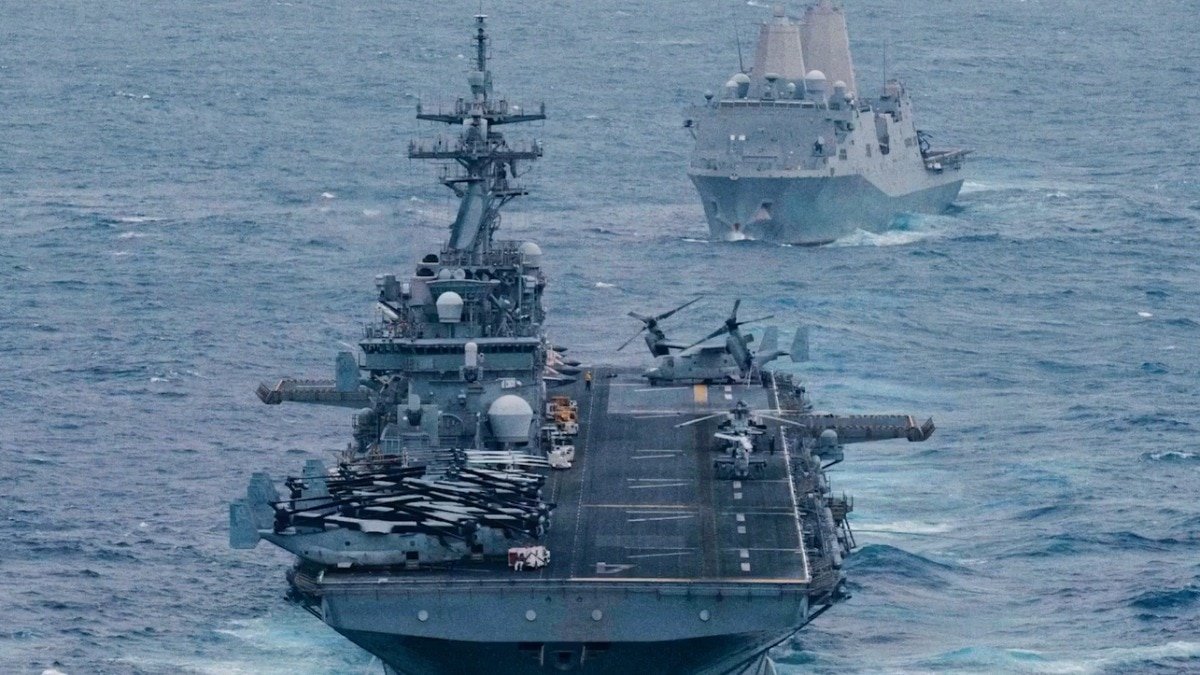
The latest escalation follows a second wave of Iranian ballistic missile attacks against US Navy ships on Monday, US officials told The Wall Street Journal. The American military has not publicly acknowledged the attack. No US vessels were hit in either the Monday strikes or the earlier weekend attack, which targeted a US aircraft carrier and a guided-missile destroyer. US officials said the repeated attacks have raised concerns over Iran‘s increasingly sophisticated missile capabilities and possible technical assistance from China or Russia.
IRAN WARNS OIL VESSELS IN KUWAIT, BAHRAIN
In response, Iran’s Revolutionary Guards said early Wednesday that oil vessels in Kuwaiti and Bahraini ports hosting American forces will be targeted in retaliation. The Guards Navy warned crews aboard the vessels to evacuate, according to a statement carried by Iranian state media, sharply raising the stakes around key Gulf shipping routes.
The US has also imposed sanctions on 36 Iranian entities, including 27 airlines, in an effort to further isolate Iran’s aviation sector.
This follows a sharp exchange of retaliatory strikes on Saturday. The US military said it “permanently disabled” two Iran-linked oil tankers—one near Kharg Island, Iran’s main oil export terminal and “completely destroyed” a third in the Gulf of Oman. US Central Command (Centcom) said the tankers belonged to a multi-billion-dollar shadow network that funds Iran’s Islamic Revolutionary Guard Corps (IRGC) and its proxies.
Centcom reported that the action came after Iranian forces launched multiple unprovoked ballistic-missile attacks on a US aircraft carrier and a guided-missile destroyer earlier that day; both warships successfully evaded the strikes and no American personnel were harmed.
Iranian state media confirmed the US tanker strikes and claimed the IRGC had retaliated by attacking three US-affiliated vessels as well as three oil tankers traveling an “unauthorised” route through the Strait of Hormuz.
The latest round of exchanges is the most intense since fighting resumed a week earlier, ending roughly a month of relative calm. A 60-day ceasefire formally expired last month with no broader diplomatic settlement in sight. The conflict, which began with wide-ranging US and Israeli strikes on Iran on February 28, has seen the Strait of Hormuz effectively closed to regular traffic, driving up global energy prices.
US President Donald Trump has described the ongoing fighting as “small potatoes” and “intermittent,” insisting it is a “military conflict” rather than a full-scale war. Defense Secretary Pete Hegseth wrote on social media Saturday: “It’s simple: if Iran shoots at US ships, we will destroy (and sink) their oil tankers.” Trump has not yet commented on the weekend tanker strikes or the subsequent Monday attacks.
WAR EXPANDS IN THE MIDDLE EAST
The conflict in the Middle East is spreading further into the Gulf, with Yemen’s Iran-backed Houthis launching attacks on four cities in southern Saudi Arabia on Tuesday. The strikes wounded more than 70 people and sparked fires at oil-related facilities, marking a significant escalation in attacks on the US ally.
The Houthis, who control much of Yemen’s populated territory, including the capital Sanaa, said they carried out a large-scale operation inside Saudi Arabia. Their forces used drones and missiles to target a Saudi airbase in Khamis Mushait and facilities linked to state oil giant Saudi Aramco in Abha, Najran and Jazan.
Satellite imagery from NASA showed heavy black smoke above the Jazan refinery, while another plume was seen rising from an oil distribution facility in Abha.
Saudi authorities confirmed fires at the targeted locations and said 73 people were injured, including women and children. The scale of the casualties suggested the strikes were among the most serious attacks on Saudi Arabia since the wider US-Israeli war against Iran began in February.
The escalation happened after fighting resumed in the Gulf following a month-long lull in August. Iran and the US have exchanged fire, pushing global oil prices back towards the $100-a-barrel mark reached at the height of the conflict.
– Ends
With inputs from agencies
SOURCE :- TIMES OF INDIA