Source : Perth Now news
Donald Trump has announced an unprecedented US push to take control of one-fifth of Venezuela’s vast oil reserves, betting American companies can revive the OPEC nation’s battered energy industry while delivering a new source of crude to help bring down American fuel prices.
The US president on Friday provided few details about the agreement, saying only that the United States had secured majority control of more than 65 billion barrels of Venezuela’s proven oil reserves through a partnership with private business.
“At my direction, Secretary of State Marco Rubio, and Secretary of War Pete Hegseth, working closely with Highly Respected Interim President of Venezuela, Delcy Rodriguez, and, through a partnership with private business, have secured majority US control of more than 65 BILLION BARRELS of proven Oil Reserves in Venezuela, at no cost to the American Taxpayer,” Trump wrote on Truth Social.
The announcement followed weeks of US-Venezuelan negotiations over a deal that would give American companies long-term access to a group of Venezuelan oilfields and guarantee the resulting crude supply to the US.
Venezuelan officials are preparing to sign agreements next week granting new oil exploration and production rights to a number of companies, particularly US firms.
Sources previously told Reuters a lease model was under consideration, with fields potentially auctioned to US producers, but the arrangement could face legal and constitutional challenges in Venezuela, where the state retains control over core oil industry activities.
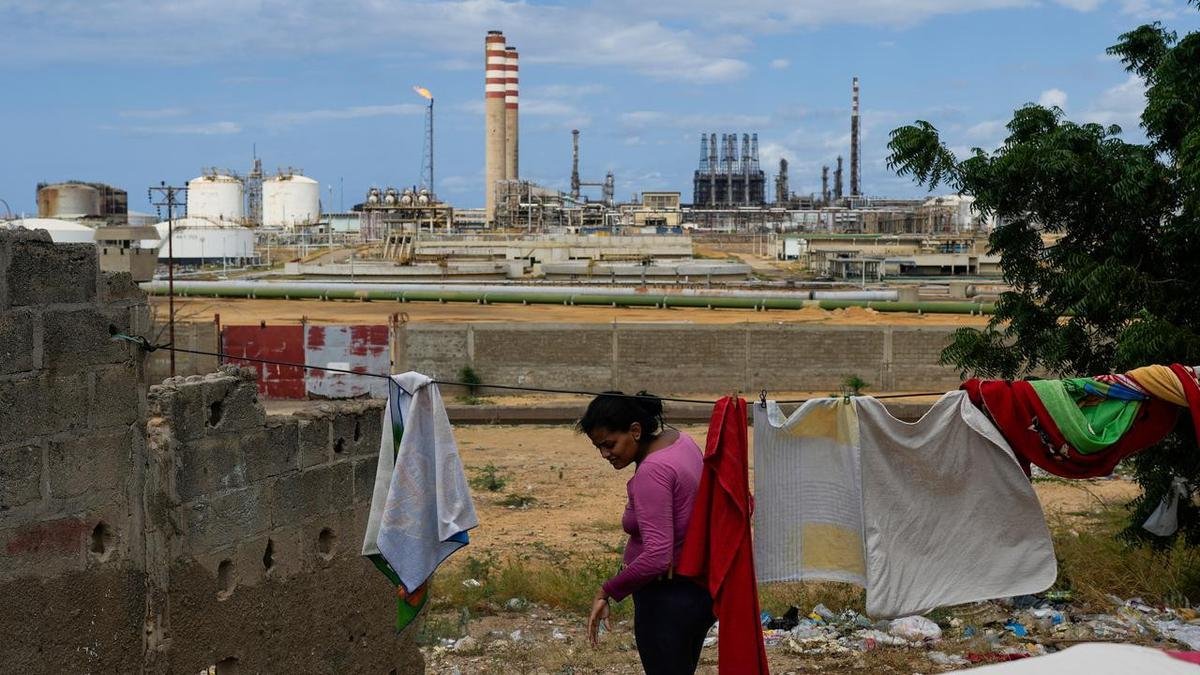
The new deal would represent a dramatic expansion of the US role in Venezuela’s oil industry as the Trump administration seeks to revive the country’s production and secure more crude for US refineries. Venezuela holds the world’s largest proven oil reserves but produces only about 1.25 million barrels per day, far below its potential after years of underinvestment, mismanagement and sanctions.
Trump did not disclose the structure of the agreement, the fields or companies involved nor how the United States would exercise majority control over the reserves.
Secretary of State Marco Rubio described the agreement as a win for both countries, saying on X it would secure stable, low-cost oil for the United States and help lower gasoline prices.
For Venezuela, Rubio said the deal would bring nearly $US100 billion ($A140 billion) in private investment, support thousands of high-paying jobs and help rebuild the country’s economy.
Analysts said they needed to see more details on the agreement’s legal and financial structure before assessing whether it could attract significant investment.
Prospects were unclear for the deal to lower gasoline prices in the short term, as developing the infrastructure needed to produce, transport and refine Venezuela’s heavy crude could take years.
Since the US captured and removed former President Nicolas Maduro from power in January, Washington has been trying to secure a stable flow of Venezuelan crude for US refineries while promoting American investment in the country’s oil industry.
The Trump administration is under pressure ahead of midterm elections in November to mollify consumer concerns over rising gasoline prices. Cheaper oil supplies and expanded output could help.
Under Maduro, years of underinvestment, mismanagement, political turmoil and US sanctions drove Venezuela’s oil production sharply lower.