
Source : the age
I love a crisp sausage as much as any Australian, but last week’s announcement of the closure of 32 Lincraft stores hit home harder than the collapse of Barbeques Galore.
Growing up in the beige brick suburbs of Melbourne in the ’70s, our barbeque was a cast-iron sheet on bricks assembled by Dad, but Lincraft was a magical gateway to glamour and style.
There is plenty about the ’70s that doesn’t warrant nostalgic reverence, such as the lack of women’s rights, racism, heroin, homophobia and the music of the Bay City Rollers, but the escapism offered by Lincraft was unrivalled outside the CBD.
For people who only entered the doors of luxury stores such as David Jones, Georges and Buckley & Nunn for emergency bathroom breaks, Lincraft was a safe and affordable starting point in changing the way they – or their home – looked.
Long before farm-to-table restaurants made the food chain fashionable, aisles filled with rolls of fabric, spools of cotton and tubes of buttons did the same for clothing.
Dreams of frothy wedding dresses, tailored summer shorts, virginal debutante gowns, quaint kitchen curtains and statement fringe-trimmed cushions were nurtured on glossy linoleum floors before facing the obstacles of Singer sewing machines at home.
My mum was a practical sewer, better with a curtain hem than a pie-crust collar, compared to our neighbour Mrs O’Toole who could rustle up a wedding dress that would rival many of today’s bridal brands.
While Mum perused rolls of op-art fabric for bedroom curtains, I would lose myself in the glamour of pattern books from Vogue, Simplicity or McCall’s. Decades before I travelled to Paris Fashion Week, this was my first front row – although I needed to stand on a stool to flick through the pages.
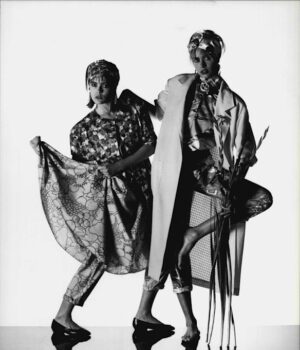
The covers of these patterns gave the misleading impression that it was natural for groups of men to hang out in zip-up jumpsuits and hooded kaftans, but it was a welcome change from the Bonds singlets, football jumpers and perilously short shorts seen outside the neighbouring hotel.
In the ’80s and ‘90s, as clothing and household items became more affordable and accessible, homemade items acquired a reputation for dagginess. Originality and quality were sacrificed to fit in with the cool kids wearing Sportsgirl sweaters, Portmans jackets or Esprit pants. Homemade tracksuits didn’t have Adidas’ triple stripes and a handstitched terry towelling top couldn’t compete with a Hypercolor T-shirt.
Lincraft was unable to keep up. Our local store closed, and I was too old to be turning the pages of pattern books without arousing suspicious stares, although I no longer needed a stool.
With the arrival of fast fashion brands, more nails arrived for the inevitable coffin of home sewing stores. The motivation for many people to sew clothing was to save money. How could the effort of making a garment or homewares compete with the dopamine rush of a $9 dress from White Fox or $14 curtains from Anko?
This year the founders of White Fox, Daniel and Georgia Contos, made the AFR Rich List with an estimated wealth of $1.3 billion. Established in 2019 as Kmart’s own brand, Anko now sells more than 1 billion items, including clothing and homewares, in Australia each year.
We have gone from homemade to ready-to-wear to ready-to-wear-and-tear.
After the enforced slowdown of COVID-19 lockdowns, fashion industry figures talked about slowing down, but today it’s moving at lightning speed, leaving Lincraft stores in the dust.
There are still outposts of crafty creativity. I recently had to track down a needle and thread to repair a cashmere jumper that I’ve been wearing since before White Fox was founded in 2013. Inside All Buttons Great & Small in the Sydney suburb of Newtown I joined a long queue to make my purchase from a sales assistant whose knowledge of the required thread, needle and stitch rivalled Mrs O’Toole’s.
The tiny shop bustled with creativity, enthusiasm and customers more interested in their individual projects than looking like a Shein shopper. It’s this sense of community that will be hurt as Lincraft becomes an online-only operation.
The only thing missing from the Newtown store was the pattern books, but fortunately times have changed for the better in some ways – as I left I saw two men hanging out in a nearby craft brewery wearing jumpsuits.
Make the most of your health, relationships, fitness and nutrition with our Live Well newsletter. Get it in your inbox every Monday.