Source :- PERTH NOW NEWS
Perth resident Cassie Fletcher had never picked up a real golf club a year ago, but she is now part of the reason WA is leading the way for women’s participation in a male-dominated game.
Traditional barriers to golf have been deteriorating over recent years as women’s participation increased by 1.3 million players across Australia since 2022.
WA is at the forefront of this surge, with female club membership sitting at 20 per cent, compared with the national average of 17 per cent. In non-traditional off-course golf venues such as driving ranges and simulators, women now make up about half of players.
Cottesloe Golf Club has one of the most significant female membership rates at 31 per cent. Social Get Into Golf classes, weekend competitions and a junior girls scholarship program have all contributed, and 41 new female members have joined in the past 12 months alone.
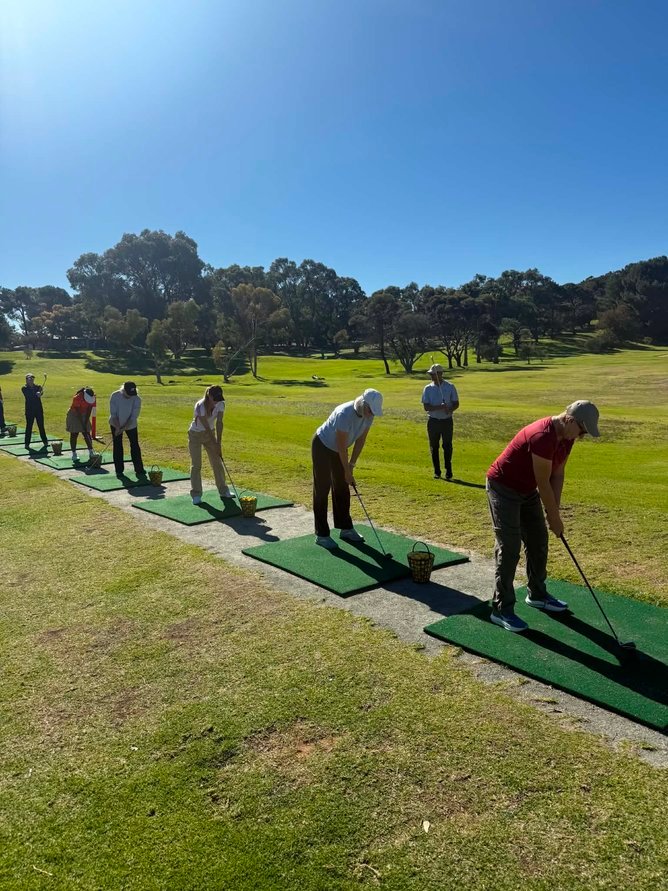
Mosman Park Golf Club also launched its first six-week women’s program earlier this year, receiving a 56-person turnout. This became a 20-week “trial membership” course with 14 participants which is set to finish this month. Another similar course is expected to run early next year.
“It exceeded my expectations — I thought we would have filled maybe two or three classes,” general manager Tony Howell said.
“Golf Australia is doing a lot of their promotional stuff around getting women into golf, so obviously that’s having a flow-on effect. Clubs are getting better at breaking down barriers … golf is modernising itself a bit.”

“I’d basically never touched a golf club before I joined the first clinic, apart from mini-golf at bachelorette parties and things,” she said.
“I was really rubbish to start with, but it’s just giving yourself that space to learn. You can go into a woman’s course and be like, all right, none of these women have touched golf clubs before, none of us know what we’re doing. It’s a bit more relaxed, and the programs definitely help.”
The course is taught by PGA professional and coach Charlie Knoll. What began as a simple four-week clinic has grown into a three-tier learning pathway spread over eight weeks, and Ms Fletcher has already completed three separate clinics.
The program starts simply with naming the parts of a golf club, correcting grip and the different aspects of the swing for each club. Players are then taken onto the course to learn strategy and basic etiquette.
Ms Fletcher said while the patient teaching method was helpful, the social aspect is a huge part of why she keeps going back.
“The ladies I’ve done the clinic with, we just add all the other ladies into the WhatsApp group for golf and it’ll just be ‘does anyone want to play today or this week?’ and so I regularly play with the same ladies once a week, so it’s been really nice to learn together,” she said.
Mr Knoll started the ladies program after conversations with women who found it “intimidating” to get started by themselves.
He began with just six participants, but will soon reach 42 as demand keeps growing.
“I coach everyone, but I was struggling with the ladies because I was a one-on-one coach … they were more comfortable in classes because it was a bit intimidating one-on-one, and they wanted to build a social network as well and find other people wanting to play golf,” he said.
“My goal is once they’ve done my classes, they can join Future Golf and join a social group, so they’re not left by themselves after they’re done. They’ve got a pathway after having lessons with me.”

“I think that typically golf has had this preconceived perception in the market that it’s for a certain demographic, and that started to break down those barriers and opened it up for younger people coming into the game, and it was seen as a bit more fun,” Golf WA chair Emma Elliott said.
“We’re also seeing in the industry different ways to be able to play golf or get into golf. There’s driving ranges, simulators, mini golf. A lot of the local governments are recognising the power of turning their golf courses into community hubs … I think golf’s just becoming more inviting and more inclusive.”