

source : the age
A West Australian researcher whose pioneering work halved the rate of skin sores in children in Aboriginal communities has been recognised in one of the nation’s highest science awards.
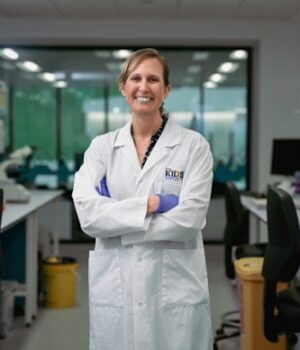
Professor Asha Bowen, who works at Perth Children’s Hospital and the University of WA, has been awarded the Frank Fenner Prize for Life Scientist of the Year award at the Prime Minister’s Prizes for Science.
The award – named in honour of the Australian scientist who is most famously credited with helping eradicate smallpox – is especially fitting for Bowen, whose work on impetigo (skin sores) led to a landmark trial involving more than 900 children that saw astounding results.
Bowen was rapt to receive the award named in honour of the “the biggest, coolest, like doctor person in all of our worlds”.
“On so many levels, I’m really, really humbled to receive this, but also pretty amazed,” she said.
Her paediatric training in the Northern Territory set Bowen on the research path that eventually led to the See, Treat, Prevent (SToP) trial that saw a 50 per cent reduction in skin sores in children in Aboriginal communities.
It was the first significant reduction in impetigo in more than 50 years.
During a literature review for her PhD, in a bid to find better treatments for skin infections in children, Bowen discovered Aboriginal children living in remote communities had the highest burden of skin infections in the world.
“Once I knew that, I was really committed to doing something about it,” she said.
“It wasn’t a fact that you could just sit with and walk away from.
“It was a fact that showcased the sheer inequity that exists in Australia and that science can endeavour to solve.
“From some of my work, we realised that skin sores were being normalised at community level, but also at clinical level, where clinicians were not even noticing the skin infections any more, and therefore weren’t treating them, and therefore weren’t preventing the downstream consequences.”
Soon, Bowen found oral antibiotics worked just as well as penicillin injections, making treatment a lot easier, and work in the community aimed at preventing the need for clinical treatment took her work further.
That echoed her work as a paediatrician and infectious diseases specialist at Perth Children’s Hospital, where there is a big focus on work being done in the community to stop children presenting at hospital with sepsis, bone and joint infections, and rheumatic heart disease.
She also identified several areas in dire need of government attention to reduce the level of skin infections in remote communities.
“Environmental health – the houses, the quality of the maintenance are not good enough – and that is where skin infections are starting, and that’s where they’re spreading between people, and that’s what needs to be fixed,” she said.
“I think it’s really important for WA to take a really strong focus on preventative health.
“We have a preventative health minister. We have … spent in the order of 1 per cent of the health budget on prevention, but we really do need to push that prevention budget higher, so that we are achieving the health benefits that prevention brings.”
Bowen is now also turning her attention to Aboriginal communities in Australia’s cities, having identified a gap in the scientific literature regarding skin infections.
One recent program has focused on sunburn in Aboriginal children, which was spurred by conversations with elders who were becoming concerned by the frequency of sunburns.
“It’s well beyond the range of skin infection, but we have just launched Australia’s first co-designed community-led sun safety campaign for Aboriginal people, and it’s called ‘Every Shade, Every Mob’,” she said.
“Because Aboriginal people today do come in every shade, and many of them have felt that the current health promotion information that is widely shared across Australia has no relevance to them.
“And so we’ve really tried hard to demonstrate that representation and showing what sun safety looks like for Aboriginal children and families.”
The award adds to a long list of accolades for Bowen, who received a Medal of the Order of Australia in 2024 for services to medicine; a 2025 WA Premier’s Science Award; the 2025 UWA Vice-Chancellor’s Mid Career Research Award; and who was named in Cosmos Magazine’s 50 Women on the Cutting Edge of Science in 2023.
It is also not the first time she has received an award named for Fenner, having received the Australasian Society of Infectious Diseases Frank Fenner Award in 2022.
Bowen was the only West Australian to be awarded in the Prime Minister’s Prizes for Science, with other major award recipients including Professor Georgina Long from the University of Sydney, and Professor Anthony Thomas from Adelaide University.


