Source : the age
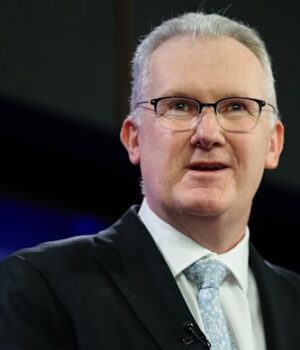
Home Affairs Minister Tony Burke has challenged the Coalition to explain how they will pay the billions needed for a plan to remove over 400,000 migrants on bridging visas from the country, as Opposition Leader Angus Taylor insisted his plan could not be fully costed until closer to the election.
In one of the government’s strongest attacks on the recently announced migration plan Burke accused the Coalition of chasing One Nation through a plan with “a whole lot of gaps”, but failed to respond when asked whether Labor had made mistakes in its management of the nation’s migration program.
“If the Coalition is saying they’re going to massively ramp up beyond what we’re doing in terms of the detention capacity in Australia, then they need to let us know how many beds, how many compliance offices, and where the new detention centres are going because those sorts of numbers that they’re talking about, we are talking billions and billions of dollars,” Burke told News24 on Sunday morning.
“They would know full well that what they’ve announced doesn’t work, but they’re they’re playing a political game of trying to chase One Nation. I think every Australian knows what they’re doing.”
The Coalition released its migration policy last week, following an announcement from One Nation and a refresh of the Labor government’s plan, both announced recently. The policy would cut around 650,000 temporary migrants from the program but permanent migration numbers would hold steady at 185,000 and skilled temporary workers would rise by 100,000. Labor is seeking net overseas migration at 225,000.
The most recent data from the Australian Bureau of Statistics has the net overseas migration rate at just over 305,000, down from a post-pandemic peak of just under 556,000.
One Nation has proposed the most drastic cuts to net overseas migration, seeking to enter negative migration for a period of three years, before rising to a stable rate of 130,000. Their policy has been criticised for its potential to send the country into recession and hurt industry. The Coalition is seeking a drop to 100,000 for two years, before rising to 160,000 in the fourth year.
Migration policies at a glance
Labor: Has a plan of 245,000 migrants by June next year and 225,000 by mid-2028. Has vowed to cut 40,000 backpacker visas and crack down on overstayers and rogue migration agents to meet this target.
Coalition: Wants a target of 100,000 in its first year of power, followed by a cap tied to housing. About 173,000 houses were built last year.
One Nation: Wants negative migration, followed by an annual net migration figure of 130,000 people.
Note: Net overseas migration is the total number of people entering the country minus the number of people leaving.
Full costings for the Coalition policy have not been released, and the Parliamentary Budget Office has so far only been commissioned to produce “analysis” of the policy, rather than a full breakdown. Taylor has said increased taxation from higher-earning skilled visas will provide “budget neutrality” when set against tax losses from temporary visa-holders.
“There are limitations on what the Parliamentary Budget Office can do because of its legislation. It cannot model directly Labor’s policies, so we had to give it assumptions to work with. That’s a constraint in the legislation, and as we approach an election, we won’t have that constraint,” Taylor told ABC’s Insiders on Sunday morning.
“We are absolutely confident that because we are raising the standards, raising the incomes and tax paid of people coming into this country, the cut in the numbers will be budget neutral, but better than this, it will raise productivity, it will raise competitiveness, it will raise the average income of the people coming to this country, and that’s what we need right now, and that’s where Labor has failed.”
Former deputy secretary of the immigration department Abul Rizvi, told this masthead that both the government and opposition needed to own responsibility for the current migration system, saying the Coalition had “stomped the foot on the immigration accelerator” following the lifting of pandemic restrictions.
Appearing on News24, Burke failed to say whether he could acknowledge a “mistake” in the government’s management of the migration system following the pandemic.
“I think it’s disingenuous for me to do the wisdom of hindsight thing when back then everybody was looking at the need to lift the economy, and we can’t live the counter life. What we know is housing hasn’t been able to keep pace,” Burke said.
“We need to give some breathing space. That’s what we’re now doing. If you go too hard, you smash the economy, in particular. You smash the health sector. You smash construction.”
The government’s refreshed immigration policy would increase funding for compliance and detention of visa overstayers, creates a ballot system for second and third year working holidaymakers, and bars many international students from bringing family members with them when they come to Australia for study.
Taylor rejected the One Nation proposal to bar migrants from “risky” nations or regions, saying: “I’ve always said that we would discriminate not based on the country someone comes from, or their race, or their religion, but based on the person, and whether that person is a suitable person to be a resident or citizen of this country. That’s what we should focus on, and we should judge people on their character and conduct, not the colour of their skin.”
Cut through the noise of federal politics with news, views and expert analysis. Subscribers can sign up to our weekly Inside Politics newsletter.
 Nick Newling is a federal politics reporter for The Sydney Morning Herald and The Age.Connect via X or email.