

SOURCE :- THE AGE NEWS
Washington: The Pentagon’s policy chief says the US has been “very clear in private” with the Albanese government about what is expected from Australia under the AUKUS agreement, while underlining the strategic importance of HMAS Stirling to the US.
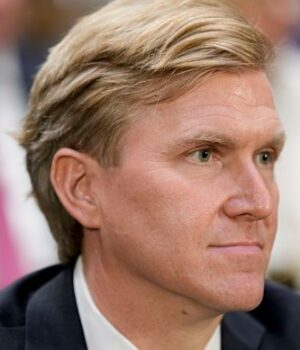
Elbridge Colby, who was one of the prominent AUKUS sceptics in the Trump administration before the US president’s declaration that the deal was “full steam ahead”, said the Pentagon was very pleased with the progress on AUKUS since its review was handed down last year.
Asked about future US activity at Submarine Rotational Force-West – the stationing of US nuclear-powered submarines, and later Australia’s, at HMAS Stirling near Perth – Colby said the facility was “tremendously important, and is one of the key values that benefit not just the United States but Australia itself”.
SRF-West was recently the subject of a political row after Defence Industry Minister Pat Conroy told the ABC from Washington that US submarines would only be there for five years until 2032, before correcting himself and acknowledging the US presence would be “ongoing”.
At stake was the question of whether nuclear-armed submarines would be allowed to rotate through HMAS Stirling given Australia’s obligation to maintain a nuclear-weapon-free zone under the Treaty of Rarotonga.
Colby, who is Defence Secretary Pete Hegseth’s undersecretary for policy, did not directly answer when asked about nuclear-armed submarines at SRF-West after 2032.
But he said the Pentagon and broader Trump administration have a “very tight discussion and a very clear understanding” about AUKUS with the Australian government, without detailing those discussions.
“They know what is required, we’ve been very clear in private with them,” he said on a briefing call with reporters. “[That is] designed to give everybody a reasonable, stable and realistic set of expectations to achieve this historic ambition that will put us all in a stronger place.
“We see a deep alignment of thinking … Australia really sees things through the lens of collective defence and a strategy of deterrence by denial designed to sustain a balance of power in this key region.”
Colby also did not directly answer when asked about the current production rate of Virginia-class nuclear submarines, which the Pentagon recently admitted was languishing at about 1.1 to 1.2 boats a year, when it needed to be 2.33 to meet AUKUS requirements.
“We remain optimistic but also clear-eyed about what we all need to do,” he said. “We will just keep knocking down the targets on our side. We have every expectation the Australian side will do the same.”
Colby added that the Pentagon was seeing “more and more” energy and focus from Canberra, and there was “no better ally” than Australia.
 Michael Koziol is the North America correspondent for The Age and Sydney Morning Herald. He is a former Sydney editor, Sun-Herald deputy editor and a federal political reporter in Canberra.Connect via X or email.

