
Source : the age
Revelations that a former rugby league player and gambling addict was offered cocaine in a room of betting company executives during a VIP event have ramped up scrutiny of Labor’s widely panned wagering laws, which are yet to secure support across the parliament.
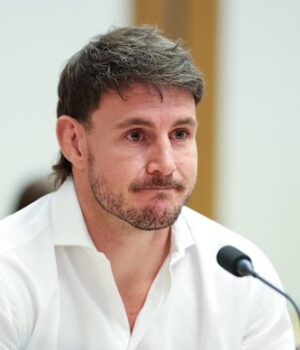
Former Canberra Raiders player Luke Bateman, now an online book influencer, told a Senate inquiry on Monday that he was flown interstate for race days by betting companies, where he was plied with alcohol and asked for his choice of drugs. He also said he would steal from his mother, partner and siblings so he could redeem $1000 offers for free bonus bets after running out of money.
“The inducements really destroyed my life because that’s what kept you coming back … when you wanted to get out,” Bateman said. “But it also destroyed the lives of the people who loved me.”
The 31-year-old was in a lineup of gambling reform advocates who outlined how they were wooed by betting companies while in the depths of addiction – raising examples that included offers of bonus bets, as well as free hotel rooms, escorts, drugs and grand final tickets.
Their evidence aimed to pressure senators into strengthening Labor’s contentious gambling package, which does not ban betting inducements, despite full prohibition being recommended by the 2023 Murphy report. Australians lose an estimated $32 billion to gambling each year.
“On Wednesdays and Saturdays, which are your two main race days, I would receive direct offers customised for me that basically said if you deposit $1000, we will give you $1000 in bonus bets,” Bateman said on Monday, saying those messages came through text messages and emails.
Asked by ACT senator David Pocock to describe the most “gobsmacking examples” of inducements, Bateman said: “There were times where I would be flown interstate and taken to race days, put in marquees with alcohol and food provided all day, things like that.
“Before getting there, the VIP manager would offer: hey mate, what drugs do you want? Do you want a couple of bags for this weekend? We’ll organise that for you. We’ll have that ready for you when you get here.”
Another time, Bateman said he was hosted at an exclusive event on the canals of the Gold Coast.
“And the entire C-suite of the company was there. All the management team administration, and they were all in a backroom doing drugs together. And I was out in this room doing drugs with all of them. This is like the CEO, the founders, the VIP managers,” he said.
“I would have been, you know, 23 years old. So while I was absolutely … I would put my hand up and say I was a willing participant of that. These are men in positions of power with influence who should be looking out for your welfare.”
Asked whether the presence of executives meant these companies knew how the system worked, Bateman said: “Well, not only did they know, they were participating in it.” He declined to name the company when asked.
Star Casino, TAB, Sportsbet named in evidence
A bipartisan report helmed by the late Peta Murphy had three years ago recommended a total gambling advertising blackout, ban on inducements and national regulator. The witnesses to Monday morning said these were glaring omissions in Labor’s final legislation.
“This legislation has some good aspects … However, it’s line ball whether it’s actually better than the status quo,” said chief gambling advocate Tim Costello.
Costello shared the story of one man who would soon plead guilty to criminal offences – a financial adviser who stole $12.3 million from his company in 17 months. “In that time, he was given free accommodation at Star Casino,” Costello said.
“He was the TAB’s biggest customer in that time. They were giving him $50,000 bonus bets. He was also Sportsbet’s biggest customer. They were flying him to grand finals. They were offering him escorts, drugs, whatever he wanted. He was doing turnover of more than $20 million a month.”
Costello said licensed bookmakers got away with that behaviour because there was no national regulator.
A spokesperson for Sportsbet said the company had “no evidence whatsoever of the allegations made by [Reverend] Costello” and no information had been provided to them.
“Sportsbet has zero tolerance for conduct of this nature,” they said. “Given the seriousness of these allegations, we ask that any evidence supporting them be urgently provided to us so that we can investigate them thoroughly through the appropriate channels.”
TAB and Star Casino did not respond to requests for comment, but betting companies and peak body Responsible Wagering Australia will address the inquiry on Tuesday.
Former Victorian MP Russell Northe, whose own career collapsed under the weight of gambling addiction, also pleaded with the inquiry to consider a national regulator.
“From my own experience, what happened to me quite regularly was I would open and close accounts on a regular basis, and that was a cry for help for me – closing an account, trying to get out,” he told the inquiry.
“But during that period where I stopped gambling and I had closed an account, I would be targeted, contacted by the gambling companies to reopen [an] account again with inducements and incentives.”
He said the Murphy report, delivered 1132 days ago, had called for inducements to be banned without delay. “What carnage has been caused in that time?”
Racing industry figures told the inquiry later that afternoon that offering cocaine to a gambling addict was “an illegal activity” and “totally abhorrent”, that they had never heard of such examples, and did not condone them.
They drew a line between inducements and what they called “generosities” – offers such as money-back specials or enhanced odds, which represented about 30 per cent of wagering turnover.
Pressure on prime minister
Communications Minister Anika Wells on Monday addressed the problem of inducements by saying people could sign up to the self-exclusion register, BetStop. “I would say to people who are either suffering from gambling harm or … who have been advocating in the space of inducements, to assist the cause by making sure that people who might benefit from BetStop are aware of BetStop,” Wells told reporters in Canberra.
Labor frontbencher Patrick Gorman told ABC’s Afternoon Briefing that “there are already existing laws to deal with illicit drugs and a range of those other things”, and that he shared Wells’ “determination to get something done by the end of this year”.
But Greens Senator Sarah Hanson-Young said not enough people were using the register – according to latest data, 40,000 people are currently self-excluding.
“The government will need to accept amendments of this legislation or the Senate will do it for them,” she said. “We will endeavour to work across party lines to fix this legislation.”
While Albanese last month said his laws had “got the balance right”, the Labor Party’s membership agreed at last month’s national conference to encourage stronger action on betting inducements and regulation – a move some advocates believe opens the door to tougher laws.
The Coalition has not yet decided its position on the bill but several backbenchers want the opposition to force Albanese’s hand on stronger measures.
Cut through the noise of federal politics with news, views and expert analysis. Subscribers can sign up to our weekly Inside Politics newsletter.
 Natassia Chrysanthos is Federal Political Correspondent. She has previously reported on immigration, health, social issues and the NDIS from Parliament House in Canberra.Connect via X or email.