Source :- THE AGE NEWS
A good shipping line doesn’t send veteran steamers into the worst of winter and hope for the best. It builds the next generation of ships while the old captains are still on the bridge. Anything else is sailing on hope and trusting the weather to hold.
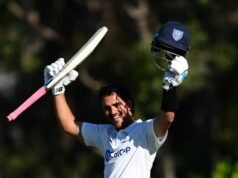
By recalling NSW veteran Nic Maddinson into Australia’s Test squad to face South Africa, selectors have made that gamble.
Australia has South Africa and India away, and an Ashes tour of England next year. So we can’t afford to lean on hope.
Even if Maddinson makes runs, his selection plugs a gap and builds nothing. The batting is vulnerable, and the bowling again rests on Pat Cummins, Mitchell Starc, Josh Hazlewood and Nathan Lyon staying fit. One injury and we’d be exposed.
Don’t get me wrong. I’m a great fan of Nic’s and always thought he should have played more Tests. But that window closed a decade ago. He was one of the most gifted players to emerge from Australia’s 2010 under-19 World Cup winners in New Zealand, alongside Mitch Marsh, Hazlewood, Adam Zampa and Kane Richardson. He struck the ball beautifully, bowled clever left-arm spin and had one of the best arms I’ve seen in youth cricket. His future looked secure.
Instead, he became a casualty of a broken first-class structure. I remember several seasons when he started well in the Sheffield Shield, then lost momentum when the Big Bash split the competition into two five-game blocks. Give him 10 straight Shield matches and he could easily have made four or five hundreds in a season, and grown into a long-term Test opener.
The problem is wider than one player. In fairness to the selectors, very few young batters get a sustained run of first-class cricket. The BBL break sees to that, and most states have held on to the stalwarts, believing experienced hands give them a better shot at the trophy than blooding kids.
State coaches are paid to fill the cabinet and protect their jobs, not to produce the next generation.
That has to change. A state job should be a working interview for the Australian head coach’s position, and states and premier clubs should be rewarded for the number of Test players they develop.
The cost of getting this wrong is bigger than a few lost matches.
If a talented 19-year-old sees the door to Test cricket shut until he’s nearly 30, he will look at the T20 circuit and ask why he should wait. We are teaching our best young players that Tests are not where the future is.
The same disconnect exists at the top. Cricket is the core business Cricket Australia has to get right. If the cricket is strong, the commercial side looks after itself because crowds and broadcasters follow fresh stars. If the cricket is weak, no amount of corporate governance will fix it.
CA’s board should be rooted in the game. I’d have four-fifths of the directors nominated by the states, plus a couple of independents for financial and governance expertise.
The objection is that state delegates will protect their interests. For most of our history the states did the job we needed because their interests and Australia’s were the same: produce the best players. What matters is what those directors are rewarded for.
Tie state funding to how many players a state develops for the national side, and parochialism becomes a reason to back young talent instead of hoarding veterans. The people running the game then have a direct stake in its long-term health.
As a former selector I’m reluctant to second-guess the panel. They know far more about the players than I do, and we can only judge the process. A selector’s job is to pick a side to win, but that has to be balanced against the future. No team is a finished product.
Australia has been here before, and we got it right. In the mid-to-late 1980s, in a lean time, Allan Border’s side blooded Steve Waugh, David Boon, Ian Healy, Mark Taylor and Bruce Reid. They lost plenty, then won the 1987 World Cup and the 1989 Ashes. Nobody remembers the matches that rebuild cost, but most remember the team it produced.
Experience is also misunderstood. A player with 10 seasons of first-class cricket has that experience only if he has learned and improved over a decade. If he’s still making the same technical errors, he has had one season’s experience 10 times.
We used to laugh at the English selectors for insisting a player needed 10 years of county cricket before being Test match ready. Regularly they picked prolific county players who had adapted to the lower level so well that they couldn’t step up. The sooner you pick someone with the talent for Tests, the sooner he adapts to what the game demands.
The usual worry is that young players get burnt. Some will. But a home series against Bangladesh is the cheapest place to find out, and a dropped player can come back.
Maddinson’s recall proves that. Australia missed a golden chance to blood one or two young batters with genuine futures. By declining, the selectors drove deeper into a cul-de-sac that will be harder to get out of when the change has to come. It’s also best to bring young batters in while Steve Smith is still in the side, so they can learn from a master.
How are we going to find the next Ricky Ponting or Steve Waugh before they turn 21 if we’re too gun-shy to give a couple of them a go at home?
This is not aimed at individuals. It comes from wanting Australian cricket to stay successful. This team has peaked, and if the selectors stay risk-averse, they will lose their battle with father time.
Unless Australia stops patching up the old steamers and starts laying new keels, the winter storms ahead will show how dangerous it is to fly on a wing and a prayer.
Sandpaper revisited: Read our coverage
 Greg Chappell is a former Australian captain. He led Australia in 48 of his 87 Tests, scoring 7,110 runs at an average of 53.86.