
Source : the age
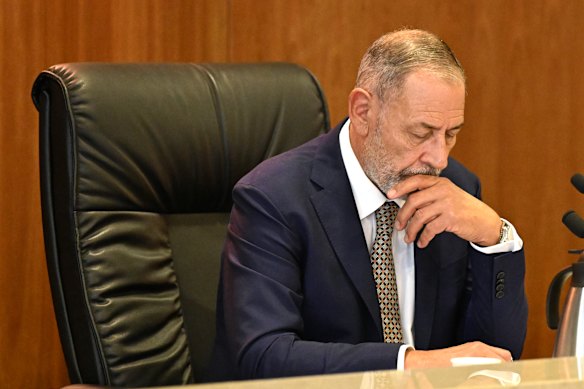
During a closing ceremonial hearing a fortnight ago, the head of Queensland’s fourth child safety inquiry in three decades was diplomatic about having to cut short his work by six months.
Initially given until November to report to government, Paul Anastassiou was instead told in February to wrap it up in time to feed his suggested fixes into this year’s state budget process.
“If I had longer, the report would be shorter,” he quipped, using one of what he said were two well-known aphorisms to address the matter of his truncated timeframe.
“The second, is the time taken to complete a task tends to expand to fill the time available in which to do it. Back in February, I was not so persuaded by the second, but the first remains true.”
What’s been unexplained by the Crisafulli government to date is why it didn’t instead require, or ask for, an interim report for its budget purposes. Political opportunity can maybe explain some of that.
The $20 million probe into the problematic system, the concerns of which go to the heart of how society and government supports (or fails) families, was set up before a second – into the CFMEU.
That this politically charged inquiry’s initial July reporting date was, in the same week its counterpart’s report was tabled, extended to December 2027, says much about the LNP’s approach.
Let alone the rhetoric around both. Releasing the 1400-page Child Safety Inquiry report on Wednesday, without a government response, senior cabinet figures instead went on the attack.
They castigated former Labor ministers responsible for system failures, but Child Safety Minister Amanda Camm refused to take responsibility (or even express concern) about some on her watch.
(Opposition Leader Steven Miles’ comments that he “take[s] responsibility … for doing everything we possibly can to support vulnerable Queensland children” were similarly lacking.)
This is but just one example of the Crisafulli government seeming, so-far, to struggle shaking its long opposition-era attack footing.
While there are valid issues for CFMEU Inquiry figurehead Stuart Wood to delve into, many of the union’s most serious matters have reared their heads in the southern states.
Industry figures, a key investigator, and the target of much Queensland CFMEU activity – the AWU – have told public hearings the construction sector has, for months now, been in a much better spot.
But the government via Deputy Premier Jarrod Bleijie – who announced the inquiry extension while acting attorney-general on Sunday – seems intent on ensuring Labor has its “Fitzgerald moment”.
“The Crisafulli government has agreed to extend the commission, to ensure every allegation can be thoroughly investigated and no stone is left unturned,” he said in a statement.
And so it is that we will have, at a cost to be determined through the process finalising the June 23 budget, another 18 months of headlines from the inquiry.
Not to mention a final report released less than 11 months before the 2028 state election. Time will tell how Anastassiou’s aphorisms will apply there – but it’s clear he could have used more time.
“That is not to say there are not matters which would benefit from further nuanced evaluation, nor matters which warrant further investigation,” he also told last month’s closing hearing.
If, more than 18 months into government, the LNP is yet to fully shed its opposition stripes, Labor is also still struggling to find its feet as one after a decade in power – except when the LNP slips.
An effort to fan community concerns about abortion access this week, on the back of a Katter’s Australian Party effort to bypass a gag on parliamentary debate of the laws, felt forced.
And after a swing to the LNP in the Stafford byelection, senior Labor figures were forced by the government to apologise this week for misleading parliament about the party’s sole campaign point.
The 93 beds hadn’t been cut from Prince Charles Hospital under the LNP, the MPs sheepishly rose to clarify in parliament on Thursday. (But they do now lack a timeline).
In a statement fired off after this, Nicholls took on oddly Trumpian tone to claim Labor’s newly minted MP Luke Richmond was, because of this admission, “in office because of a lie”.
Pressed in a brief media conference later about whether he was suggesting voters were dumb or wrong for having voted Richmond in, Nicholls insisted he thought most saw through the claims.
For his part, Miles said the MPs were caught out on a technicality of language. Technically, neither Labor nor the LNP are being entirely upfront.
Maybe no wonder then, that alongside the Stafford swing to the LNP was also a jump in the portion of voters parking their first preferences outside the major parties.
And perhaps no wonder that Richmond used his first speech to, beyond Labor’s bare post-election policy cupboard, float the need for state debate on making gas exporters “pay their fair share”.
An idea also being bandied around by independent federal Senator David Pocock, the Greens, and One Nation. Could Labor, at least in Queensland, be next?
Heads up
- While suggesting the government would take two months to respond to the Child Safety Inquiry report, the recently updated blurb for Attorney-General Deb Frecklington’s June 16 Queensland Media Club address, and linking of that response to the In Plain Sight report, suggest we might get at least some hints much earlier.
- Beyond Frecklington’s big announcement, the next three weeks are set to be a busy few in Queensland politics, and parliament, with two weeks of CFMEU Inquiry hearings before budget day on June 23 kicks of a four-day sitting of MPs.
 Matt Dennien is a reporter at Brisbane Times covering state politics, parliament and the public sector. He has previously worked for newspapers in Tasmania and Brisbane community radio station 4ZZZ. Contact him securely on Signal @mattdennien.15Connect via email.