Source : the age
Let’s start with a quick round of aircraft trivia: Which long-haul economy seats in the sky are the most comfortable? Answer: The majority of wide-bodied, twin aisle aircraft offer a seat that is 17-18.5 inches wide (43.18 centimetres to 46.99 centimetres) with a pitch (legroom) of 31-32 inches. (On budget carriers, however, seats shrink to about 16 inches wide with a 29-30 inch pitch).
The A330 and A330neo aircraft are generally the most consistent to feature the widest seat of 18-18.5 inches due to this aircraft’s typical 2-4-2 economy class layout.
When it comes to the most generous pitch, the A350 and Dreamliner 787-9 are excellent bets for 32-34 inches. Top Japanese carriers, notably Japan Airlines (JAL), offer an industry-leading 33-34 inches, and JAL is unique for offering a 2-4-2 layout, versus other major airlines that use a higher density 3-3-3 configuration in economy on these aircraft types.
Don’t be fooled into thinking an A380 necessarily has the biggest economy seats. Despite its vast size, an A380 economy cabin can feel very crowded if an airline has crammed in more seats, putting the crunch on comfort.
Know your plane
See why aircraft type matters? Most of us don’t clock what type of plane we’re flying on, let alone the dimensions of the seat. But knowing the characteristics of the aircraft models being used to fly you to your destination can make for a more comfortable ride. Passengers have personal preferences and needs, such as a family wanting a long middle row, versus a couple or solo traveller. Not to mention scoring the biggest possible economy seat for your journey.
You can check which aircraft will be deployed before putting down your credit card. “If you want to know what type of aircraft you’ll be flying on, click on the ‘flight details’ button before you book and pay,” says James Harrison, an adviser and support co-ordinator with Sydney-based Frontier Travel.

“That way, unless the aircraft is swapped out for operational reasons, you know what you’re in for. Many people want to fly a specific aircraft type. They might prefer a huge 6.4-metre wide double-decker A380 to the narrower 5.5-metre wide single-deck Dreamliner.
“Others feel the opposite and want to opt for a smaller jet, like a Dreamliner, that’s also more environmentally friendly.”
The majority of airlines worldwide fly the standard models listed below, built by either Boeing or Airbus, including updated and retrofitted versions. Not to mention variations on these versions, depending on how each airline configures the aircraft they order.
Each model has pros and cons
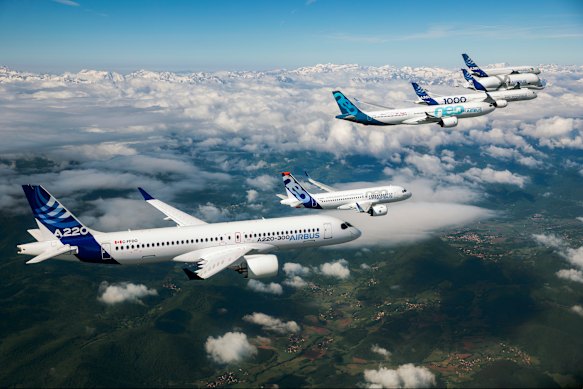
Savvy frequent flyers hunt down “new generation” aircraft, such as Boeing’s 787 Dreamliner and the Airbus A350, because they have lower cabin altitude – closer to 6000 feet rather than 8000 feet in older planes – and higher humidity, helping reduce passenger fatigue, headaches and dry skin. Such aircraft also tend to have lighter, more fuel-efficient engines that may reduce CO2 emissions by up to 25 per cent.
And, of course, the interior of each aircraft model can vary wildly based on how airlines choose to fit out planes. The key variation here is usually whether it’s fitted out as four cabins (first, business, premium economy and economy), or three. How many seats an airline opts for in each cabin also affects width, pitch and recline. For example, a Dreamliner 787-9 making short and medium-haul runs will generally feature around 30 to 50 more seats than one flying for between 15 and 17 hours.
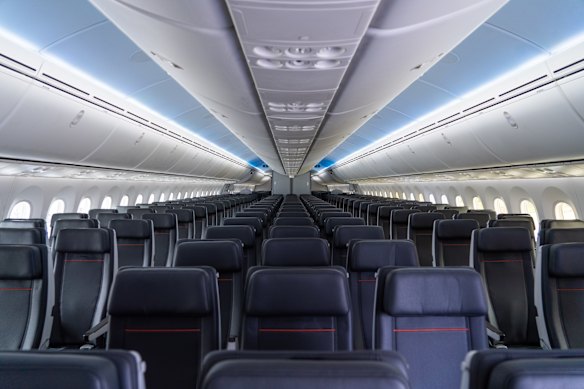
Too many economy seats crammed into virtually any aircraft type results in squeezy seats and narrow aisles, and, understandably, this is a top gripe for passengers worldwide.
Here, then, is your plane-by-plane guide to help you choose the best aircraft for your next trip – with imperial measures, given that’s what the industry still uses.
The plane Airbus launched the A330-300 in January 1994 with French carrier Air Inter, followed by the shorter, longer-range A330-200 in 1998.
Who flies it Delta Air Lines, Cathay Pacific and Turkish Airlines. Qantas often flies it on its Asian routes.
Need to know The A330 is the second-most delivered wide-body aircraft after Boeing’s 777. The original A330-300 and A330-200 models are still widely used, but production has now shifted to the “new generation” neo (new engine option) variants: the A330-800neo and -900neo. The A330-900neo has remained popular with airlines given it can fly for around 15 to 17 hours nonstop, and can carry up to 460 passengers.
Cabin layout Typically a three-class configuration. Most A330-900neos use a 2-4-2 economy seating layout, which passengers often prefer to the 3-3-3 configuration on other aircraft, including 787s. Full-service carriers put 224 to 184 seats in economy; budget carriers like the Philippines’ Cebu Pacific do all-economy 459-seat layouts.
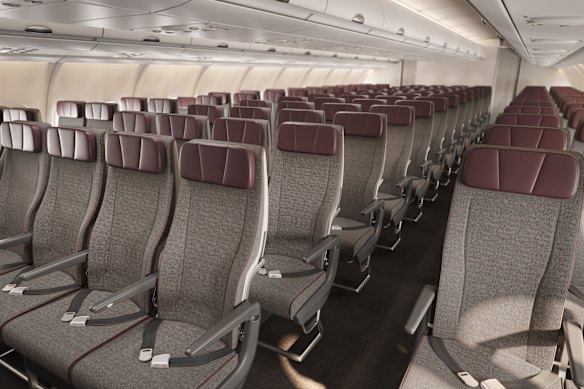
Pluses The A330neo is a versatile, economical workhorse that combines lower operating costs with high reliability, plus environmental wins given it features lower fuel burn than the first generation A330s. It is also known for the 18-inch width of its standard economy seats.
Minuses As with the 777, that other “mature-aged craft” of the skies, an A330 passenger experience can be hit or miss depending, if it’s an older model, on whether it has been refurbished. The biggest drawback of the A330neo is that despite having modernised engines, it’s based on a 30-year-old airframe. This makes the A330neo feel less “up-to-the-minute” than its key rivals, the 787 Dreamliner and A350.
Number of toilets in economy Four or five, depending on seating density.
One more thing Qantas has around 26 first-generation A330-200s and 300s that it deploys on domestic and shorter international flights, mainly to the Asia-Pacific. These aircraft will be gradually replaced by other models from 2027.
The plane Boeing’s 777 officially entered commercial service with United Airlines as launch partner in June 1995.
Who flies it Emirates, United Airlines, Qatar Airways, Cathay Pacific, Singapore Airlines, Air France, American Airlines and Korean Air. As of June 2025, Virgin Australia operates 777-300ERs on long-haul routes to Doha, Qatar under a wet lease arrangement with its partner, Qatar Airways.
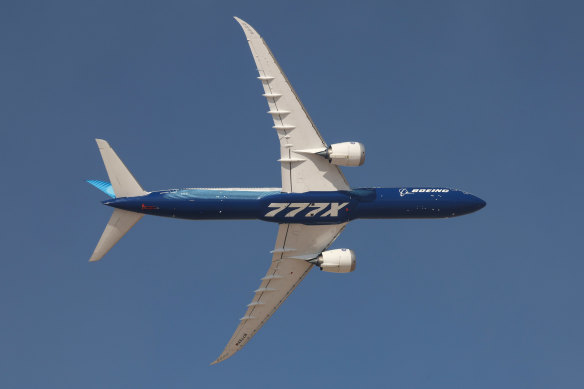
Need to know Like the A330, the 777 is among the oldest aircraft types in the air, hence there are many versions and variants. Today, you’ll find four main types of passenger 777, of which the 777-300ER (Extended Range) is the most common. It can fly for 15 to 17 hours carrying up to 550 passengers. The latest version, the 777X, will be the largest twin-engine jet ever. Originally supposed to launch in 2020, the aircraft has been repeatedly delayed and Boeing is now aiming to start delivering the plane to customers next year.
Cabin layout It usually features a three-class layout, but also four classes. Accommodates between 200 and 350 people in economy.
Pluses Its high dispatch reliability rate of 99.5 per cent signals that the 777 rarely suffers technical delays.
Minuses The 777 is almost as wide as an A380’s upper deck. Many airlines use that space for a 10-abreast 3-4-3 economy layout, resulting in narrow seats and squeezy aisles.
Toilets in economy Typically six or seven.
One more thing Old, unrefurbished 777s have among the worst “dinosaur business class” in the sky. Also watch out for outdated entertainment systems, unreliable Wi-Fi and small overhead cabin bins.
The aircraft The Airbus A380 launched in October 2007 with Singapore Airlines. The A380-800 remains the only model ever produced for commercial passenger use.
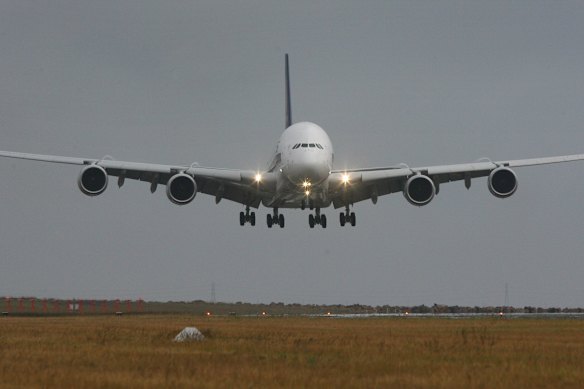
Who flies it Emirates, Qantas, Singapore Airlines, British Airways, Lufthansa, Qatar Airways and Etihad. Shout out to ANA, which only has three, but they feature exceptionally cool livery.
Need to know When it launched, the A380 was regarded as a game changer. It remains the world’s largest passenger aircraft: a double-decker superjumbo that can seat up to 853 people in an all-economy configuration, but more typically accommodates around 340 to 550 passengers across three or four cabin classes.
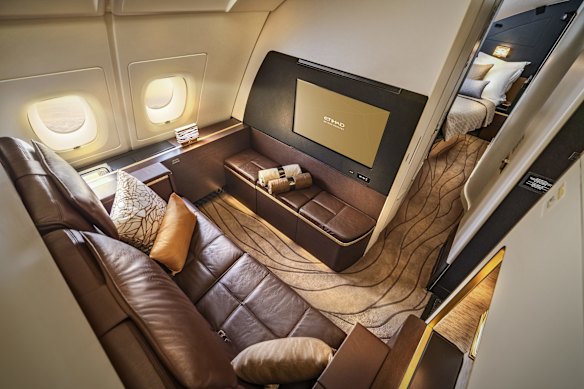
Cabin layout Much variation here. In economy, expect to see 3-4-3 seating layouts. Major A380 carriers such as Qantas and Emirates fly roughly 14 first-class seats, 70 to 78 business class, 60 to 44 premium economy and around 340 economy. Singapore Airlines spoils its A380 first-class passengers with just six suites. Etihad’s The Residence is a one-bedroom flying apartment.
Pluses Due to its size and stability, most passengers report a smoother flight experience during turbulence. A380s have higher ceilings, wider aisles and sometimes slightly wider seats than smaller aircraft. If you want to move a lot of people long distances on planes that are virtually full, the A380 makes sense commercially. This model has the space to include wild extravagances like showers in first class (on Emirates and Etihad planes), and a full-service bar for the pointy end.
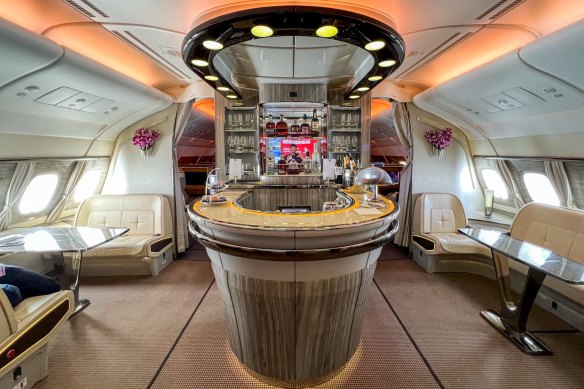
Minuses Many view it as a fuel-guzzling dinosaur given its four engines burn more fuel than the smaller new generation twin-jet aircraft. The plane’s size and complexity can lead to more technical issues, meaning delayed flights. While the aircraft is more roomy, equally, you’re flying with many more people onboard. Don’t expect shorter queues for toilets, but do anticipate more noise.
Toilets in economy Usually 10-plus toilets for the main economy deck.
One more thing Want a taste of first class on an A380? Ride up front on an Emirates three-hour flight from Sydney to Christchurch, for around $3600 return.
The Aircraft All Nippon Airways (ANA) was Boeing’s launch partner in 2011 for the Dreamliner 787-8.
Who flies it ANA is the biggest operator of the 787 Dreamliner, with more than 85 planes. United Airlines, American Airlines, Qatar Airways and Japan Airlines (JAL) also love this aircraft.
Need to know This original new generation aircraft took to the skies almost four years before Airbus got its A350 up and away. There are three versions: the 787-8, -9, and -10, where each subsequent model was slightly larger. The stretched 787-9 version for around 300 passengers is the most popular. It entered service in 2014 and offers increased passenger capacity along with greater range. This is the version best known to Australians given Qantas has 14 787-9s, many of which are deployed on long-haul non-stop flights, such as between Perth and London and Auckland and New York.
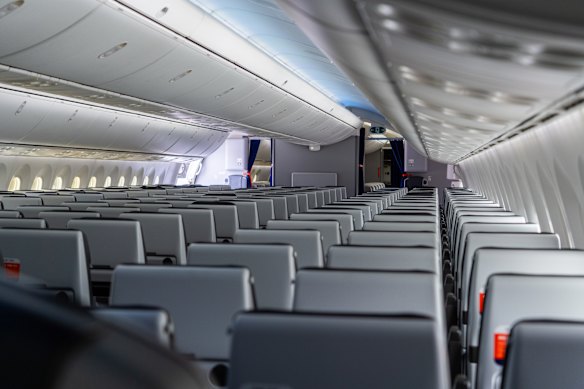
Cabin layout Most 787-9s seat between 244 and 300 passengers, of which around 146 to 263 will be in economy. Qantas, among other airlines, configures economy as 3-3-3. Qantas puts 236 passengers on its 787-9, with 166 seats in economy, 28 in premium economy and 42 lie-flat business-class seats. Jetstar has 11 787-8 Dreamliners for international flights (configured as 21 business-class seats and 314 economy) and domestic routes. A refreshed version for international flights will roll out any day, with 44 business seats and 281 in economy.
Pluses Improved air quality and lower cabin altitude that results in reduced jet lag. Turbulence sensors create a smoother ride, while the windows are up to 65 per cent larger than those of older planes, and feature electronic dimming instead of pull-down plastic shades. Roll in the LED mood lighting to mimic daylight, high ceilings and quieter engines, and you see why the Dreamliner is beloved.
Minuses On the flip side, airline executives complained this aircraft was no dream at all. Despite the many upsides, it was plagued by production and technical issues from the start.
Toilets in economy Usually four or five.
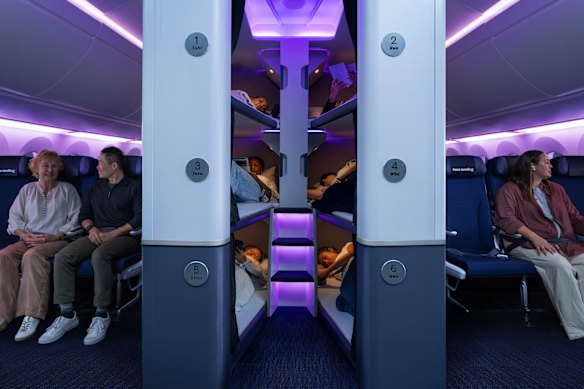
One more thing Air New Zealand will soon introduce the Skynest on its 787-9s – lie-flat bunk-bed-style sleep pods that are rentable in four-hour blocks for economy passengers. It builds on the airline’s popular Skycouch option, a row of three seats that converts to a flat surface on Air NZ’s 787-9s and 777-300ERs.
The aircraft The Airbus A350 competes with Boeing’s 787 and 777. It began flying in early 2015 with launch customer Qatar Airways.
Who flies it Singapore Airlines has the biggest fleet of A350-900s; Qatar Airways, Cathay Pacific, Delta Air Lines, Air China, and Japan Airlines are also big fans.
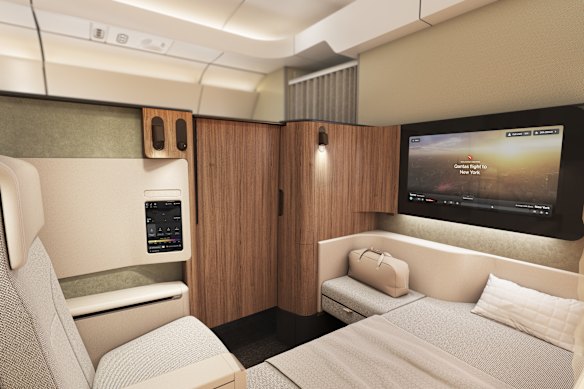
Need to know There are three key versions of the A350, of which the A350-900 is the most common, and can hold up to 440 people. Singapore Airlines uses a specialised A350-900ULR (Ultra Long Range) on its Singapore-New York direct route, the longest non-stop flight in the world at around 20 hours. The 2018-released A350-1000 is a slightly larger aircraft, but it can’t fly for as long as an A350-900ULR. When it finally takes flight after a number of delays, Qantas’ custom-ordered A350-1000ULR variant will surpass the A350-900ULR.
Cabin layout An A350-900 comfortably seats 300 to 350 passengers in a three-class configuration, of which around 210 seats are usually in economy. Ultra Long Range versions typically feature fewer seats: Singapore Airlines’ has just 161 seats across only business and premium economy classes for its Singapore to New York non-stop runs.
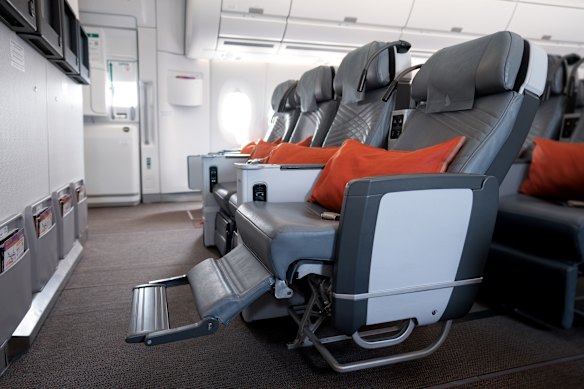
Pluses Like the Dreamliner, the A350 is a premier, next-generation aircraft with vastly improved fuel efficiency, passenger comfort and operational flexibility. The A350-900 is marketed as the quietest twin-aisle aircraft in the sky.
Minuses This aircraft has experienced well-publicised production delays and comments that seating comfort is sub-par when arranged in high-density configurations. Cabin dryness on long-haul flights has also been reported by passengers.
Toilets in economy four to six.
One more thing Fancy doing the world’s longest flight before Qantas overtakes it? Changi-New York direct on Singapore Airlines is priced from SG2373 ($2627) return in premium economy.
Domestic and short-haul international front
737-800
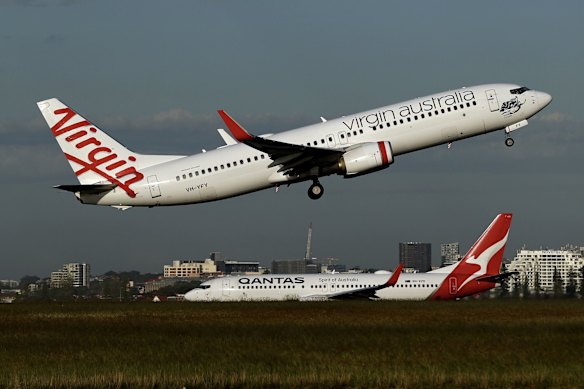
This twin-engine narrow-body aircraft forms the backbone of many fleets, including Qantas and Virgin Australia. It flies routes of under seven hours and can carry up to 189 passengers. VA has 19 new 737-8 (MAX 8) planes, with seats of around 17 inches wide, and a 30-31 inch pitch, and more on order. Qantas is gradually replacing its 737s with new A321XLRs and A220s.
A320
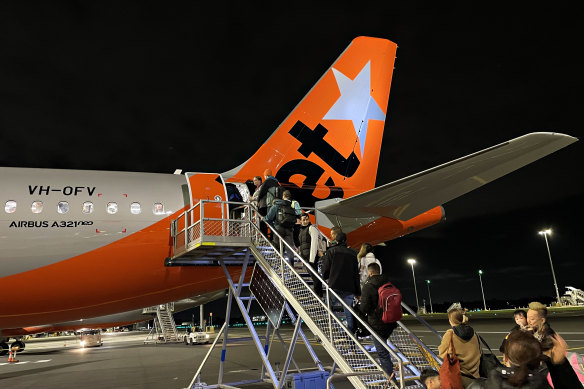
Another common narrow-body workhorse that’s used mostly on flights of up to six hours. An A320 usually seats around 150 to 180 people. Jetstar has 56 in its Australian fleet and 25 in Japan. Look out for the 320neo: Jetstar has five flying, with eight more on order. These have 18.2 inch wide seats, with a 28-29 inch pitch and three-inch recline. You’ll find A320s on many busy routes such as Kuala Lumpur to Singapore.
A321
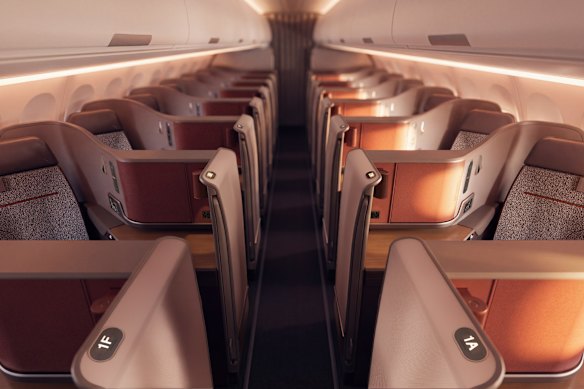
The A321 is part of the A320 family, but this stretched variant (44.5 metres versus 37.6m for the A320) typically holds between 180 and 244 passengers and can fly for up to 11 hours. The newer A321neo models often feature the Airspace cabin, with a more spacious feel. Qantas Group is transitioning to buy more Airbus planes, with 48 A321XLRs on order, which will feature lie-flat business class beds, a first on Qantas narrow-body aircraft (for flights around South-East Asia and the Pacific.) Qantas received its first A321XLRs in 2025, and Jetstar has this model on order; it already has around 25 A321neoLR (long range).
A220
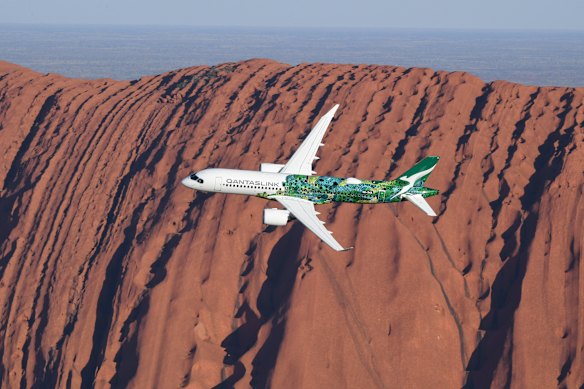
In Australia, only QantasLink – on routes such as Sydney to Canberra, Melbourne to Hobart and Brisbane to Wellington, New Zealand – operates A220s. QantasLink has more than 13 A220-300s, each with 137 seats. This classy little aircraft has an average age of just 1.3 years, and many more are on order. The A220 has approximately 25 per cent fewer CO2 emissions per seat, compared with the old B717s it replaces.
DASH 8
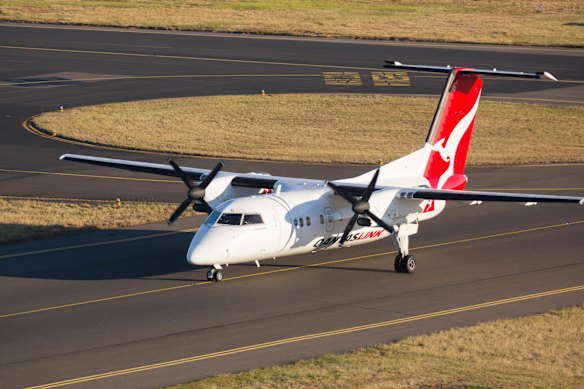
Dash 8 is noted as one of the world’s quietest turboprop aircraft. For decades, the QantasLink Dash 8 fleet has kept regions such as Dubbo, Mildura, Longreach, Devonport and Kangaroo Island connected to capital cities. QantasLink currently has around 45 De Havilland Canada Dash 8-400 (Q400) turboprop aircraft, which have replaced older models. Larger, and more than 30 per cent faster, the Q400s have a toilet, a galley and 74 to 78 seats in a 2-2 configuration.