

source : the age
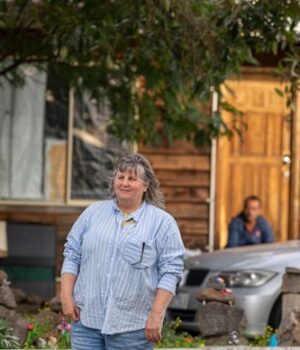
Having slept alongside criminals, drug users and other vulnerable people, Helen Dawson describes her 4½ years of living in rooming houses as “chaotic and terrifying”.
“Everything is just really difficult on a personal, intimate scale,” she says. There is limited privacy from rooming house managers or fellow tenants, and support or dispute resolution services are near-impossible to access, she adds.
“Someone can go and steal all of your possessions. In my case, literally take your pair of jeans from under your pillow and take all of your belongings overnight while you’re asleep.”
Despite the challenges, Dawson says that her experiencing living in a rooming house taught her the value of personal responsibility and a caring community. She also formed close friendships with people she’s still in contact with.
Now living in public housing, Dawson is passionate about fixing the system. It’s particularly important in places like her suburb of Frankston, where she says rooming houses are quickly becoming a “mainstream housing option”.
According to the Consumer Affairs Victoria public register, the number of registered rooming houses in Victoria jumped by almost 19 per cent – from 1710 to more than 2040 – between June 2025 and June 2026.
But in Frankston, the number of rooming houses has almost doubled over the past six years, from 70 in 2020, to 121 today.
Sometimes called a boarding house or a multi-tenant house, rooming houses are dwellings where individual rooms are rented separately to four or more people. They usually include sharing facilities such as a kitchen, bathroom and living spaces.
Unlike public housing, rooming houses are generally privately owned and maintained by an operator – either an individual or a business – who generally run the properties for profit and can approve or evict residents at their discretion and without consultation from other tenants. Oversight responsibilities are shared between councils and state government agency Consumer Affairs Victoria.
As more of these residences open, there is rising worry around how they are being managed.
Dawson has concerns around operators who manage too many properties, houses being overcrowded, and rooming house residents having similar rights to people living in temporary accommodation like motels or caravan parks.
These factors mean tenants can find it difficult to exercise their rights and are vulnerable to significant safety issues, Dawson says.
“Mostly the barriers are systemic, institutionalised … it means that people feel incredibly degraded by being excluded from the rights that other people have,” she says.
Peninsula Community Legal Centre chief executive Jackie Galloway said that while rooming houses play a vital role in the housing space, she has concerns about the standards provided to tenants.
“It is not uncommon for residents to feel unsafe, and they have elected to move to rough sleeping,” Galloway said.
“We need to highlight this dire situation. Where there are incredibly low rental vacancy rates, rooming houses can play a role. However, we need to ensure they are safe and well managed.”
According to the centre’s 2025-26 impact report, the average weekly rent for a room in a rooming house in Melbourne’s south-east region is now $303 a week.
While this type of accommodation is frequently described as temporary, the legal centre’s annual impact report revealed the average length of stay was 2½ years.
But the condition of the properties was “wholly inadequate” for long-term accommodation, with broken windows and doors, pest infestation, water leaks and mould recorded across visited properties by the centre this year alone.
Increasingly, councils have raised motions supporting improved rooming house regulation and stronger minimum standards.
In the City of Frankston, the surging number of rooming houses has forced councillors to grapple with a clash between affordable housing needs and community safety concerns.
Councillor Nathan Butler moved a motion at an August meeting that called on the state government to “urgently review” laws governing rooming houses before November state election. The vote lost narrowly, gaining the support of four of nine councillors.
Butler’s motion called for improved minimum standards for renters (particularly relating to privacy and security), improved resourcing at Consumer Affairs Victoria and increased public notice and review rights for all rooming house applications.
Currently, Victorian planning provisions only require an operator to submit a planning permit to a council if they intend to operate a home with more than nine rooms.
Butler, who has previously lived in rooming houses, told this masthead that although rooming houses offer an important source of housing, there was often limited oversight compared with other living options.
“My concern is that an unintended consequence of how relatively easy they can be to establish – combined with how profitable they can be – is that we’re seeing them grow very quickly in communities like Frankston, potentially at a disproportionate rate,” he said.
Frankston Mayor Sue Baker, who was among the councillors supporting the motion, said everyone should have access to safe and appropriate housing.
“Council has a shared responsibility to ensure these properties meet required standards and operate in a way that protects the wellbeing of both residents and the surrounding community,” she said.
Frankston Council has received 250 complaints about rooming houses over the past two years from rooming house residents and community members, mainly relating to anti-social behaviour, safety and noise complaints.
Counsellor Josh Cohen owns a clinic next to a registered rooming house in Frankston. He believes mental health challenges contribute towards some of the behavioural stereotypes surrounding the type of residence.
“There is a significant element of people that fall through the gaps in terms of being able to get the support that they need … That then factors into their living circumstances,” Cohen said.
He said the state government should be providing more funding to support people living in rooming houses with complex needs, and questioned the transparency of the current system.
“If they’re privately run, how regulated are they?” Cohen said.
Similar regulation concerns are being experienced across other Melbourne councils. Both the cities of Knox and Brimbank have taken to Municipal Association of Victoria state meetings motions supporting improved regulation and stronger minimum standards for rooming houses.
Knox Mayor Paige Kennett said her council met with Planning Minister Sonya Kilkenny in April to discuss regulation, and wrote to then-local government minister Nick Staikos.
“Community concerns about rooming houses across Knox have been emerging for some time … Council would welcome further discussion with the state government about opportunities to improve the regulatory framework and management arrangements,” Kennett said.
Start the day with a summary of the day’s most important and interesting stories, analysis and insights. Sign up for our Morning Edition newsletter.
 Gemma Grant is a city reporter at The Age. Contact her securely on Signal @gemmagrant.88Connect via email.

