
Source : Perth Now news
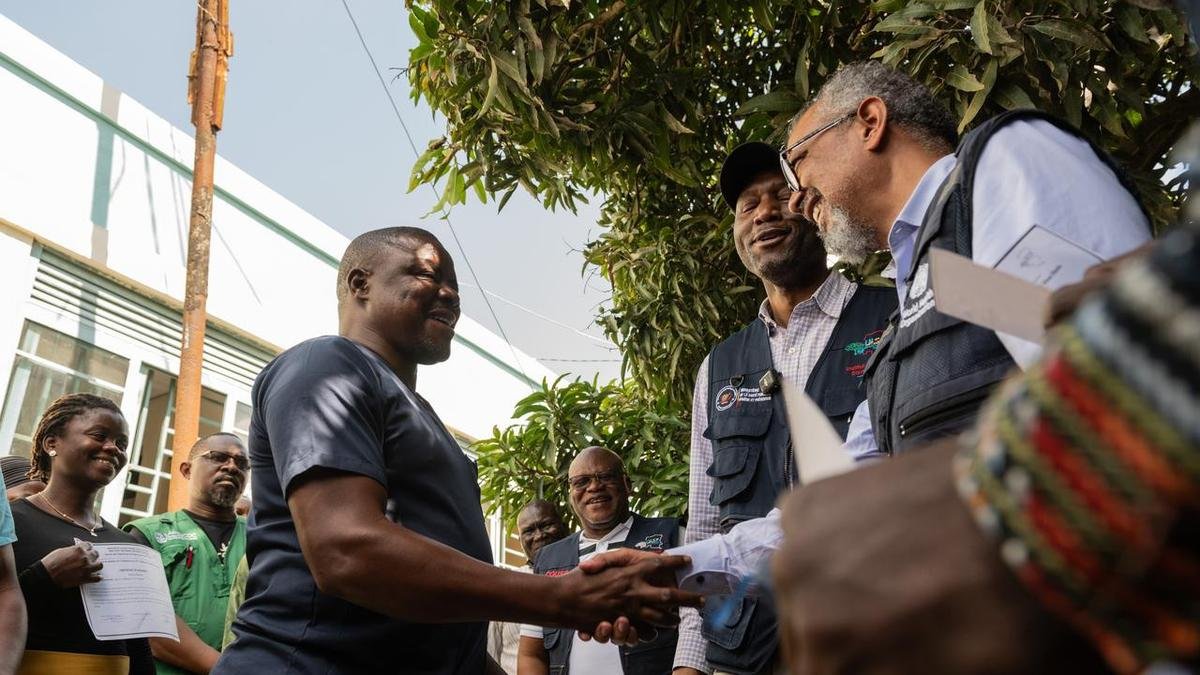
Five patients have recovered from a rare type of Ebola virus, the head of the World Health Organisation says during a visit to Bunia in the Democratic Republic of Congo, a city at the heart of an outbreak.
“Four people will be discharged today and there was one that was discharged the day before yesterday,” WHO director-general Tedros Adhanom Ghebreyesus said during the opening of a new Ebola treatment centre in Bunia, the capital of Ituri province.
“Of course, we’re still working on vaccines and treatments but that doesn’t mean that people cannot recover from Ebola,” he added.
The WHO said on Friday a patient had recovered from the Bundibugyo virus, the current species of Ebola, which has no approved treatment or vaccine.
It was the first documented recovery of a confirmed Bundibugyo patient during the current outbreak.
The health organisation said authorities have reported 134 confirmed cases in DR Congo and neighbouring Uganda, including 18 confirmed deaths as of May 29.
Baraka Bulambulu, one of those who recovered, told the Associated Press on Sunday that community members feared contracting an unknown illness from them, keeping their distance while delivering food and medicine.
He said the uncertainty was overwhelming, as he and other patients believed they might die without knowing what disease they had although testing eventually confirmed Ebola.
“Being able to come out of this alive is an immense source of happiness,” Bulambulu said.
“Many people who were in the same situation died.”
Ezo Étienne, a nurse, said his symptoms began during ward rounds when he suddenly felt dizzy, then rapidly deteriorated into vomiting, intense itching, severe diarrhoea and extreme weakness.
He was tested seven times before Ebola was confirmed.
His treatment remained purely to treat the symptoms: medications to control vomiting, fluids to prevent dehydration and pain relievers.
“That was all they could provide,” he said.
He urged the public and healthcare workers not to dismiss early symptoms such as vomiting and headaches, warning that misinformation leads many people to believe they have been poisoned rather than seeking hospital care.
The dangers faced by health workers have been heightened by anger among residents over the stringent medical protocols for handling the victims’ bodies, which clash with local burial rites.
Residents have launched at least three attacks against health centres.
Tedros stressed the importance of involving the community in the outbreak response during the opening of the new treatment centre on Sunday.
“If you come to health facilities when you have symptoms, you can get the support and recover, so the key is to come forward as early as possible and to get the necessary support,” the WHO chief said.
“We can stop this Ebola and anyone who has it can also recover. But the rule … is this thing is everybody’s business and every citizen should be involved,” he added.