

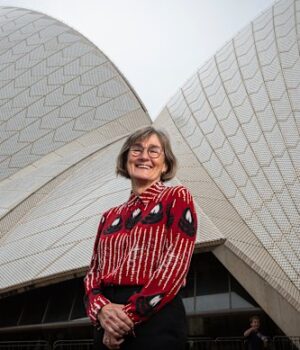
Source : the age
Eight years ago, about midway through her term as boss of the Sydney Opera House, Louise Herron received a dressing-down from Alan Jones, one time commander of the commercial airwaves.
Jones repeatedly called for her resignation, berating her on air for refusing to project promotional material for The Everest horse race directly onto the sails of the Sydney Opera House.
“Who do you think you are?” Jones repeatedly asked Herron. “You don’t own the Opera House.”
Herron steps down from the Sydney Opera House effective August 6, exactly 14 years to the day since she took on the position as the venue’s first female chief executive. She announced her departure to staff on Wednesday afternoon, calling an end to an era that shaped and transformed arguably the world’s most recognised performing arts venue. Herron will be taking up a position as a vice-chancellor’s fellow at the University of Sydney from September.
In her 14 years, Herron managed to secure $300 million from NSW government for a huge renewal program, resisted a push to put corporate logos on the house, programmed bands on the forecourt in defiance of a small band of nearby residents complaining, and crystallised and prioritised the notion that the Opera House should be a “place for everyone”.
But it was that testy exchange and her defence of the Opera House against horse racing interests that first defined her in the public mind.
“Perversely, I’m grateful to Alan Jones for that conversation,” she recalled. “It was an opportunity for people to show how much they cared for the Opera House, and the next day 5000 people had signed an online petition. People did wild things, setting up massive lights on the bridge to block the projection. It showed how much love there was for the Opera House and level of support personally for its conservation.”
Herron’s departure will trigger an international search for her replacement, with Australians likely to be on any headhunter’s list including Rachel Healy and Karen Quinlan, who run equivalent performing arts centres in Brisbane and Melbourne respectively, and those in charge of Sydney organisations such as Fergus Linehan (Carriageworks), Anne Dunn (Sydney Theatre Company), Kim McKay (Australian Museum), Barbara Moore (Biennale of Sydney) and Lisa Havilah (Powerhouse Museum).
The Australian Ballet’s executive director, Claire Spencer, and the National Film and Sound Archive’s Patrick McIntyre, who was executive director of the Sydney Theatre Company for more than 11 years, might also be sounded out.
From within, Kya Blondin will take over from Herron in an acting capacity until a successor is named later this year. Having stood in for Herron during a recent six-month sabbatical, Blondin could also be a contender.
A former MinterEllison partner and chair of Belvoir St Theatre, Herron was appointed to chief executive in 2012 with no prior experience running an arts company and no funding in sight for long-called-for works.
“It was a huge learning curve,” she said. “I was completely unknown at the time, I wasn’t on anyone’s radar and I think that’s really important to bear in mind – that people can emerge. And that’s the thing about leadership, right? If you give people the right environment and the right belief and the right tools they will so often exceed their own and other people’s expectations.”
During her term she oversaw the largest and most transformative series of building works since the Opera House opened in 1973.
The renewal touched all corners of the building and opened new spaces to the public – removing vehicles from the forecourt, establishing a new Centre for Creativity and acoustically refurbishing the concert hall, replacing its doughnut sound reflectors with acoustic petals, as well as improving access for visitors with limited mobility.
The Opera House celebrated its 40th anniversary and its year-long 50th anniversary celebrations with Herron at the helm, who, never one to waste an opportunity, used both birthdays as ways to leverage capital funding and cement Jorn Utzon’s creation as Australia’s favourite building.
Known for her tenacity and drive, Herron leaves a strong legacy of cultural stewardship and heritage protection of the world-famous heritage building. Staring down Alan Jones did not faze her, even if then-premier Gladys Berejiklian went on to order the projection of numbers and colours but not the Everest logo and horses’ names. Heeding the furore, the next year race runners and numbers went on the Harbour Bridge.
“It’s a terrible thing to say, but I didn’t notice it was a bad conversation,” she said. “Being a woman in law firm and investment banking – that was nothing extraordinary. You have to stand up for what you believe in.”
That toughness often ruffled feathers, notably during negotiations with resident companies the Sydney Symphony Orchestra and Opera Australia, to reduce their stage time to make way for Bangarra Dance Theatre and diversify the Opera House’s offerings. Herron was once told that 80 per cent of people really liked her, 20 per cent didn’t. “That’s about right. If you are going to embark on the decade of renewal you can’t keep the place the same,” she said.
Herron was previously in the frame for a new role spearheading sweeping changes to the state government’s approach to the creative arts, after overseeing the writing of NSW Labor’s new road map to reinvigorate the faltering cultural sector, which is still struggling with rising expenses and cost-of-living increases. The role to co-ordinate agencies responses didn’t eventuate.
Both deny it, but Herron’s relationship with former chair Lucy Turnbull was at times tense. During the pandemic, when Carriageworks entered administration, Herron said she was willing to take the arts venue into the Opera House’s orbit.
COVID was the nadir of her tenure, when stages went dark and her workforce was sent home for four months.
She made ample use of her contact book and quickly put together philanthropic support for an online program of live-streamed performances and talks which she proudly boasts got more views than the ABC in its first seven months. Philanthropy and sponsorship has gone from $1 million a year to $10 million under her watch.
In many ways Herron is a maverick in the arts world, an outsider and strategic thinker who operated by her own rules, and kept the ear of multiple arts ministers, disarming them with her tendency to speak her mind.
Arts minister John Graham also paid tribute to her legacy: “Under her formidable leadership, the Opera House has never sounded more in tune with contemporary arts and culture.
“The list of Louise’s achievements is long. Her tireless advocacy has seen the Opera House focus its vision on being Everyone’s House, ensuring our beloved icon plays a key role connecting more people with the arts.
“While she will be missed at the Sydney Opera House, I’m grateful she has accepted my invitation to remain as chair of the Creative Communities Council, where she will continue to provide valuable advice to the government for the benefit of the arts sector and the people of NSW.”
Sydney Opera House Trust chair Michael McDaniel said: “It’s impossible to overstate the impact that Louise has had on the Opera House, and on Australian cultural life in general.”
The new CEO will inherit unfunded works to the Drama Theatre and ongoing maintenance of a building that is beloved by tourists and sits on Bennelong Point, exposed to corrosive salt water and weather.
Herron’s appointment to Sydney University marks her return to the institution from which she graduated with a bachelor of arts and bachelor of laws, before later completing a master of laws at the University of London. Sydney University vice chancellor Professor Mark Scott welcomed her appointment.
“I’ve admired Louise’s leadership for many years. She has an instinct for bringing people together and helping institutions navigate difficult challenges without losing sight of why they exist. That’s a rare quality, and one that will enrich our university enormously,” he said.
Taking up her part-time position at the University of Sydney, Herron will remain as chair of the government’s key advisory board. She is not drawn to boards.
“I like to do things,” Herron said. “I’ve been doing this job for 14 years and I do think it’s important that people leave jobs at the appropriate time … You need not stay in jobs too long, and 14 years is a long run by anyone’s measure.”