
Source : INDIA TODAY NEWS
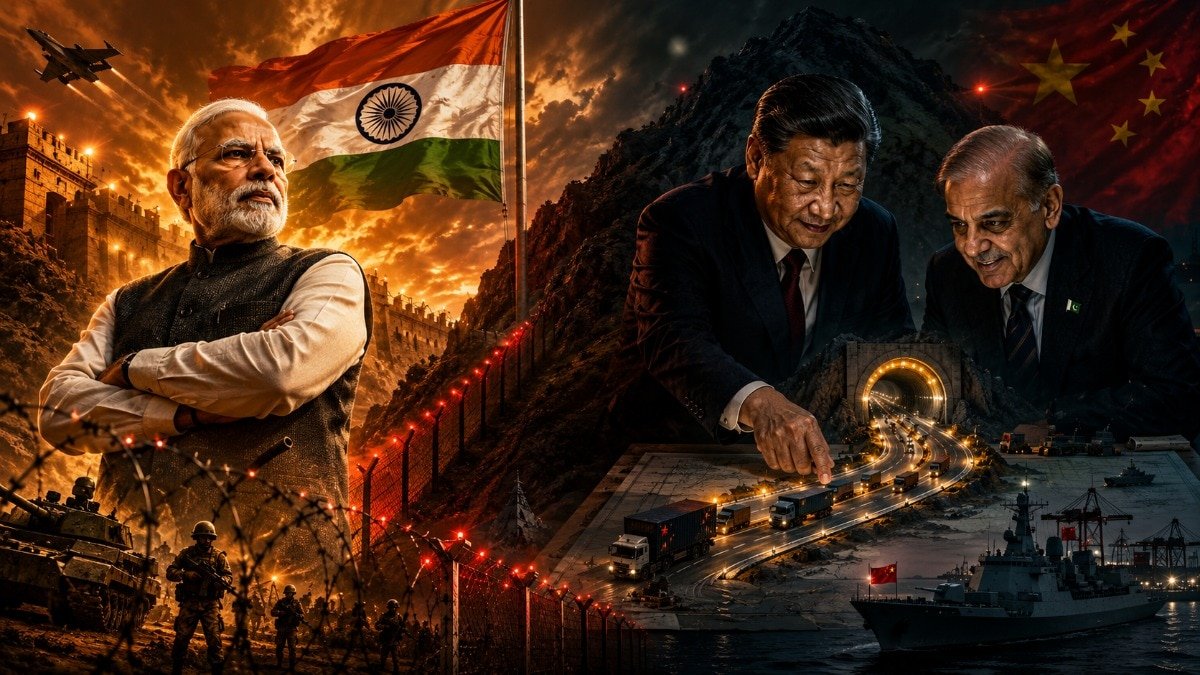
When Pakistani Prime Minister Shehbaz Sharif touched down in Beijing for a visit lasting four days, from 23 to 26 May, the agenda looked familiar: diplomatic ceremonies, bilateral agreements and warm words about a shared strategic partnership. What followed, however, was anything but routine. The joint statement issued at the end of the visit described the Kashmir dispute as “left over from history” and called for its resolution in accordance with UN Security Council resolutions. India’s Ministry of External Affairs responded within hours and did not mince words.
advertisement
“India categorically rejects unwarranted references to the Union Territory of Jammu and Kashmir,” the MEA said, adding that Jammu and Kashmir and Ladakh “have been, are and will always remain integral and inalienable parts of India.” The statement went further. No other country has the locus standi to comment on the same.
So why does this keep happening, and what is actually going on?
The answer is less about Kashmir and more about strategy. For Pakistan, getting China to mention Kashmir in a bilateral communiqu is a diplomatic win it can showcase at home. For China, the cost is near zero. Beijing repeats a formula it has used for decades, one that keeps Islamabad grateful and compliant. In return, Pakistan reaffirms the One China Policy on Taiwan, commits to the next phase of the China-Pakistan Economic Corridor and pushes forward plans to develop Gwadar Port, which China views as a vital foothold on the Arabian Sea. The Kashmir paragraph is the price Beijing pays for a loyal partner on India’s western flank. It is transactional, calculated and entirely predictable.
India’s sharpest objections, however, were not limited to the Kashmir reference. The MEA also went after the China-Pakistan Economic Corridor directly, pointing out that some of its projects sit on Indian sovereign territory. Parts of the corridor pass through Gilgit Baltistan and Pakistan-occupied Kashmir, areas India maintains were part of the princely state of Jammu and Kashmir that legally acceded to India in 1947. New Delhi “resolutely opposes and rejects” any attempt to legitimise what it calls Pakistan’s “illegal and forcible occupation” of these territories, and said it had conveyed this clearly to both Pakistani and Chinese authorities on several occasions.
India also rejected references to transboundary water resources cooperation between China and Pakistan. Since the rivers in question pass through Indian territory, the two countries do not share a transboundary water relationship at all. India has never recognised the 1963 boundary agreement under which Pakistan ceded the Shaksgam Valley to China, a transfer of 5,180 square kilometres of territory India considers its own.
The phrase “left over from history” deserves particular attention. It frames Kashmir as an unresolved partition-era question rather than a settled internal matter. It echoes Pakistan’s longstanding position in international forums and directly challenges India’s 2019 decision to revoke the special status of Jammu and Kashmir and reorganise it into Union Territories, a move China criticised at the time.
India’s response to all of this has been consistent: deepen ties with the United States, Japan and Australia through the Quad, harden its sovereignty language and refuse any framing that treats Jammu and Kashmir as open to external comment. The positions are fixed. Every joint statement out of Beijing only makes them more so.
– Ends
SOURCE :- TIMES OF INDIA