

Source : the age
Australians are reaching for their puffy jackets this week and grumbling about the cold – but there is an upside. Cold weather makes for sweeter, better-tasting vegetables.
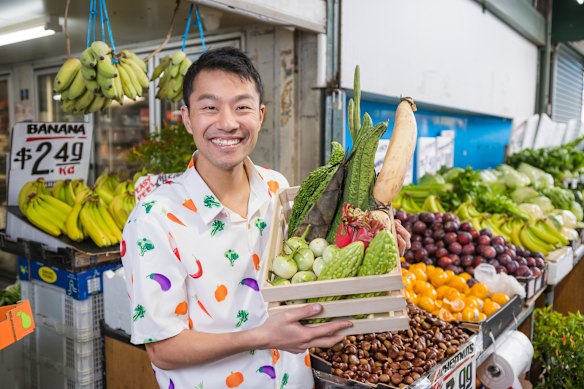
“When temperatures drop below zero, broccoli converts its starches into sugars to stop the liquid inside the plant from freezing,” says Melbourne fruiterer Thanh Truong, better known as the Fruit Nerd. “The result is sweeter broccoli. The same process applies to kale, cabbage and Brussels sprouts – cold weeks are the best time to buy them.”
The snap has brought hardier greens into focus and turned the fruit bowl over to citrus. Here are some of the best buys of the season.
Cauliflower
Right now, the best thing in the vegetable aisle is also one of the cheapest: cauliflower. “It’s been really inexpensive of late,” says Graham Gee, a senior buyer from independent greengrocer The Happy Apple in Ascot Vale and Seddon. “They’re currently about $3 a head, and that goes a long way.”
It’s also an endlessly adaptable veg that can be roasted whole, sliced into “steaks”, blitzed into soups, served as a rice substitute or added to curries. “They’re usually around 800g or 900g, so you’re probably looking at around 30c or 40c a serve,” says Catherine Velisha, the managing director of Velisha Farms in Werribee South. “They’re quite bulky, so they fill the plate up.”
Keep an eye out for fioretto or cauli blossom – a cross between a cauliflower and broccoli, with slender stems and delicate white florets. “There’s none of that woodiness, and you can eat the whole thing,” says Gee. “It’s very tender and sweet.”
Leafy greens
As cooler weather brings hardier greens like kale, spinach, rocket, cabbage and radicchio into season, organic farmer Palisa Anderson wants to bust a common food myth. According to Anderson, who runs the organic Boon Luck Farm and supplies top Sydney restaurants like her family’s Chat Thai, it’s a misconception that leafy greens are a summer crop. “Leafy greens actually love the cool, dry and crisp weather.”
Right now, she’s buying puntarelle, an Italian chicory that looks like “Medusa’s head”. People tend to overlook it, she says, because they don’t know what to do with it. You can eat the heart raw, like celery – she serves it at home with a lemon and anchovy dressing – while she sautees the outer leaves with garlic and chilli. “It’s just the most delicious thing.”
Root vegetables
Root vegetables such as turnips, carrots, swedes and radishes are pulling up nicely, too. Among them is the Japanese radish, daikon, eaten raw for its peppery crunch or braised down to melting tenderness in soups and stews. “It does seem to be growing in popularity, likely driven by the interest in Japanese and Korean cuisine – plus it’s super healthy,” Gee says.
Mandarins
Imperial mandarins are everywhere right now, and they’re also the cheapest, coming in at about $4 to $5 a kilo. But don’t lock into one variety, says Truong. “Afourers might be the variety in abundance one week; then murcotts the next; then dekopons. Buy whatever’s in good volume that week, and you’ll get better fruit at a better price.”
There’s nothing worse than peeling a mandarin to find it dry and mealy inside. “Always pick the heavier fruit,” Truong says. “More weight means more juice. A light mandarin or orange is at risk of granulation, in which the pulp dries out.”
Oranges
If you’ve been navel-gazing, you’ve probably noticed cara cara oranges on the shelves, a natural mutation of the Washington navel that’s sweet with a blush-pink centre. Anderson is harvesting her crop in northern New South Wales.
Look for fruit that is full, smooth and free of obvious pores, she says. “If you get an orange that’s full of pores, it’s probably been ripened off the tree, and it never gets as good flavour.” Blood oranges, with their crimson flesh, are expected to land on shelves next month (July).
Apples and pears
Turns out there’s no such thing as a bad apple – at least, not right now. “All varieties, including pink lady, kanzi, jazz, Granny Smith and those small, sweet missiles are eating well, because we’re in the front part of the season,” says Gee. And please don’t forget about pears, he adds. “They tend to get overlooked, but they’re eating great.”
Retail prices have stabilised since autumn’s fuel hikes, though overall costs remain slightly elevated. “Apples have started off a little higher than last year,” says Gee. “But there’s still good value if you look for what’s in season, and buy when there’s a good crop coming through.”
For the best value, Truong suggests trying a new grocer this weekend. “Most Australians shop at the same place every time for convenience, and that convenience comes at a cost. A store with lower prices moves produce faster, and faster turnover means fresher stock. It’s worth shopping around.”
 Erina Starkey – Erina is the Good Food App Editor for The Sydney Morning Herald and The Age. Previously, Erina held a number of editing roles at delicious.com.au and writing roles at Broadsheet and Concrete Playground.