

Source : Perth Now news
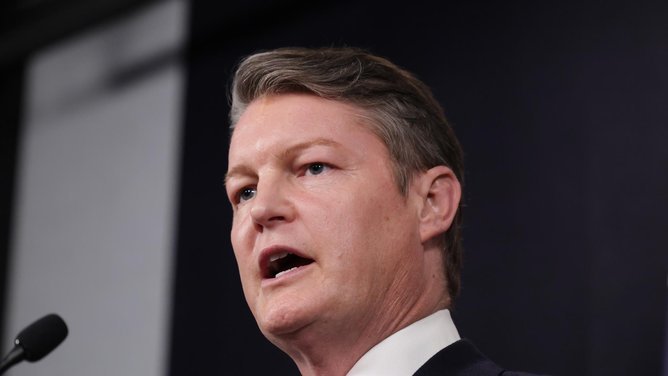
Victoria’s new Labor Premier Ben Carroll is being urged to commit to establishing dedicated supported housing for young people after new data revealed more than half of young people accessing homelessness services ended up in the ED when experiencing a mental health crisis.
The data, released on Monday by Melbourne City Mission, painted a stark picture of the conditions Victoria’s homeless youth were dealing with less than six months before voters return to the polls in a hotly contested race between a highly-unpopular Labor, a struggling Coalition, and an insurgent One Nation vote.
According to the data, half of all young people accessing homelessness services in Melbourne had attended the hospital emergency department for mental health concerns – almost 60 per cent of which had self-harmed, had suicidal thoughts, or had attempted suicide.
About 17 per cent of those people had attended four or more times.
Five of every six young people accessing services had grown up experiencing family violence, the report found. About two-thirds were already known to child protective services.
In the Latrobe/Gippsland region, more than half of young people had been homeless for two or more years, while in Greater Melbourne more than one quarter had been without a home for four years or more, according to the survey of 209 young people aged 15 to 24 on April 1.
Following the report, Melbourne City Mission (MCM) and youth mental health service Orygen called on whichever party forms government in November to commit to a dedicated, funded supported-housing model for young people, which they said would be the youth equivalent of a program already promised, and only partly delivered, for adults.
Orygen executive director Professor Pat McGorry said the report reinforced the case for secure and supported housing as a form of mental health intervention.
“You cannot recover from a mental health crisis while you are sleeping rough or moving between crisis beds,” he said.
“Housing has to be part of youth mental health care, not an afterthought for when a young person has recovered. The Royal Commission made a promise to address this and so far the Victorian government has failed to deliver.”
MCM chief executive Paul Wappett said the data showed young people were being repeatedly discharged from hospital back into homelessness, with nowhere safe to go.
“Every young person in this snapshot has a story that starts with trauma and ends up in an emergency department, because there is nowhere else for them to go,” he said.

“Police, paramedics and hospital staff are working in a broken system and none of them can give a young person the home they need. That’s not a job any of them signed up for, and it’s not a job they should have to do.“
Among those sleeping rough in Victoria is Clara.
Experiencing periods of homelessness at a young age, Clara achieved well in school but was largely forced to leave home after turning 18 due to violence.
“I had no choice but to leave,” she told NewsWire.
“Over the following months, I experienced homelessness, cycling through youth refuges, sleeping rough, and spending time in hospital emergency departments.
“Despite always valuing my education, the trauma I experienced severely affected my mental and physical health, making it difficult to attend school and continue my studies.”
Without stable housing or the right mental health support, Cara’s mental health deteriorated, and she attempted suicide 42 times in six months.
“Everything changed when I was offered medium-term housing through MCM. Having a safe place to live gave me the stability to engage in recovery, access support, and rebuild my life,” she said.
“Today, I live in stable housing with my partner, study biomedicine, and work in the advocacy team at MCM. My experience has shown me that safe housing is not just a roof over your head, it can be the foundation for recovery, hope, and a future.”
Lifeline