

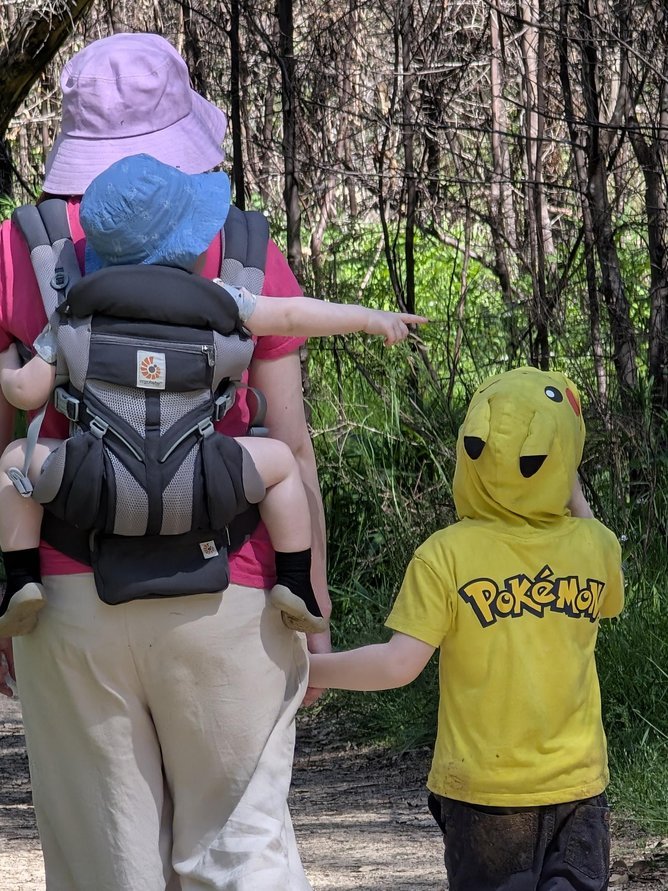
Source : Perth Now news
Bridgette Earnshaw made a bold choice at 26 years of age between buying a house or having a baby.
She paused her string of unsuccessful dates and used her savings to fund an IVF journey instead of a mortgage.
Ms Earnshaw represents a booming new demographic of solo mums by choice.
“I was looking at what I had in the bank going, OK, so basically you can take one of two paths now. You can keep saving a little bit more and buy a house and push back having kids by probably five to 10 years or you can have kids, and so I chose that option” Ms Earnshaw told NewsWire.
Moving on from a bad relationship that left her feeling like she had “terrible taste in men”, Ms Earnshaw realised she didn’t need a partner to pursue her lifelong desire of motherhood.
“After looking at the guys I was dating and going, ‘Honestly, you’d be a terrible dad anyway. Like, what is the point of settling down with you?’ And then I wouldn’t be able to parent the way I wanted to … I was like, no, much better off if I can just raise them by myself,” she said.

Ms Earnshaw welcomed her first child at 27. Her second son, whom she described as a “birthday present” to herself, was born a day after her 31st birthday
Behind her decision to be a solo parent stood her family whose support made sure she was able to look after the kids.
Ms Earnshaw and her two sons live in a granny flat built on her parents’ property. She said she was fortunate to have “incredibly supportive” parents.
“They babysit while I work which is wonderful,” she said.
Solo mums and fertility clinics
Young single women are now a fast-growing group in fertility clinics. They are choosing solo motherhood in their 20s and early 30s.
The latest Fertility Society Australia and New Zealand (FSANZ) data shows a 68 per cent surge in single-female cycles between 2020 to 2023.

The average age for female patients undergoing these cycles is 36, with 35-39-year-old women the largest proportion.
Fertility specialist and FSANZ board member Manuela Toledo said a common theme among these women was that “they’re not going to sit around waiting for Mr Right”.
“They’re freezing eggs to potentially have a baby with a future partner in their 40s, but they’re also wanting to be a mum now,” Dr Toledo said.
“They know that socially, it’s quite acceptable to be a single mum and it doesn’t preclude finding a life partner in the future.
Horrors of online donor sperm market
While clinical IVF is booming, experts including Dr Toledo said they were concerned about the rise of online donor sperm markets that bypassed fertility clinics and remained highly unregulated.
“We’re very, very concerned about the fact that there’s no way that the family limits are being adhered to,” Dr Toledo said.
She said warned of a future crisis that might leave donor-conceived children with “way more half siblings than is safe and advisable”.
Brisbane-based fertility specialist Devini Ameratunga echoed similar concerns, saying there was “a lot of rotting” happening in the community that deeply concerned her.
“It’s really disheartening because these are vulnerable people that we should not be doing this for,” Dr Ameratunga said.
She shared a shocking glimpse of the online market, saying people have paid for and had sperm delivered to their doorsteps that were “obviously” all dead.
Both experts warned of the potential immense emotional toll on children from online sperm donors who would grow up without legal rights to access their donor’s information and be unable to track down their biological origin.
Not a ‘last resort’ anymore
The rise of solo mums by choice is a move away from traditional views of single parenthood. Previously seen as a “last resort” or a result of life circumstances, single parenthood was now an active choice driven by reproductive autonomy and strong family support, Brisbane-based reproductive psychologist Narelle Dickinson said.
“It’s less of a last resort option and more of a ‘this is actually how I imagine myself as a parent without having a partner’. So it’s actually often a goal from the beginning,” Ms Dickinson said.

“There are always going to be men and women who are uncomfortable with non-traditional pathways.”
“There are some men who very much understand it. I suspect there are some men who would probably feel very threatened by the idea that men are redundant in the reproductive process as long as we can access their sperm.”
For some women, motherhood has been a lifelong desire that has overpowered the choice to have a romantic partner.
Ms Earnshaw said she was ”happily in the mum zone” and was not seeking out any relationships.
She described the birth of her first son as a mystical experience.
“It was like meeting a part of my soul that was living outside of my body. I instantly was like, yep, I know you are amazing and I would quite literally throw myself in front of a bus to protect you without hesitation,” she said.
Her honest advice to young women looking into pursuing the solo mum path was to “really think” about what’s important to them and what desire was stronger between being a mother and a partner.
Would they rather have a partner and no children or would they have children without a partner?
“I don’t know people who regret having children. I know lots of people who regret that they didn’t have children, but I don’t know people who look at their kids and go, ‘I wish I hadn’t done that’,” she said.


