

Source : INDIA TODAY NEWS
Back in the late 1990s, the Honda City arrived in India and changed perceptions of what a mid-size sedan could be. It combined Japanese engineering, reliability, comfort and a surprisingly engaging driving experience into a package that quickly became aspirational. For many buyers, the City was the default choice if they wanted something premium without venturing into luxury territory. More importantly, it built a reputation that few cars in India can match. Generations of enthusiasts still speak fondly of the City, whether it was the iconic VTEC models of the early 2000s or the sharp-driving third-generation car that became a benchmark in its segment.
advertisement
Fast forward to 2026, and the automotive landscape has changed dramatically. SUVs dominate sales charts, sedans occupy a shrinking corner of the market, and buyers have more choices than ever before. Yet the Honda City survives. Not only that, Honda continues to invest in it. This latest update marks the second facelift for the fifth-generation City, which first arrived in 2020 and was previously refreshed in 2023. The question is simple: Does the latest City remain true to the qualities that made it such an enduring success?
What’s changed?
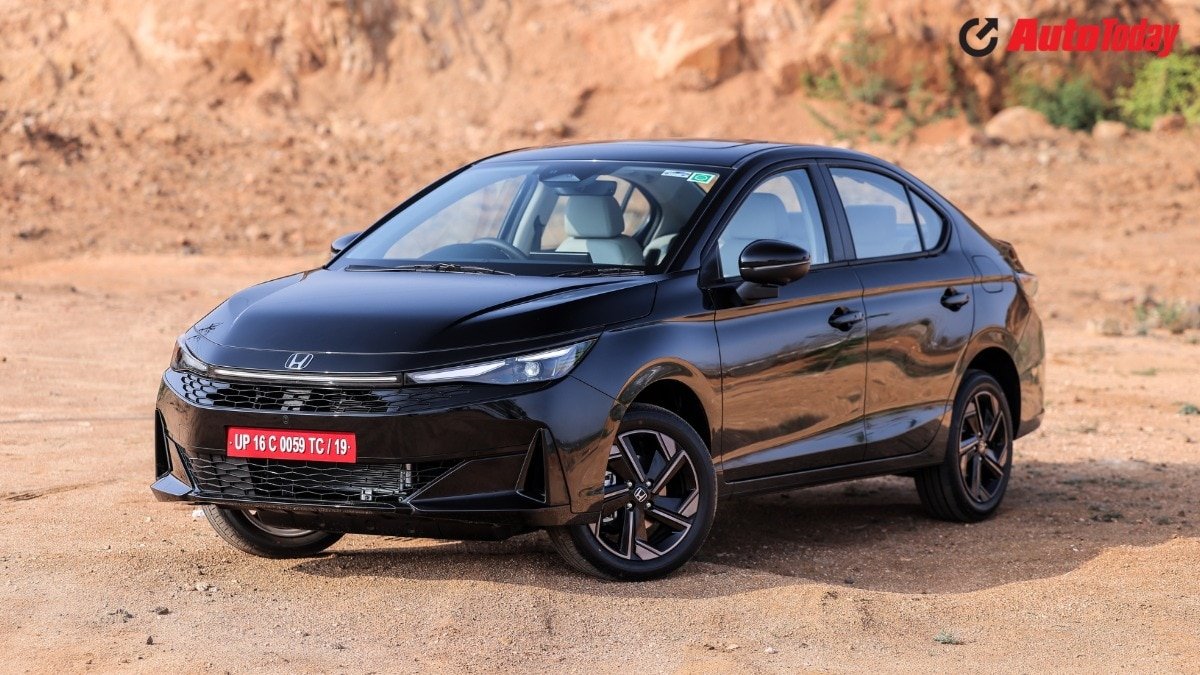
The most noticeable changes are concentrated at the front. Honda has given the City a more contemporary face with a redesigned grille, fresh honeycomb detailing and revised LED lighting elements. The new two-piece daytime running lamp signature gives the sedan a sharper identity, while the revised front bumper and larger air intake add a touch more visual presence. The styling now feels more aligned with Honda’s global design language and lends the City a cleaner, more sophisticated appearance. Functional vertical air intakes have also been integrated into the bumper, helping improve aerodynamic efficiency while adding visual interest.
Move to the side, and changes are minimal. The silhouette remains unchanged, which is no bad thing considering the City continues to be one of the more elegant sedans on sale today.
New 16-inch dual-tone alloy wheels are the primary update here.
At the rear, Honda has revised the bumper and added a larger diffuser-style element. The reflectors have been repositioned vertically, and the tail lamps receive a smoked treatment. A new Honda emblem at both ends completes the visual refresh. The City also gains a new Black Crystal Pearl exterior colour, adding another option for buyers seeking a more premium appearance.
Inside, the updates are more meaningful. The biggest change is the new 10.1-inch touchscreen infotainment system with wireless Apple CarPlay and Android Auto. To be frank, this isn’t the most impressive touchscreen in its class, but it does get neat tricks like gesture control. However, the unconventional tilt of the screen itself makes it feel like an afterthought once again, and it isn’t the most legible under direct sunlight. Ventilated front seats finally make their way into the City and are likely to be one of the most appreciated additions to Indian conditions. A 360-degree camera has also been added, significantly improving ease of parking and manoeuvring in tight urban environments.
The dashboard layout remains familiar and continues to prioritise ergonomics over theatrics. There are some subtle changes to the trim on the inside, like the colour of the seats is lighter than earlier, and front seat headrests have changed too. Physical controls for climate functions remain, which makes daily usability far easier than many rivals that increasingly rely on touchscreen-heavy interfaces.
Rear seat comfort remains one of the City’s strongest attributes. Space is generous, knee room is excellent, and the overall seating position is comfortable for long journeys. Rear passengers benefit from dedicated AC vents, USB Type-C charging ports and a centre armrest. While features such as rear sunshades and adjustable headrests would have enhanced the experience further, the City remains among the most comfortable cars in its class from the back seat. Material quality continues to reflect Honda’s traditional strengths. The cabin feels solidly assembled and built to last, even if some competitors now offer more visually dramatic interiors.
What’s it like to drive?
For this review, we drove the City e:HEV hybrid, which remains unchanged from the previous iteration. In fact, this version is mechanically identical to the older City, which means crucial numbers like ground clearance, wheelbase, and more remain the same.
Moreover, the conventional 1.5-litre, four-cylinder naturally aspirated petrol engine remains available with either a six-speed manual or seven-step CVT. The hybrid is where Honda showcases its engineering expertise. The system combines a 1.5-litre four-cylinder Atkinson-cycle petrol engine with two electric motors and a lithium-ion battery pack. Combined output stands at 126bhp, while the electric motor alone delivers an impressive 253Nm of torque. Numbers, however, tell only part of the story.
What immediately stands out is refinement. Compared to rival SUV hybrid systems that rely on three-cylinder engines, the City’s four-cylinder setup feels noticeably smoother and more sophisticated. Transitions between electric and petrol power are seamless, and the vehicle spends a surprising amount of time operating silently in EV mode, particularly in urban traffic. The hybrid system is clearly calibrated with efficiency as the priority. Honda claims close to 28kmpl and, given the way the system operates, achieving impressive real-world fuel economy should not be difficult. For buyers covering significant annual mileage, this remains one of the strongest arguments in favour of the hybrid.
Beyond efficiency, the City continues to impress as a daily driver. The steering is light enough for city use while offering sufficient confidence at highway speeds. Visibility is excellent, the driving position is comfortable, and all controls fall naturally to hand. Ride quality is arguably one of the City’s biggest strengths today. Where earlier generations prioritised agility and responsiveness, the current car has evolved into something more mature. It absorbs road imperfections with remarkable composure and remains exceptionally comfortable over long distances. That being said, acceleration is brisk but not exhilarating. If you’re looking for the push of a turbocharged motor, you will be left wanting more.
That is not to say the City has entirely forgotten its roots. There is still a degree of precision when changing direction, and the chassis remains predictable. However, comfort now takes precedence over outright sportiness. The e-CVT transmission complements this character well. Progress is smooth and relaxed, making the City an effortless companion in traffic. Push hard, and the engine note becomes more noticeable, but that is hardly the intended use case for a hybrid focused on efficiency and refinement.
Honda’s ADAS suite, branded as Honda Sensing, remains unchanged and is one of the better-calibrated systems in this segment. Features such as adaptive cruise control and lane-keeping assistance work effectively without feeling intrusive. Ultimately, the City feels exactly as a modern Honda should: easy to drive, comfortable to live with and engineered with a clear focus on everyday usability. On the whole, though, the Honda City is more catered to a buyer with a balanced driving style. If you’re going to spend time both in the driver’s seat and being chauffeured around, the City facelift will prove to be a reliable partner in the long run.
Verdict
The Honda City facelift is not revolutionary, nor does it need to be. Instead, Honda has chosen to build upon the qualities that have sustained the City for more than two decades. The updated styling is more stately, the new features address key omissions, and the hybrid powertrain remains one of the most sophisticated options available in the segment. In terms of pricing, the City facelift costs between Rs 12 lakh and 21 lakh (ex-showroom). While the base price remains the same, there has been a price hike of around Rs 1 lakh for a few variants compared to the older pricing. Given the updates, that can feel a bit steep, but one must remember that the City continues to excel where it always has: comfort, refinement, efficiency and reliability. In an era dominated by SUVs, that combination remains surprisingly compelling.
Subscribe to Auto Today Magazine
– Ends
SOURCE :- TIMES OF INDIA