

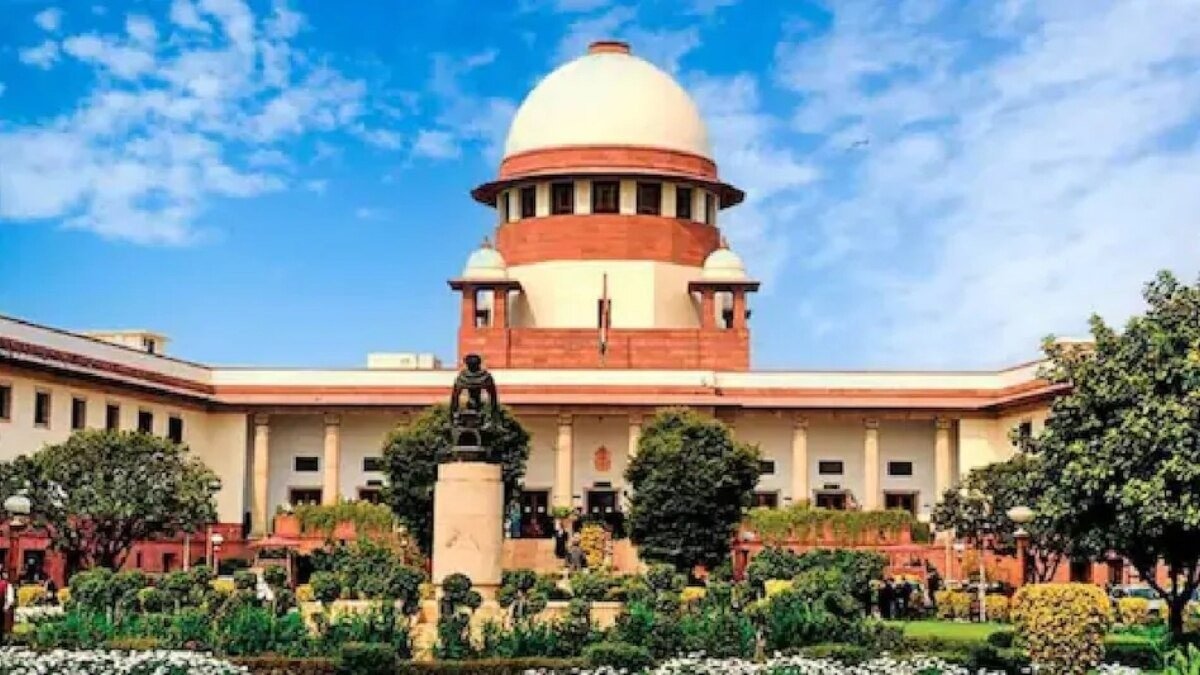
Source : INDIA TODAY NEWS
In a move to tackle delays in the judicial system, the Supreme Court has laid down a set of timelines and guidelines for pronouncing and uploading judgments after courts reserve their verdicts.
The top court said that if a judgment is not delivered within three months of being reserved, the Registrar General concerned must place the matter before the Chief Justice of the High Court. The Chief Justice may grant an additional two weeks for pronouncement of the verdict. If the judgment is still not delivered within that period, the case can be reassigned to another bench.
advertisement
The Supreme Court further directed that where only the operative portion of a judgment has been pronounced, the detailed reasons must be uploaded within 15 days. If this does not happen, affected parties may move an application before the court. If the reasons are not uploaded within 30 days, litigants may seek transfer of the matter to another bench for fresh consideration.
To improve transparency, the court ordered that the date on which a judgment is reserved must be displayed on the respective High Court’s website. Registrars General of all High Courts have been directed to place the guidelines before their Chief Justices for implementation.
The Supreme Court also emphasised that judgments in reserved matters should ordinarily be delivered within three months. Cases involving personal liberty, including bail matters, should be prioritised and decided expeditiously.
In a major relief for undertrial prisoners, the court said orders in bail cases must be pronounced on the day after the order is reserved. Bail orders should be promptly communicated to jail authorities, and undertrials granted bail should be released on the same day or, at the latest, the following day. Trial courts have also been directed to report compliance to the High Courts.
The directions came while hearing petitions alleging extraordinary delays in the pronouncement of judgments by the Jharkhand High Court. Petitioners claimed that verdicts in their criminal appeals had remained reserved for two to three years after final arguments were concluded. Taking serious note of the issue, the Supreme Court had expanded the scope of the matter and sought status reports from all High Courts regarding cases where judgments had remained reserved for months or years.
– Ends
SOURCE :- TIMES OF INDIA