
SOURCE :- THE AGE NEWS
When US President Donald Trump struck a deal to end Israel’s war in Gaza in October, the signing ceremony was an all-singing, all-dancing affair alongside world leaders in Egypt, televised live.
Ending the conflict in Iran was much different. Trump signed the agreement late on a Wednesday night during dinner with French President Emmanuel Macron in Versailles, filmed by his aide Dan Scavino.
After inscribing his signature on the page, Trump pointed at the white tablecloth below. “Oil down,” he said to someone across the table. Then he pointed towards the ceiling: stocks up.
With the war now officially concluded after 100 days, the world has been left wondering: what was it all for? Iran’s Islamic theocracy is still in power, the fate of its nuclear stockpile is unclear, and the US has expended a great deal of munitions, money and goodwill.
Trump’s critics argue the benefits are little more than a slow return to the way things were before: the price of Brent falling, the Dow Jones climbing. That has certainly been the president’s emphasis since doing the deal.
“These fools, who think I haven’t been tough enough on Iran, when the Stock Market Just Hit A RECORD HIGH, and Oil prices are ‘tumbling’ down, are either jealous, bad people, or stupid,” he posted on social media.
But there are many more complicating factors emerging from the war and the deal inked this week: America’s relationship with Israel and the Gulf states, the future of the Iranian regime and its proxies and the US’s broader standing in the world, to name only a few.
At face value, the US and Israel are a house divided; the Islamic theocracy in Tehran has been thrown a lifeline and Hezbollah in Lebanon has been afforded a degree of protection; and Washington’s status as a dependable power is being severely questioned.
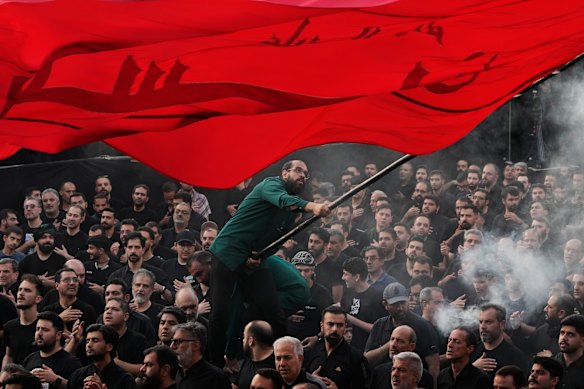
At the same time, Iran’s leadership was decimated, its nuclear program was bombed to bits and its economy is smashed and it received little if any help from its allies. “If you’re looking at the outcome of a war,” says Paul Musgrave, associate professor of international relations at Georgetown University in Qatar, “it is actually perfectly possible for both sides to lose.”
‘Horrific surrender document’
The 14-point memorandum of understanding unveiled this week represents only the start of a conversation between the US and Iran, not the end. Its primary function is to declare an end to the war, to end the US naval blockade, to reopen the Strait of Hormuz and to establish a 60-day negotiating window for a proper deal.
Nonetheless, criticism of the memo has been sweeping, from Obama and Biden-era foreign policy wonks to the Republican war hawks in Congress and weary Middle East analysts around the globe.
“This is a jaw-dropping, horrific surrender document complete with hundreds of billions in reparations,” said Susan Rice, Obama’s ambassador to the United Nations, and later his national security adviser, in a post on X.
“It is the predictable result of incompetent negotiation and the foolhardy strategic catastrophe of starting and pursuing this disastrous war. The US will not soon recover from this, the biggest national security blunder in decades.”
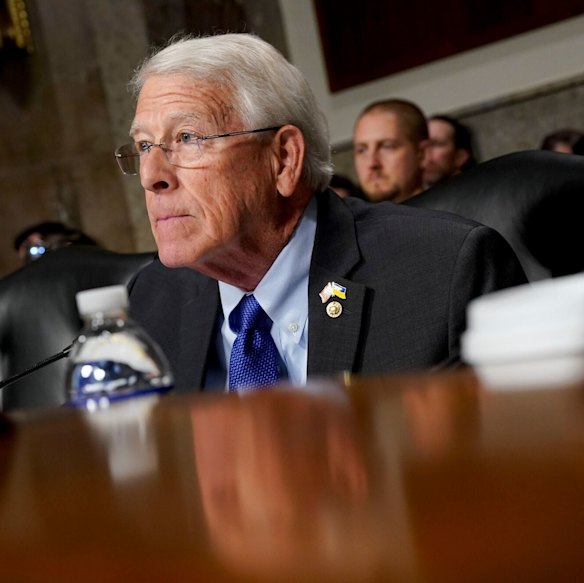
Mississippi senator Roger Wicker, the Republican chairman of the Senate Armed Services Committee, said the MoU negotiated away the victories of Operation Epic Fury, the US military campaign against Iran, in ways that were “completely out of step with the president’s goals”. Others have portrayed the agreement as tantamount to an American surrender.
Plenty of upside for Iran
The central thesis of this critique is that the US is providing Iran several major concessions without much in return.
First, it immediately lifts restrictions on Iranian oil sales. Later, it contemplates relieving all sanctions against Iran pursuant to an agreed upon schedule as part of the final deal, and unfreezing Iranian assets.
The Trump administration will allow Iran to access its oil money held in Qatar to buy humanitarian and non-sanctioned goods from the US under an interim deal between Tehran and Washington. The Financial Times reports the sum could be as much as $US6 billion ($8.6 billion)
The US also commits to develop a plan with regional partners “with at least $US300 billion for the reconstruction and economic development of the Islamic Republic of Iran”. And it pledges to draw down troops from the area and return them to pre-war levels.
‘These are the sorts of terms you would concede to if you were looking to end a very unfavourable situation.’Paul Musgrave, associate professor of international relations at Georgetown University in Qatar
For now, Iran’s commitments are to reiterate its declaration that it does not seek nuclear weapons. It also undertakes to destroy or down-blend its stockpiles of highly enriched uranium under supervision by the International Atomic Energy Agency, though the precise mechanism is left for later discussion.
To critics, these concessions to Iran are excessive, and reek of desperation for a deal. “These are the sorts of terms you would concede to if you were looking to end a very unfavourable situation,” says Musgrave.
For him, the outcome indicates “the Iranians had greater strategic patience, greater strategic leverage and the ability to shape a deal that was always going to be more favourable to them relative to the Americans”.
Dan Shapiro, a former US ambassador to Israel, now a distinguished fellow at the Atlantic Council, called it a “shockingly weak deal”. He was especially surprised that oil sanctions would be lifted immediately without a single concession from Iran, other than reopening the strait.
“The real meat of the nuclear negotiations, on the enriched uranium stockpile, on future enrichment and on verification measures, won’t even have started, and they’ll already be cashing in,” he said.
The $US300 billion reconstruction fund, Shapiro said, was “shocking in its size, but also in its implication that Iran is expected to emerge from this as a rational and responsible actor in the region”. None of the MoU goals involved improving the lives of the Iranian people, he noted.
Lightweights at the wheel
Among Middle East watchers, especially in Washington, distrust of the Iranian regime runs deep, and there is little time for Vice President JD Vance’s idea that this deal could be a “grand bargain” by which Iran re-enters the community of nations and the world economy. The US negotiating team, Vance, Trump’s old property developer friend Steve Witkoff and presidential son-in-law Jared Kushner, are widely regarded as naive foreign policy lightweights.
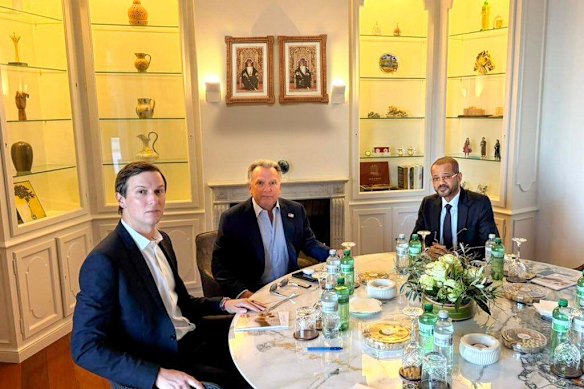
But the Trump administration thrives on doing things differently, and Vance is keen to give peace a chance. “People say, ‘The Iranians will never change their behaviour’,” Vance said on Thursday. “Maybe that’s true, and if so, they don’t get any of the benefits of the bargain. But isn’t it worth trying?”
His staunch defence of the deal rests on the principle that Iran gets nothing, or at least very little, unless it demonstrates it is adhering to the agreement and changing its rogue state ways. The specifics of this are yet to be determined, but the basic thrust, that Iran gets nothing until it gives something, leads Vance to argue it is “win-win” for the American people. Not a cent of American taxpayer money will go to Iran, he says.
Much of the vice president’s case rests on optimism and deference to his boss.
“Have a little bit of faith in the president of the United States,” he urged Republican critics. “The idea that he’s going to strike a deal that’s bad for the American people, it’s preposterous. He believes in this deal. He is going to see it to completion.”
Meanwhile Trump, who had planned to send Vance to Switzerland to sign the deal until he quietly inked it himself in Versailles, joked that he would blame his vice president if it all fell apart. “You better be careful, JD,” he said.
As well as dismaying many of Trump’s close allies and media friends, the memorandum of understanding has stunned Israel, which was always pursuing more maximalist aims in the campaign against Iran and Hezbollah.
While Prime Minister Benjamin Netanyahu shied away from overt criticism, some of his far-right ministers let Trump know exactly what they thought of the deal: a disaster for Israel and the world. Netanyahu reportedly fumed in private.
Reports also indicated Israel was not consulted on the MoU, nor had it been briefed about its contents, although the White House says it “remained in close co-ordination with our regional partners” throughout the process.
Shapiro says claims about a terminal decline in the US-Israeli alliance are exaggerated. But he says the high level of co-operation at the beginning of the war is unlikely to be repeated.
“Israelis are aghast at how quickly Trump seems to have pivoted toward rewarding the Iranian regime,” he says. “It represents a significant divergence of US and Israeli interests. The US priority is to get the Strait of Hormuz open and re-establish some global economic stability. Israel’s interest, of course, would be to continue the war and try to continue to weaken the regime. They can’t do that without the United States.”
Shapiro says there is also deep concern in Israel that it will be expected to restrain itself in Lebanon even if Hezbollah continues to attack Israeli communities. Netanyahu has indicated he has no plans to stop the air strikes or to withdraw troops from southern Lebanon, and Israeli ministers have said they do not consider themselves bound by the agreement in Lebanon.
“The way that the deal requires Israel to abide by a negotiation that it was not a part of … that is just a level of treatment that I do not think Jerusalem is used to,” says Musgrave.
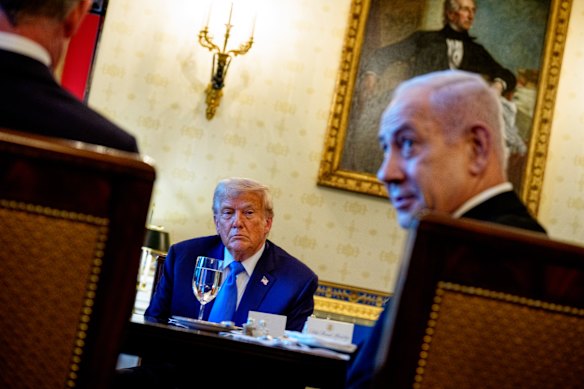
That tension blew out into the open on Friday (AEST) when Vance slammed Israeli critics of the deal, telling them they should know where their bread is buttered. Trump was the only world leader who still sympathised with Israel, he said from the White House press podium, and Israel should “wake up and smell the reality”.
In an interview with The New York Times, Vance said Israel lacked its own alternative plan. “What is your exact proposal? You’re a country of 9 million people. You can’t just kill your way out of solving every single national security problem that you have.”
The long-term implications of this fissure could be significant. Vance is a leading contender for the Republican nomination for president in 2028, and polling consistently shows younger Republicans are turning against the Jewish state. Netanyahu, whose closeness with Trump was a key political asset, faces an election no later than October.
Eurasia Group founder Ian Bremmer suggested the MoU may turn out to be a blessing in disguise for the Israeli people. “Netanyahu losing his election because of Trump’s Iran deal would be the biggest favour the United States could do for Israel,” he wrote on X.
Vali Nasr, an Iran expert at the Johns Hopkins School of Advanced International Studies, saw it differently. “JD Vance’s response to Israeli criticism of the MoU shows that there is another Iran gain coming out of this war,” he said.
“Before the war, there was no daylight on Iran between US and Israel. Now their positions are becoming night and day apart.”
Trump will need to own this deal
Other than Israel, Middle East countries and the rest of the world broadly welcomed this week’s deal, if only because it marked an end to the war and a return to something resembling normal maritime trade.
Vance argued the Gulf nations’ endorsement of the deal should be regarded as one of its biggest selling points because they know Iran better than anyone and have the most to lose if it goes wrong.
But even those analysts prepared to give the MoU a chance, and who say it was the least bad option, find themselves questioning its content.
“It would take a very committed partisan to say that the carrots for Iran here are not more enticing, and the sticks less intimidating, than those of the [Joint Comprehensive Plan of Action],” wrote historian Niall Ferguson in The Free Press, referring to the 2015 nuclear deal signed by Barack Obama.
That deal, so despised by Trump that he withdrew from it during his first term (he continues to deride it on social media), is now a problem for the president. In lieu of regime change in Tehran, delivering a better final deal than the 2015 Obama agreement is a must.

Musgrave believes that’s unlikely, but not impossible. “The one thing that might be better about this is simply that Donald Trump has to put his name to it, and he might take ownership over that,” he says.
“There could be a world in which the establishment of economic ties gives more voice to people in Iran who want to have greater connections to the outside world, and that leads to strategic stability. But does that really seem plausible from either the Iranian or the American side? And even if it was, that deal was probably on the table back in February.”
Carnegie Endowment for International Peace nuclear program co-director James Acton says the Trump administration must pursue full implementation of the MoU because the alternatives, more bombs, or simply walking away, are worse.
Acton says one of the key problems with the MoU is its vagueness and its apparent reliance on what senior US officials are calling gentlemen’s agreements made during negotiations.
“The administration needs to ditch this kind of wishful thinking,” he wrote at Carnegie. “Whether Iran will comply with written provisions remains to be seen, but it is virtually certain it will ignore unwritten ones.”
The 60-day negotiating period began on June 18. That puts the deadline in mid-August, just as the US summer comes to an end and campaigning for November’s midterm elections gets properly under way. Trump could face dire choices between letting Iran menace the deal or restarting a war that would cause gasoline prices to spike weeks before the poll.
Musgrave says the war and its aftermath will weaken perceptions of American credibility and capacity and that it will change geopolitics in ways we don’t fully appreciate yet. “We are dealing with a crisis of the United States’ own making that has exposed the limits of US power,” he says.
“That makes the US less desirable as a partner, and any arrangements that depend on American credibility less desirable. [It] also means that other actors are going to change how they behave.” He cites Canadian Prime Minister Mark Carney’s speech earlier this year calling for middle powers to carve out a new world order that did not depend on US protection, saying that now looks prescient.
For Musgrave, the short-term winners of this war are clear: the Islamic Revolutionary Guard Corps, Netanyahu’s political rivals, and anybody involved in the transition to green technology. “But overall, the losers are the entire world.”
Get a note directly from our foreign correspondents on what’s making headlines around the world. Sign up for our weekly What in the World newsletter.