Source : the age
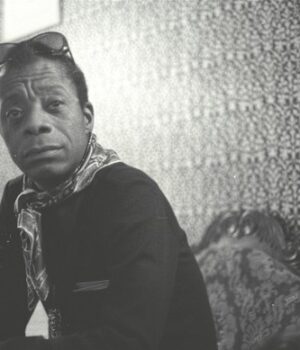
One day in eighth grade, Nicholas Boggs arrived at his Washington school dressed in a suit. He was giving a presentation on the writer and activist James Baldwin. It might have been around the time Baldwin died. Baldwin was only 63, but he had lived hard: partying, drinking, smoking, lots of sex and endless loving. Loving is the point. Baldwin needed to be in love and spent much of his life doing exactly this, anguishing though it could be – so much so that his biographer, that sweet, earnest boy in the suit, calls his book Baldwin: A Love Story.
Boggs’ biography has taken 30 years to write, 40 to think on. Baldwin (1924–1987) was a massive figure in both literature and civil rights; his insights were electric and well-documented. But reputations are fluid, tastes alter and Baldwin’s elaborate style isn’t easy for later generations. Boggs, in his 708 pages, isn’t much interested in revealing the public man, but in understanding his subject’s intricate dance between creative life and love life.
Baldwin was intersectional before the word was coined. And entirely original. He hated labels and never defined himself as homosexual, although sexually he exclusively liked men. He also had significant deep friendships with women, many of them famous, a few in love with him. Boggs’ original exploration of who Baldwin was, who he became and why, translates him through the four great loves of his life, all men.
The first love, non-sexual, was the artist Beauford Delaney. Baldwin was 16 when he met Delaney, who was in his 30s. Delaney fell in love with the brilliant young man who appeared at his door after a high school classmate suggested Baldwin visit him. Delaney lived in Greenwich Village, the equivalent of Paris’ Left Bank, and was delighted to introduce Baldwin to everyone. Baldwin, the eldest of nine children, his stepfather a street preacher, a man of violence and fury, found in Delaney a spiritual father: Delaney was walking, living proof for him that a black man could be an artist. He never lost touch with Delaney and supported him through difficult later years.
The great love of Baldwin’s life was a shaggy-haired boy from Lausanne called Lucien Happersberger. Straight and 17, Lucien was trying to make it as an artist in Paris. The pair locked eyes in a seedy gay bar (Lucien always needed money) where Baldwin was, as always, holding forth. In Paris, Baldwin was also meeting the magisterial Richard Wright, who had been generous and helpful to his young compatriot until that generosity was not returned. Boggs stretches himself to be non-judgmental about his subject, noting his generosity and his kindness to his family, and stresses how the complexities of his personal life gave impetus to his creative work. Baldwin had a lifelong fantasy of a conventional happy home, the type he never knew, yet he remained a self-obsessed artistic adolescent his entire life. Creative genius is the eternal alibi for bad behaviour.
Lucien returned to Switzerland, married and had children. Baldwin, about to become famous, returned to America. He fell in love with a 22-year-old Turkish actor studying at Yale, Engin Cezzar, who was reading to be Giovanni for the stage play of Giovanni’s Room. Their friendship deepened and, in 1961, Baldwin went to visit Cezzar and his wife in Istanbul for a few days. He stayed for a decade. He was in love with the city, and, in Turkey, he was not smothered by the demands of fame. Baldwin could never be still. He crisscrossed the world and sporadically landed again in the US. As his glittering essays reflect, he saw his homeland best when he wasn’t there.
Baldwin’s last great love was the French artist Yoran Cazac, and he lived in Tuscany and Provence with Cazac and his wife. He was godfather to their children. In his last decade, a new generation was impatient with his rococo style and irritated by protest literature, but Baldwin continued to work on stories, essays, columns and films, and talk to the most important people in the world.
How he did it all is a miracle, as is the writing of this serious and happily unsalacious biography. Exhausting? Yes. It is also magnificent and can only deepen understanding of this extraordinary, tormented man’s life. Boggs also loves, is often in love with, his subject. Entirely appropriate. At the end, it was Lucien, the shaggy-haired boy from Lausanne, who returned to be by Baldwin’s side. That is eloquent enough.
What else is happening in the book world?