

source : the age
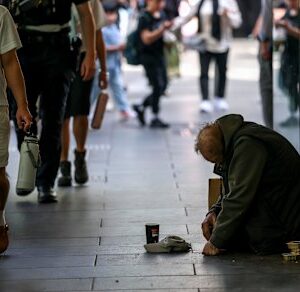
Homelessness services warn that they are stretched beyond capacity and the state government’s $27.8 million assertive outreach program to reduce rough sleeping will further increase demand.
Under a new statewide expansion of the “by-name” program, which already operates in inner Melbourne, teams of homelessness workers will be sent onto streets around Victoria to profile homeless people, build trust, prioritise those in the greatest need, and connect them to housing and other support services.
However, homelessness services warn crisis accommodation centres are regularly full before lunchtime, and that homeless people end up being placed in unsafe accommodation.
The City of Melbourne has been operating a by-name homelessness list since 2019 – rather than waiting for people to access services – but homelessness continues to grow in the CBD, with 140 people on the list.
Council to Homeless Persons chief executive Deborah Di Natale backed the state government’s push for assertive outreach as a vital lifeline for people sleeping rough, but she said it would probably cost $31 million to deliver and did not go far enough.
“Homelessness is increasing across Victoria, and we know that the single biggest investment that is going to make a difference to ending homelessness in Victoria is to make a commitment to build more social housing,” she said.
Council to Homeless Persons data shows 10,673 people sleeping rough sought support from specialist homelessness services in Victoria last year, a 25 per cent increase in five years.
The actual number of rough sleepers in the state is unknown because many of them do not seek support. These are the people who are targeted with assertive outreach.
“If you have a look at people who are working on the frontline now, they have got a queue from 9am, by about 11 or 11.30 am every single housing option is exhausted, and they are then dealing with a queue of people that they can’t provide any crisis accommodation for,” Di Natale said.
One young woman working on the frontline told her: “I have to make a decision about this woman who has come to me. Do I put her in this really unsafe, dodgy rooming house that I know is totally inappropriate? Or do I say, continue sleeping rough, knowing that when you are sleeping rough you are likely to be the victim of crime?”
Melbourne City Mission chief executive Paul Wappett also backed assertive outreach as a positive start but similarly said more support services were needed, particularly for young people.
“We’re going to increase the demand by doing these assertive outreach programs, and it’s important that we identify who needs these services and give our best opportunities to try and provide all the support that we need to,” he said. “But it will highlight just how much more housing we need for people who find themselves in homelessness.”
Former New York mayor Bill de Blasio backs assertive outreach, and will outline his approach to tackling homelessness at next month’s Melbourne Assembly public forum.
Melbourne Lord Mayor Nick Reece said the level of homelessness was less than its peak in 2019, when there were 500 homeless people in the CBD, but that the council’s by-name list – which proactively identifies every rough sleeper, tracks their progress, and aligns housing supply with individual needs – was not enough on its own.
“Homelessness, rough sleeping, is one of the most complex societal problems that we face, and it’s so multifaceted,” Reece said. “One component of it is the crisis in the mental health system manifests itself in people with acute mental health issues presenting on the streets.”
The council has increased its Melbourne outreach team to seven workers, including trained mental health officers to deal with people with acute mental health issues. It has also opened the Make Room homelessness service, which houses 50 people.
“Make Room has made a big difference in Melbourne,” Reece said. “But the truth is, we could use another two Make Rooms in the City of Melbourne.”
Reece said that in a typical month, the council’s support team interacted 400 times with people experiencing homelessness, and service users made 5500 visits to the council’s safe-space program in August.
“Across the board we need more services, more beds and more homes,” he said. “Obviously, when you’re assertively reaching out and helping someone on the street and giving them a pathway, they need somewhere to go.
“That means that we need that injection of funds in emergency accommodation, temporary accommodation, and long-term accommodation as well.”
Reece attracted criticism this year after failing to deliver on his promise of $6 million in homelessness funding to the Salvation Army and a further $3.2 million to Melbourne City Mission.
“The City of Melbourne’s putting more money into food relief than ever before, and Vincent Care, who are now delivering on that contract, are delivering more warm meals, hot breakfast to people than ever before,” he said.
Start the day with a summary of the day’s most important and interesting stories, analysis and insights. Sign up for our Morning Edition newsletter.


