Source : the age
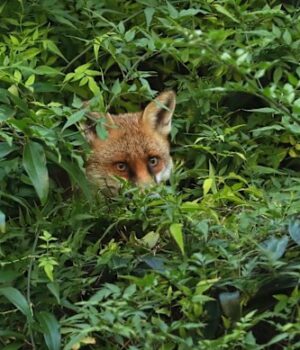
Artificial intelligence could become a new weapon in the fight against Australia’s burgeoning fox population, as technology is developed to identify the invasive predators and deliver poison while sparing native wildlife.
The push comes as a new federal strategy lays bare the scale of the threat from foxes, which occupy about 80 per cent of Australia and are estimated to kill more than 300 million native animals each year.
The draft national threat abatement plan says AI-powered bait stations, image-recognition traps, thermal cameras and remotely monitored devices could make fox control more targeted and effective. One system, known as a sentinel bait station, uses AI to distinguish between target and non-target animals and restrict access to bait.
In some temperate areas, fox densities can reach 16 animals per square kilometre, from central Queensland, through NSW, Victoria and South Australia. Populations are also now thriving in Western Australia.
The plan – which replaces strategy written almost 20 years ago – also examines improvements to grooming traps that use image recognition to identify animals before delivering a dose of poison.
Bluetooth technology could eventually prevent devices from firing at tagged domestic dogs, while mobile and satellite connections could allow rangers to monitor equipment remotely. An initial field test of a prototype produced promising results, although no foxes were encountered during the trial and further testing is required before the technology can be considered for wider use.
The latest government estimates put Australia’s fox population at about 1.7 million, although officials warn the figure fluctuates with rainfall, food availability and other environmental conditions.
Introduced by wealthy settlers for hunting between 1845 and 1879, the European red fox is estimated to kill about 367 million mammals each year, including 108 million native mammals, as well as 111 million birds and 88 million reptiles. They have contributed to the extinction of at least 20 native mammal species.
Invasive Species Council rewilding manager Rob Brewster said the new strategy was an opportunity to bring Australia’s approach to fox control into line with advances in conservation science.
“Foxes have helped drive native animals to extinction and continue to prey on threatened mammals, birds and reptiles across huge areas of the country,” he said. “For animals like bandicoots, bettongs and many ground-dwelling birds, controlling foxes can be the difference between populations recovering or disappearing altogether.”
Brewster said emerging technology would need to be matched by sustained investment.
“It is good to finally see a new national strategy on the table, but the final plan needs to be ambitious and backed by the funding needed to deliver real action on the ground,” he said.
“A strategy sitting on a shelf won’t protect wildlife. Governments need to invest in co-ordinated, sustained fox control across the landscapes where our most vulnerable native animals still survive.”
The draft plan says foxes can rapidly recolonise areas after control efforts stop, with individual animals recorded travelling as far as 300 kilometres. More than 40 fenced wildlife havens covering about 850 square kilometres have been established on the mainland to protect threatened mammals from foxes and feral cats.
Conventional control programs have helped reverse declines in species including the boodie, woylie, bridled nail-tailed wallaby and western swamp tortoise. But the government’s strategy envisages a combination of poisoning, trapping, shooting, exclusion fencing and eradication from priority islands, alongside research into emerging approaches.
Hamish McIntyre, the president of the National Farmers Federation, said foxes were a “dreadful pest” particularly for lambs and kid goats but also in horticulture around grapes and berries.
“It needs to be co-ordinated effort, obviously farmers, but also all the national parks and crown land,” he said, adding that “local, state, and federal governments should work together”.
The draft strategy sets a 30-year goal of reducing fox impacts sufficiently to secure the long-term viability of affected native species.
Dr Bronwyn Hradsky, from the school of agriculture, food and ecosystem sciences at the University of Melbourne, said no country had the tools to eradicate foxes at a continental scale.
“With current methods, it is feasible to eradicate foxes from a confined space such as a fenced reserve or an offshore island but impossible over vast areas,” she said.
She said eradicating foxes from Australia would require some yet-to-be-developed form of biological control.
Brewster said Australia had developed effective tools for controlling introduced predators but needed to deploy them at a much greater scale. AI is not presented as a replacement for existing control methods, but as a potential way to make them more precise, particularly in remote areas where monitoring traps and preventing harm to non-target animals can be difficult.
Get to the heart of what’s happening with climate change and the environment. Sign up for our fortnightly Environment newsletter.
 Rob Harris is the national correspondent for The Sydney Morning Herald and The Age based in Canberra. He is a former Europe correspondent.Connect via email.