Source : INDIA TODAY NEWS
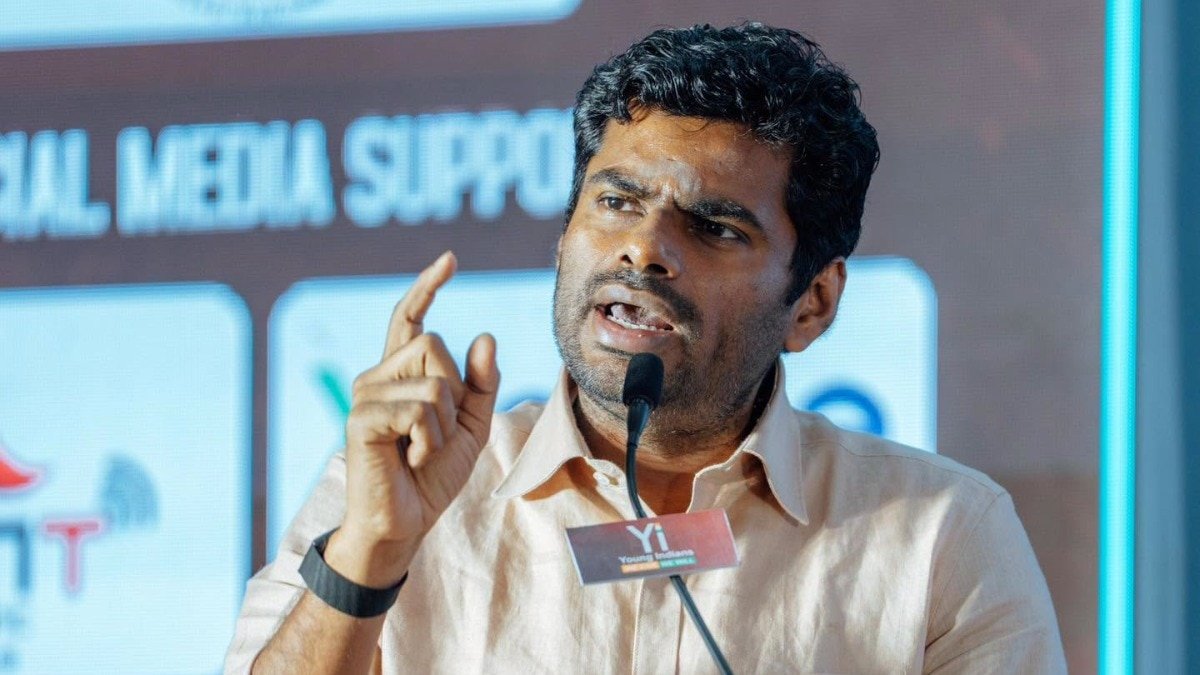
Former Tamil Nadu BJP chief K Annamalai has escalated his attack on the Centre over the Delhi Police crackdown on Cockroach Janta Party (CJP) leaders, questioning the legality of preventive detention procedures and accusing the government of branding dissenters as “foreign agents” instead of answering their questions.
In a detailed social media post, Annamalai wrote, “In a democracy, if you question the violation of due process of law, you are called various names. You will have to face various attacks, including being branded as a ‘foreign agent’.”
advertisement
Annamalai’s comments came a day after he termed the Delhi Police’s actions on CJP a “real disservice” and defended the organisation’s democratic right to raise critical questions.
The BJP hit back, accusing Annamalai of double standards and reversing his stand on the Special Intensive Revision (SIR) of electoral rolls after quitting the party.
Annamalai, who left the BJP in June, said the central government should answer the questions raised by CJP instead of branding its protests anti-national. While distancing himself from the group’s protest tactics, he defended its right to dissent.
“I want to make one thing clear to some people in the BJP. If you have a habit of choosing oblivion at your convenience, don’t forget this anymore: I quit the BJP on June 5, 2026. As I said yesterday, I do not agree with the CJP’s protest tactics, and I find many of their approaches misguided. But if you ask me if they have the right to protest, argue or fight on an issue they consider important, I would definitely say yes!” he wrote on X.
In a five-point list of questions directed at the Centre, Annamalai sought explanations for the denotification of Jantar Mantar as a protest site, the powers of police officers acting as Special Executive Magistrates, the handling of a bail hearing involving CJP members arrested on October 13, the rejection of eight sureties, and the alleged use of pellet guns and other violations of standard operating procedures during the NEET protests.
Annamalai questioned how Jantar Mantar was denotified as a protest site after CJP submitted a request for permission to hold a demonstration. He said the detained CJP functionaries had been released by the Special Executive Magistrate after the matter reached the High Court.
“My question again is this: Is the BJP really opposing the CJP? Or is it providing free publicity for it? Does the BJP want to split the votes of the Opposition parties by projecting the CJP as a major political force? At this rate, even if the CJP paid, they could not have had a better publicity team!” he alleged.
Annamalai’s remarks drew a sharp response from the BJP. The party’s Tamil Nadu chief spokesperson, Narayanan Thirupathy, accused Annamalai of changing his position on SIR after leaving the party.
Thirupathy said Annamalai had earlier defended the electoral roll revision exercise, claimed Tamil Nadu had a large number of fake voters who needed to be removed, and criticised the DMK for opposing the process.
He also cited Annamalai’s public debate with Congress leader Shashi Tharoor in May 2026, saying the former BJP leader had then defended SIR as fair and necessary and accused the Opposition of double standards.
“Today, after quitting the BJP, the same Annamalai has switched sides,” Thirupathy said, questioning why he was now backing concerns raised by CJP and the Congress.
The BJP spokesperson also criticised Annamalai for questioning the Delhi Police’s handling of the protests, arguing that the police must act when demonstrations cross legal boundaries or continue after protesters are asked to disperse.
As a former IPS officer, Annamalai understood the demands of maintaining law and order, Thirupathy said, arguing that his criticism of the police was inconsistent with his past responsibilities.
“Consistency matters, especially from someone who has been both a police officer and a senior political leader,” he said.
Annamalai, meanwhile, maintained that the government must answer questions raised by protesters, even if their methods are disputed, and cautioned against discrediting democratic institutions over the alleged errors of individuals.
– Ends
SOURCE :- TIMES OF INDIA