

Source : Perth Now news
Another suspected case of bird flu has been found on Australian soil, in what would be the second in the same state.
Authorities in South Australia have confirmed that a sick migratory bird has been detected at Hardwicke Bay on the York Peninsula.
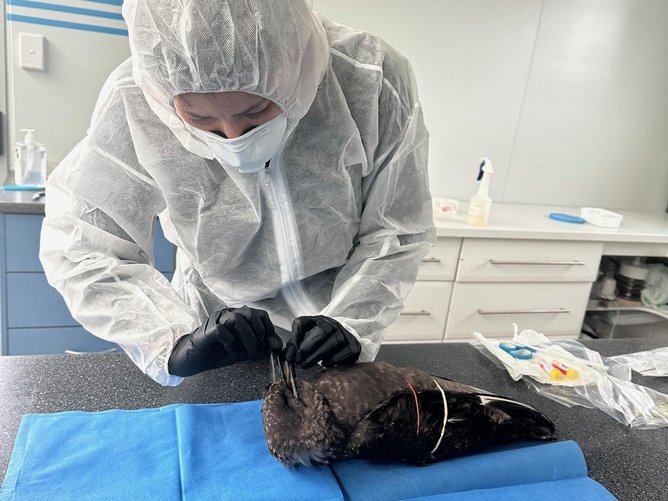
The giant petrel was reported to the Emergency Animal Disease Hotline, with initial tests detecting the deadly new H5 strain.
Should this test be confirmed, it will take the total number of cases in SA to two – and the total in Australia to eight.
Currently five cases have been confirmed in WA, while a single case has been confirmed in NSW in a petrel found late last week.
South Australia’s industries minister Clare Scriven said that it was “disappointing” that the suspected case had been found.
“The surveillance we are undertaking is critical to get a broader understanding of where these birds are being seen, and I thank the public for reporting sick or dead birds to us,” she said.
“Every report is reviewed and if there is any suspicion of H5 bird flu we send teams to collect the birds for testing.”

Skye Fruean, chief veterinary officer at the Department of Primary Industries and Regions South Australia (PIRSA) said preparations had been ongoing for a number of years.
“The new suspect case at Hardwicke Bay is considered isolated as there were no other impacted birds in the same area.” Dr Fruean said.
“This is encouraging as there are still no signs yet of spread of H5 bird flu into native wildlife.”
Meanwhile, a sigh of relief has been breathed in NSW after it emerged that a sick cormorant found over the weekend did not have the strain.
The bird was discovered at Narrabeen and underwent tests at the Elizabeth Macarthur Agricultural Institution, which came back as negative.
NSW chief veterinary officer Jo Coombe said the negative result was being reported due to “significant interest” in the case.

“Since the response was stood up on June 19, many investigations have been conducted relating to sick or dead birds and all have come back negative for H5, apart from one confirmed giant petrel near Hawks Nest on the weekend,” she said.
“There are no detections in poultry or evidence of spread to local wildlife or large-scale deaths in any animals.
“The risk to human health remains low.”