Source : Perth Now news
Australia’s $6.3bn supplements market is facing criticism from two former Australian sporting stars who believe too many older consumers are being sold confusion instead of clarity.
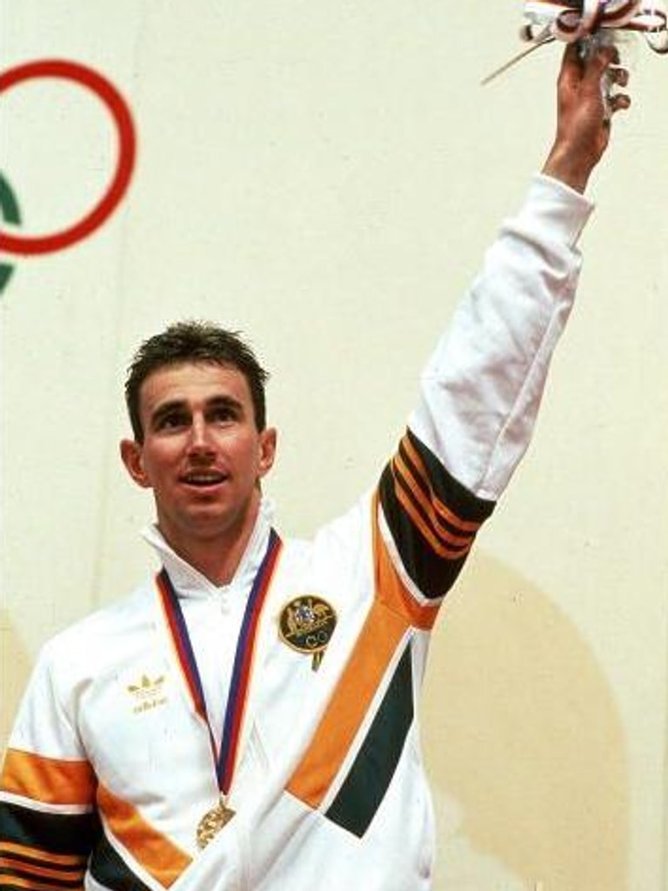
Olympic gold medallist Duncan Armstrong and Ironman legend Guy Leech have gone public with concerns about a booming industry they believe often pushes people towards multiple products rather than simpler, clearer options.
The market is only getting bigger. Complementary Medicines Australia’s 2025 Industry Snapshot estimated complementary medicines supply chain revenue at $6.3bn in 2025, up from $4.6bn in 2021.
It also reported that 74 per cent of Australians had used supplements in the previous year, with 41 per cent taking them daily.

Independent data points in the same direction. The Australian Bureau of Statistics has reported that 50.9 per cent of Australians aged 75 and over had taken a dietary supplement, underlining just how common supplement use becomes later in life.
Older Australians are among the heaviest users. Complementary Medicines Australia’s snapshot found people aged 75 and over were more than twice as likely to take supplements as adults aged 18 to 29.
In residential aged care, 78.4 per cent of residents use at least one complementary medicine and 41.2 per cent use two or more.
For Leech, who has known Armstrong for more than 30 years, that demand has helped create a highly profitable model built around separate products for separate concerns.
“Why would a company that makes a fortune selling you 10 different bottles ever put out the one product that replaces all 10?” Leech, who owns independent supplement brand NEXT50, told NewsWire.
“It’s not that they can’t do it. It’s that it would cost them money.”

Leech believes many people, especially those over 50, are left standing in the health aisle trying to work out why supporting joints, heart health, brain function, sleep and energy can seem to require a cupboard full of products.
But for Armstrong and Leech, the issue is not just cost or convenience. It is also about how hard it can be for shoppers to work out what they are actually buying.
Under Therapeutic Goods Administration rules, some supplement ingredients can be listed in a way that protects commercial confidentiality.
In practice, that can mean labels identify a proprietary ingredient or blend without spelling out the exact amount of each component inside it.
That is legal under the current system. Critics, however, argue it can make it much harder for shoppers to compare products or judge whether ingredients are included in meaningful amounts.
For Leech, that is where frustration sets in.
“A long ingredient list isn’t a formula, it’s a smokescreen,” he said.
“If a company won’t tell you the dose, assume it’s not enough.”

Leech believes unclear labelling leaves consumers at a disadvantage.
“Imagine buying a supplement that claims to support your brain health, but you can’t see exactly how much of each active ingredient you’re getting,” he said.
“How can you compare it with the scientific research? How can you compare it with another product? And how can you know whether you’re getting value for money?”
Another part of the problem, he argues, is that many shoppers do not realise not all supplements are assessed in the same way.
Most supplements sold in Australia are listed medicines, known as AUST L products. They are considered lower-risk goods and are not individually assessed by the TGA for efficacy before sale.
Instead, the company behind them must hold evidence for its claims and certify that it complies with the rules.
Registered medicines, known as AUST R products, go through a much stricter assessment for safety, quality and clinical efficacy before they reach shelves.
That distinction is not widely understood, even though trust in the category is high.
Complementary Medicines Australia reports 84 per cent of Australians are confident in the safety and quality of local supplements, while 82 per cent trust supplement brands.

For Armstrong, the issue became deeply personal after he suffered a heart attack and triple bypass at 52.
“Millions of older Australians think they’re doing everything right, buying supplement after supplement, and they’re not buying health, they’re buying a story,” Armstrong told NewsWire.
He believes many older people are being overwhelmed by anti-ageing promises, complex labels and expensive routines.
“There is a huge amount of bullsh-t pushed at older Aussies as longevity and ageing solutions that I don’t have time for,” he said.
“I have a full life to live with my kids, and now grandkids, and don’t have time to analyse lengthy ingredient lists on every bottle, calculate the doses, or trial every trending supplement regime that comes along.”
Armstrong also warned supplements are not risk free, particularly for older people already taking prescription medicines.
That concern is backed by the independent medical journal Australian Prescriber, which has warned some complementary medicines can interact with prescription drugs, including anticoagulants and cardiovascular medicines.
“Does the ingredient list put you at risk with other medication you may be taking? Please check with your doctor before taking anything,” Armstrong said.

Leech said he created NEXT50 after becoming frustrated with taking about 10 products a day himself.
It is marketed as a once-daily powder for adults over 50, but he argues the issue goes beyond his own brand and speaks to a wider problem in the supplements aisle.
His central argument is that people should not need expert knowledge or a cupboard full of products to understand what they are buying and cover their daily supplement needs.
“Transparency shouldn’t be a premium feature. It should be the starting point,” he said.