

SOURCE :- THE AGE NEWS
Beijing: Late last Wednesday night, a Tibet Daily reporter filmed a video from inside his car as it pelted down China’s National Highway 219 in heavy rain.
He was racing from Lhasa, the capital of the Tibet Autonomous Region, to Gyirong Port at the border with Nepal where a great human tragedy was unfolding.
Jigme Dorje/Xinhua via AP
They were due to arrive at the port – or what was left of it – around 4am, he explained, their 14-hour drive delayed by the severe weather.
“Upon arrival, we will bring you the latest updates on the disaster situation and emergency relief efforts at the scene as soon as possible”, the reporter said in the video posted to Tibet Daily’s WeChat account, a Chinese social media platform.
By that stage, the world had seen the first video of the gargantuan wall of mud and ice that had ripped through the immigration crossing that morning at the Tibet-Nepal border, swallowing everything in its path. That clip would soon be scrubbed from the Chinese internet by censors.
The scale of the event would become more apparent in coming days, but by then it was already clear than many people were dead.
This scramble – dropping everything and running towards the disaster – is a universal journalistic imperative. It’s what is expected of journalists, especially when your country’s citizens are caught up in tragedy. Credit where it’s due to the Tibet Daily journos.
But it’s an imperative the Chinese government has denied foreign journalists like me, despite repeated requests for access to the Gyirong area where there are, based on China’s own figures, five Australians among the more than 500 missing.
On Tuesday, I posed the question again to China’s Foreign Ministry at a press conference in Beijing: why is China refusing access to foreign reporters seeking to cover this tragedy alongside Chinese state media from the disaster zone on the Tibetan side?
I’m far from alone. Other journalists working for international media outlets in China have also sought access.
With more than 260 foreigners from 23 countries among the missing, this is a not a mere internal China issue. It took on more significance for Australia on Tuesday, when one of our own was confirmed alive in Tibet.
The ministry’s response – essentially, it is too unsafe – is clearly undermined by the authorised presence of local media reporting from nearby the flood ravaged areas.
“Road and communication in the affected area is currently cut off, and there is a significant safety risk of secondary disasters,” spokesman Guo Jiakun said. “Rescue efforts are being carried out in [an] intensive and orderly manner, and we will continue to release the latest information on the disaster situation and rescue operations.”
Compare China’s approach with what’s happening in Nepal, which has borne the brunt of the catastrophe, and where the world’s press have amassed since Wednesday. Among them is this masthead’s South East Asia correspondent Zach Hope who dispatched with haste from Singapore, joined by photographer Kate Geraghty from Sydney. They’ve reported harrowing tales of survival amid the devastation.
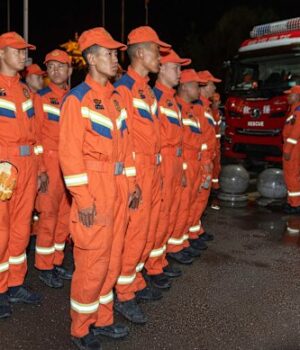
Over the past few days, I have watched clips of state media reporters from the likes of Tibet Daily, Xinhua and China Central Television reporting from the disaster zone, standing on muddy embankments as they carry the government’s message about access and rescue efforts, while tractors work in the background.
I don’t wish to impugn the personal dedication or professionalism of these reporters. They are doing gruelling work in challenging conditions, and against the backdrop of mounting casualties, although China has only reported 16 dead so far.
But their reporting is ultimately heavily controlled by their masters: the Chinese government. All state media outlets are regulated by the Publicity Department of the Central Committee of the Chinese Communist Party – better known by its original name, the Central Propaganda Department.
We won’t be hearing or seeing anything from those reporters that hasn’t been vetted by editorial staff whose foremost loyalty is to the party’s version of the truth.
Chinese President Xi Jinping laid out his expectations for state media during a 2016 tour of their newsrooms.
“All news media run by the party must work to speak for the party’s will and its propositions, and protect the party’s authority and unity,” state outlet Xinhua quoted Xi as saying at the time.
It may well be that China has a good story to tell about its search and rescue efforts in Tibet. It has massive military resources and advanced scientific equipment, that it can – and says it has – deployed, including troops, aircraft carriers, and drones.
But given China’s obsessive control over information, its fixation on positive coverage, and the absence of independent reporters, how can the world be confident it is getting the most full and accurate picture possible of what is happening on the Tibet side of the border? We should also question why almost no survivor accounts have emerged organically on social media from Tibetans or others who have made narrow escapes.
What’s this really about? China has long imposed an effective ban on foreign press entering Tibet, rarely granting the permits needed to enter the region unless for closely monitored government-coordinated trips.
It’s part of the Beijing’s broader effort to strictly control Tibet, which has sporadically erupted with protests and self-immolation among Tibetans who have pushed for autonomy since China annexed Tibet in the 1950s.
It’s almost certainly futile to hope Chinese authorities will open the door now when anxieties are running high. But transparency is fundamental for trust.
China’s security state runs on a culture of nothing to fear, nothing to hide. Well, touché.
That runs in both directions.
Read more on the Nepal flood disaster:
Get a note directly from our foreign correspondents on what’s making headlines around the world. Sign up for our weekly What in the World newsletter.
 Lisa Visentin is the North Asia correspondent for The Sydney Morning Herald and The Age based in Beijing. She was previously a federal political correspondent based in Canberra.Connect via X or email.

