

source : the age
When the Australian Education Union’s ruling branch council voted in mid-May to endorse a new pay deal negotiated between the union and the state government for 85,000 public school educators, the show of hands was unanimous.
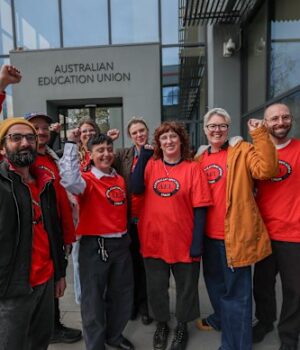
But little more than a month later, the council delegates gathered again on Friday morning at the AEU’s Abbotsford HQ to try to pick their way through the wreckage of their plans, after the union’s membership of more than 60,000 stunned the leadership and the Allan Labor government by voting to reject the deal by an emphatic 58 to 42 per cent.
The result looks set to have far-reaching consequences, and well beyond the classroom.
The scene is now set for more school strikes – like the dramatic action that brought 35,000 teachers onto the streets of Melbourne in March – bringing disruption to term 3 and perhaps even term 4 of the school year.
An acceptance of the pay deal would have allowed Education Minister Ben Carroll to sign a long-awaited funding agreement with the Commonwealth later this year, to eventually bring the state’s schools up to the minimum funding standard, a much-needed pre-election win for a government trailing its opponents in the polls.
The union, a Labor backer in its past two state election wins, will be unable to campaign for the ALP before November’s vote if it remains locked in an industrial dispute with the Allan government.
So there are plenty of headaches from Friday morning’s vote for both the government and the union’s leadership, who just weeks previously exuded confidence that the wage offer – with those headline increases of 28 to 32 per cent over the life of the deal – would get over the line.
Australian Education Union (AEU) activist Caitlin Wood, one of the dissidents in the room at the council’s Yes-vote on May 15, conceded that the pay offer, with some concessions on working conditions, looked good at first blush.
“Then our questions came,” the Footscray Primary School teacher said.
“The pay on paper sounded good, but we hadn’t had time to figure out what it meant, so that the numbers sounded quite positive at first glance.
“And there were a few more things in there, like leave entitlements also, that sounded really good on paper, but on further reflection …
“There was nothing in there to do with class sizes, which was a big one. There was nothing to do with workload, especially for primary [school], and primary is already behind in face-to-face teaching time.
“People care about money, everyone’s struggling and lots of people are getting second jobs, but the workload thing is why people are taking personal leave because they’re not focusing.”
Another trade unionist present on the day, Coburg High School teacher Ohad Kozminsky, said the mood in the room was good-humoured and collegial and that all the delegates were given plenty of time to study the detail of the draft agreement before it was put to the vote.
But even as AEU branch president Justin Mullaly left the room for a press conference to begin the job of selling the draft agreement – to both his union members and the public – Wood, Kozminsky and their colleagues were mobilising to make sure they did not lose the vast industrial ballot that followed.
Wood and Kozminsky are members of the Fight the Crisis group along with Lucy Honan, a veteran unionist who ran for branch president in 2024 and pulled in 37 per cent of the vote.
Along with other groups, including other hard-left outfits such as Socialists in Schools and the Committee for Public Education, Fight the Crisis deployed the campaign infrastructure it had built over the years in pursuit of various other causes, to take the fight against the draft agreement to the union’s leadership.
“We were trying to build up through [school level] sub-branches and regions, getting motions passed, broadening our reach and clarifying the red lines that members had, what was realistic and what was necessary,” Honan said on Friday.
A savvy social media effort by the No campaign soon forced the union leadership onto its own socials, in an effort to combat what it called misinformation, but the online momentum appeared to be with the No camp.
“Lots of teachers are very good at social media,” Honan said.
“We’ve got lots of people in Fight the Crisis who are design teachers, maths teachers who crunched the numbers, we’ve got artists, teachers are very skilled people.”
A set of graphs by one of those teachers, Daniel Christienz from Virtual School Victoria, countering the union and government’s narrative that the proposed deal would catapult Victorian teachers above their NSW counterparts on pay, proved a potent online weapon for the No campaigners.
But in the end, Honan said, it was the message, not the medium, that proved decisive.
“We were just putting down what people were willing to pick up,” she said.
As the weeks went by, the warning signs began to mount. Union officials sent out to brief a series of regional and suburban gatherings were getting a hostile reception, and teachers became more outspoken to parents, online and in the media.
After Friday’s union council meeting – which granted the No camp its wish of putting more strikes on the agenda – branch president Mullaly maintained his trademark poker face when asked when he first sensed the agreement might be in trouble.
“I don’t think there was a point because in the end, members got to decide, and they got to decide through their sub-branches because that’s our democratic structure,” he said.
Mullaly was equally non-committal on the question of whether he had any regrets over the way he and his team went about selling the deal to members.
“I’ve no regrets when it comes to making sure I do my job as a union leader,” he said.
Start the day with a summary of the day’s most important and interesting stories, analysis and insights. Sign up for our Morning Edition newsletter.


