Source : INDIA TODAY NEWS
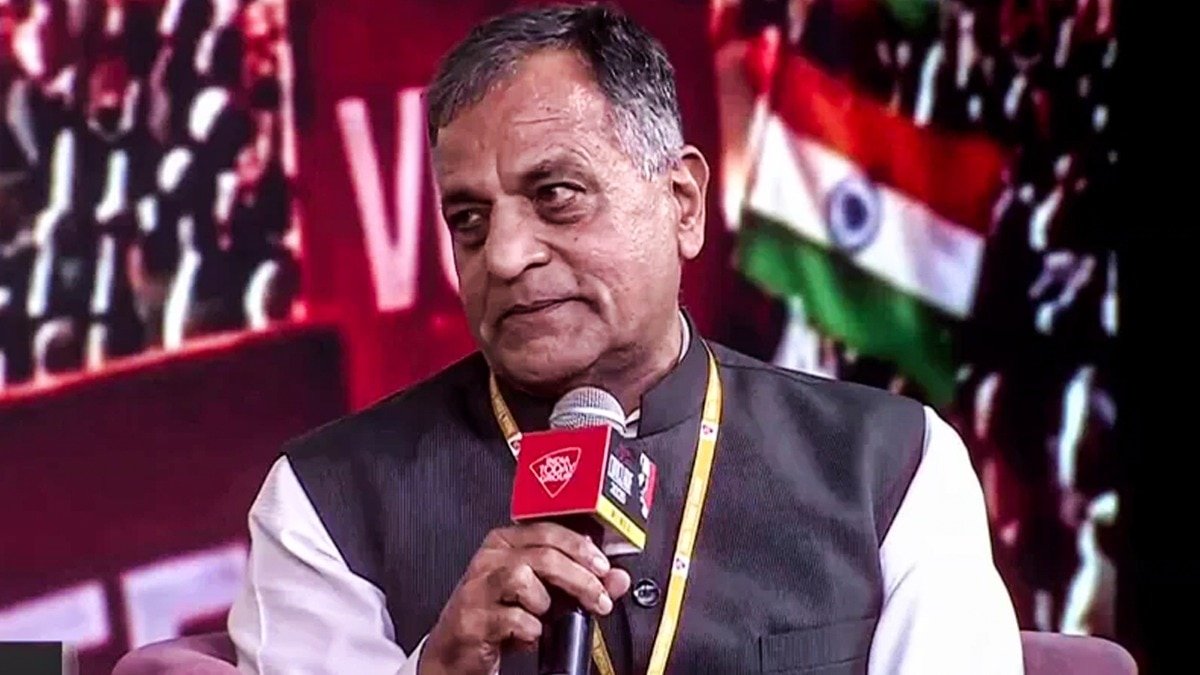
Former Election Commissioner Ashok Lavasa said the Election Commission was not empowered to modify Form 6 without government approval, arguing that even a unanimous decision could not authorise it to change the rules.
Speaking at the India Today Conclave Mumbai 2026 amid the Special Intensive Revision (SIR) row, Lavasa said adding a declaration to Form 6, used to apply for inclusion in electoral rolls, amounted to changing the prescribed form.
advertisement
“The Commission was not empowered. They were not competent to change the rules,” he said. “Whether two agreed or one disagreed, that’s besides the point.”
Lavasa argued that the form used during SIR differed from the version prescribed in the rules and required approval from the competent authority, which he identified as the government.
He also questioned the Commission’s September 26 statement that the Supreme Court had upheld the changes, saying the Chief Justice had clarified that the court had not approved any change to Form 6.
‘SOMEBODY HAS TO OWN RESPONSIBILITY’
Asked whether Chief Election Commissioner Gyanesh Kumar should step down pending an inquiry, Lavasa declined to put himself in Kumar’s position but said allegations of illegalities required accountability.
“If illegalities have been committed, then somebody has to own the responsibility,” he said.
Responsibility would depend on each commissioner’s involvement, he said, adding that the Supreme Court’s verdict would determine whether an illegality had occurred.
Former Chief Election Commissioner O P Rawat broadly agreed but qualified his position on Form 6. He described the dispute as involving “semantics”, citing a Supreme Court order that, according to him, recognised the Commission’s power to seek additional information.
Rawat said eligible voters being unable to vote in West Bengal while their appeals remained pending was a more serious issue requiring immediate examination.
QUESTIONS OVER BENGAL VOTER DELETIONS
Lavasa questioned the use of “logical discrepancies” to flag voters after Electoral Registration Officers had prepared West Bengal’s draft rolls. He said these officers were legally empowered to determine eligibility, while “logical discrepancy” was an invention of the Commission rather than a category prescribed in the rules.
“Nobody knows what is the algorithm of the logical discrepancy,” he said.
According to Lavasa, around 60 lakh cases were flagged, prompting the appointment of 700 judicial officers. He said approximately 33 lakh people were restored, while 27.6 lakh remained under adjudication and could not vote.
Of 1.26 lakh cases decided after the election, he claimed, 93% involved people found to have been wrongfully deleted. He called this a “scathing criticism” of the procedure.
Rawat said elections should have been held using the previously finalised rolls if the revision was incomplete. He also questioned SIR’s timing, saying earlier intensive revisions were conducted 12–18 months before elections to allow appeals to be resolved.
‘A DISCREPANCY IS NOT A DISQUALIFICATION’
Lavasa called the exercise “conceptually flawed”, questioning why the entire electorate had to establish eligibility afresh when deaths, duplicate entries and changes of residence could be addressed through annual summary revisions.
He also questioned linking voting rights to whether a person’s parents or grandparents appeared on an earlier roll.
“If my parents or my grandfather or whoever was not on the electoral roll, how does it affect my right?” he asked.
Spelling and age discrepancies should not automatically lead to exclusion, he said: “A discrepancy is not a disqualification.”
Lavasa welcomed camps to restore deleted voters but questioned why these efforts followed elections. Rawat also criticised asking wrongfully deleted voters to submit Form 6 as new applicants.
TECHNOLOGY MUST SUPPORT THE LAW
Lavasa said centralised software could improve data management but must not obstruct officials from performing their statutory duties. He cited complaints from electoral officials in Goa and Maharashtra, BLOs and EROs in West Bengal, and judges heading Bengal’s appellate tribunals.
“Technology is there to support law. It is not to replace or impede law,” he said.
Rawat said ERONet was introduced in 2017 to identify duplicate entries nationwide and claimed its replacement, ECINet, was causing difficulties.
Both warned that excluding eligible voters could affect election outcomes.
Lavasa also called the removal of the Chief Justice of India from the panel selecting election commissioners a government “self-goal” that invited allegations of bias. However, he rejected the suggestion that commissioners were necessarily beholden to the government that appointed them.
He described the scale of criticism facing an institution conceived as a neutral umpire as “a cause of great worry”.
– Ends
SOURCE :- TIMES OF INDIA