source : the age
Lauded as one of the finest Australian journalists of his generation, former Four Corners executive producer and ABC news and current affairs chief Peter Manning died last month, aged 81, after a career spanning 60 years.
Tributes have poured in to his family and online, with Manning being described by the Herald’s chief investigative reporter Kate McClymont as “a colossus of Australian investigative journalism”, and by others as a “fierce and loyal protector of journalists”, and “the best boss I ever had” for his “attention, care and infectious enthusiasm”.
Manning was born in wartime Sydney in 1945, to small businessman Michael Manning and secretary Rosemary Weston, who worked at a toy factory in the western suburbs. They divorced when Peter was very young, and he grew up between Bondi, where he attended Waverley College, and Toongabbie. An only child, he revelled in the company of his cousins – especially Jenny, Anne, Karen and Wendy.
Brought up Catholic in a Menzies-loving household, Manning showed an early sign of his instinct for writing when, as an 11-year-old, he had a letter published in the Daily Telegraph, denouncing Russia’s invasion of Hungary in 1956. After graduating from high school he did a stint as a copyboy there – his first job in journalism.
Embarking on an arts degree at Sydney University in 1962, the fervent anti-communist immediately tried to resurrect the Democratic Labor Party club on campus, then dormant, and started writing for the weekly student newspaper, Honi Soit. At first, he was in favour of the Vietnam War, but his politics were shifting, inspired by the liberation theology of the university’s Catholic chaplain, Ted Kennedy.
Manning had at one point considered joining the priesthood, but as he told Nadia Wheatley and Meredith Burgmann in an interview for their book Radicals – Remembering the Sixties (2021), “the thing that was revolutionary for me was Ted saying, ‘Live your values of love and social justice in the world, don’t hide in a church.’ ” Many start out radical in their youth and grow conservative as they age. Manning went the other way.
A radicalising influence was the horror of Vietnam. “My brain was seeing the ridiculous nature of the argument that you have to bomb the hell out of Vietnam, in order to save it, for freedom,” Manning told Wheatley and Burgmann. In 1965, his number came up in the birthday ballot, but although by now he considered himself a conscientious objector, he was lucky to be rejected for bad feet.
Manning fell in love with fellow student Maria Beswick. They married in 1966 and soon had two children, Paddy and Megan. They were together for a decade, and stayed warm friends.
After graduating with a BA majoring in government, Manning started teaching at Ashfield’s De La Salle Catholic boys’ school for a year, but then found work as a trainee reporter at The Bulletin, under editor Donald Horne, who took him under his wing but decided he needed to do a formal cadetship.
In 1967, he was hired by The Sydney Morning Herald and The Sun-Herald, where one of his first tasks was writing the “Dog of the Week” column. He got his grading, and returned to the Bulletin in 1969.
In 1971 Manning was recruited by the ABC for its revolutionary new daily current affairs program This Day Tonight, joining a crop of pioneering muckrakers who went on to become some of journalism’s biggest names, including Bill Peach, Caroline Jones, Mike Willesee, Andrew Olle, Kerry O’Brien and Mike Carlton.
Through the mid-1970s he went back to print, serving as senior writer at The Bulletin, co-founder and editor of a short-lived campaigning community newspaper The Leichhardt Local, part-time editor of New Journalist, and managing editor of Nation Review. In 1975, he published his first book, Green Bans: The Story of an Australian Phenomenon.
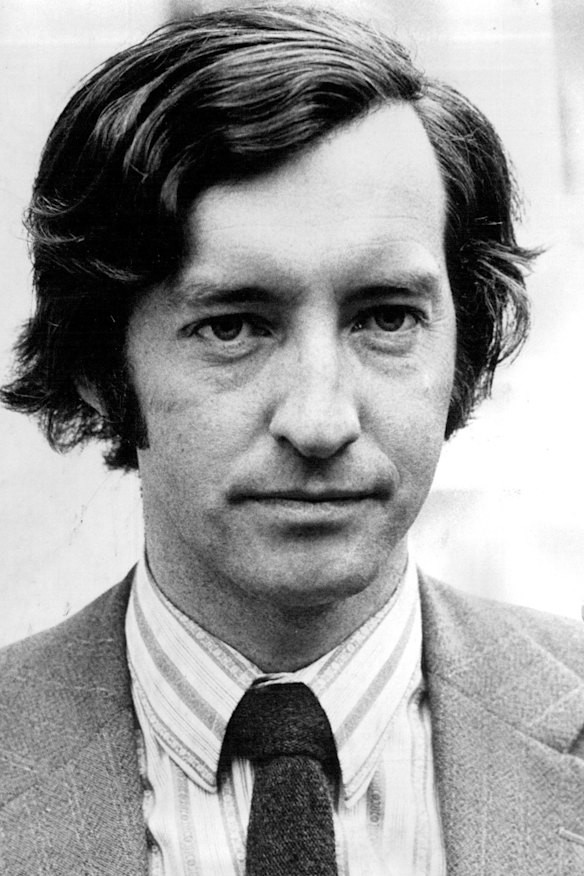
Manning returned to the ABC in 1979, first as a news reporter at radio station 2JJ and then as a senior producer with TDT’s replacement program, Nationwide. At the ABC, in 1981, he met and fell in love with reporter Jenny Brockie, and they would soon marry and have a daughter, Thea.
Golden age
In 1982, Manning joined Four Corners as a producer to rejuvenate the program, which was then facing the axe. Then-executive producer Jonathan Holmes paired him with a newly hired reporter, Chris Masters, and he recalled last week that “the program they came up with months later, The Big League, put Four Corners on the map for the rest of the 1980s”. The Big League led to the Street royal commission into allegations that Premier Neville Wran had conspired to pervert the course of justice.
Under his leadership, Four Corners enjoyed a golden age from 1985 to 1989. While he was executive producer, he commissioned high-impact investigations that won a slew of awards. These include the Gold Walkley in 1985, when Chris Masters and Bruce Belsham won for French Connections, which identified the French intelligence agents behind the sinking of the Greenpeace protest ship Rainbow Warrior.
With Manning at the helm, Four Corners won the Logie for most outstanding achievement in public affairs in both 1988 and 1989, and Paul Barry’s program Blue Death, which exposed the dangers of blue asbestos mining in Wittenoom, won the Human Rights Award for television documentary in 1988.
Jonathan Holmes, as head of ABC TV documentaries for some of those years, wrote for ABC Alumni that he watched Four Corners each week with amazement.
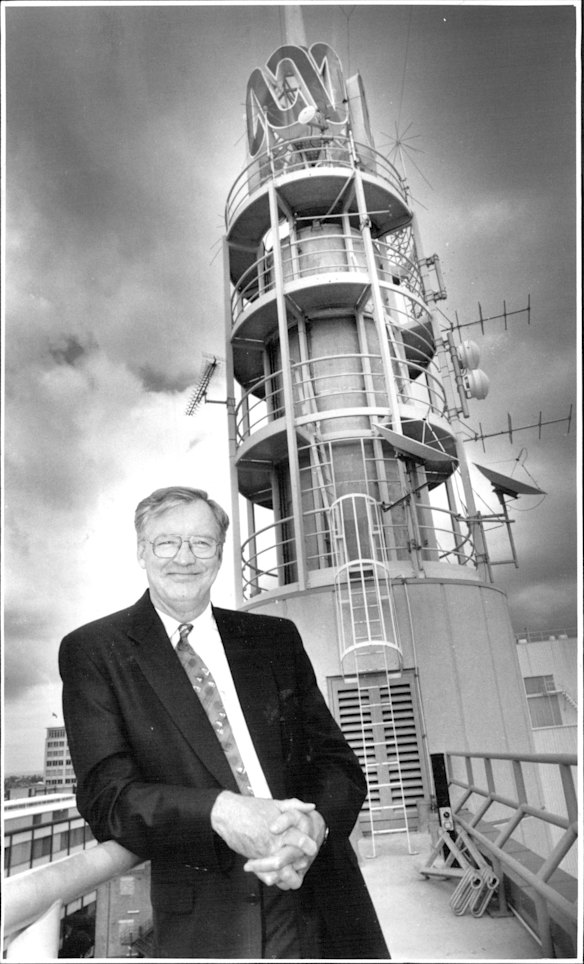
“The standard of reporting was just so high. And it wasn’t only the exposés of corruption or crookery. I still remember The Dead Heart, a story Chris Masters told about two young jackeroos who died in the Western Australian outback, and the thoughtless negligence of the bosses who allowed it to happen,” he wrote.
“Peter led a team that loved him. There’s no other word for it. He was tough but endlessly encouraging. He could be stern, but he laughed a lot more often. He was a hugger, a rollicker, a man with a heart. ”
As head of ABC news and current affairs from 1989 until 1993, Manning created new programs, such as Lateline (which ran for 28 years), Foreign Correspondent (now 34 years strong) and Landline (now 35 years old).
As head of Radio National, he launched news program Radio National Breakfast, which is still going strong 30 years later. He launched the ABC’s multimedia unit in 1995, overseeing its first online output. In 1996, he became the founding executive producer of the Seven Network’s investigative program Witness, hosted by Jana Wendt and later Paul Barry.
Manning also gave some of the biggest names in television their first break, including Stan Grant, Marian Wilkinson, Sue Spencer, Tony Jones, Debbie Whitmont and Paul Barry.
From 2001 to 2009 Manning was adjunct professor, then senior lecturer, in journalism at UTS, where he nurtured a generation of students, many now working in high-profile media posts. His book Us and Them: A Journalist’s Investigation of Media, Muslims and the Middle East (2006) examined the news coverage of Muslims in Australia from the wars in Afghanistan and Iraq to the Israel/Palestine conflict, and from asylum seekers to the Cronulla riots. The book was based on extensive research and travel to Israel and Palestine, Syria and Lebanon with Carole Lawson, his life partner since 2001.
From 2009 until 2012, Manning was senior lecturer in journalism at Monash University. UTS awarded him a PhD in 2014 for the book Representing Palestine, showing how journalists failed to identify Palestinians, and the Herald failed to cover the massacres and forced migrations of 1948. He returned there as a visiting fellow/professor in the School of Communication.
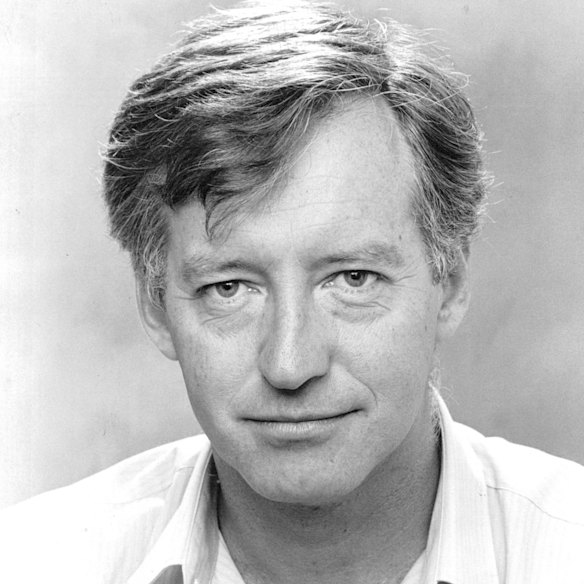
In the academic phase of his career, Manning was a staunch activist for peace and social justice, serving as an adviser to the Australia Palestine Advocacy Network and joining the Labor Party’s Dulwich Hill branch, where he successfully campaigned for recognition of Palestinian statehood to be incorporated into the party’s platform in 2018.
In 2022, Manning was diagnosed with Alzheimer’s, a disease he fought bravely for almost five years. He received a roaring standing ovation at last year’s Walkley Awards in Sydney after he was announced the winner of the outstanding contribution to journalism award for 2025 – an award he treasured and pointed to with endless pride.
In the tribute video shown at the awards ceremony, Tony Jones described Manning as “by a huge margin, the bravest executive producer that I ever worked with”, and Kerry O’Brien declared, “I cannot think of a person who has done more … to lay down the foundations, and help safeguard the integrity, the independence, and the drive for excellence in ABC news and current affairs.”
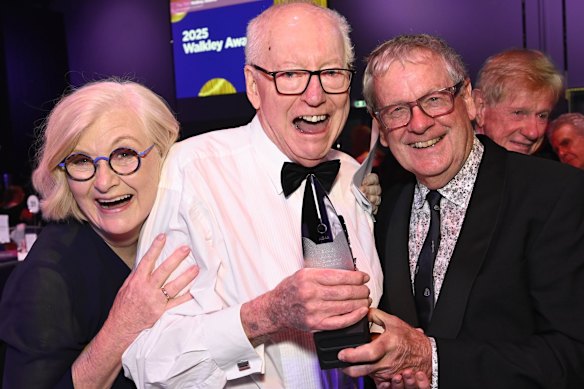
Daughter Thea Burke said she had an incredible bond with her father, who was an adventurous and devoted family man.
“Dad and I lived in a little cottage in Neutral Bay, just the two of us, for most of my childhood,” she said. “The fact that it was largely just the two of us for so long meant our bond was intensified. I went everywhere with him. With Dad, life was big. To be lived. The overwhelming feeling when you were with Dad was ‘everything will be OK’. He was my north star.
“It’s been said this week that Dad’s career was ‘colossal’ and I was born smack bang in the middle of it. But it never, not for one second, impacted his devotion to me.
“There are memories of dark, mysterious editing rooms, falling asleep under tables, decorating Ultimo offices with endless drawings, of chasing Dad down the long corridors of Radio National, which he said would make a perfect cricket pitch, of being warmly welcomed into every room by all Dad’s colleagues. But other moments stand out more now.
“Dad never believed in wasting time on the mundane. He much preferred adventure. He’d pull you out of school at the smallest opportunity for fun – trips up north to see the cousins, a holiday, a St Patrick’s celebration at an Irish pub in the city. Swimmers were kept in the boot of the car at all times, which meant Bondi swims after school were a weekly occurrence.”
Manning was a true believer in public interest journalism – especially at his beloved ABC – based on scrutinising and investigating the powerful, not getting access to them, and holding them to account. There was no interest, power or party he would not take on, usually on behalf of the underdog.
He died peacefully at the Royal Prince Alfred Hospital on September 28, surrounded by family. He is survived by his partner Carole, children Paddy, Megan and Thea, and grandchildren Jude, Milo, Matilda and Audrey.
His funeral will be held at St Brigid’s Church in Marrickville on Friday, October 9.
Start the day with a summary of the day’s most important and interesting stories, analysis and insights. Sign up for our Morning Edition newsletter.