

source : the age
After two months without tapping on or off, Victorians will have to dig deep into drawers and handbags to locate their long-dormant myki cards on Monday.
The state government announced free travel off the back of skyrocketing fuel prices to encourage more people onto public transport and provide some cost-of-living relief.
Initially announced for April only, the scheme was extended through to the end of May, followed by half-price fares for the rest of the year – at a cost of $432 million to the state budget.
Data supplied by the state government, based on myki gate reads and head counts on V/Line trains, found more than 68 million public transport trips had been taken from March 31 to May 11 – an increase of 19 per cent on the same time last year.
But while Transport Minister Gabrielle Williams said it had “made a real difference” to cash-strapped Victorians, it was only ever supposed to be a temporary measure.
The government said passengers had been informed May 31 was the cut-off through announcements, posters and customer service staff, who would continue to remind people in the coming weeks.
The Age spoke to a dozen commuters on one of the last mornings of public transport freedom.
While most were aware it was coming to an end, a few did not. One tram-rider said it was surprising there had not been a bigger advertising campaign alerting commuters that they would have to start touching on again.
The majority said they had been catching public transport more often since it was made free, and were sad to see the initiative end.
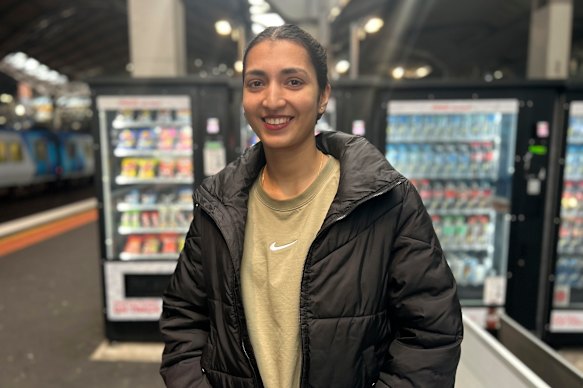
On her way to university, student Prabhpreet Kaur said she had noticed far more people catching the train, and while that meant carriages were more crowded and she sometimes had to wait for the next train, the financial savings had been worth it.
“It’s usually quite expensive … [but] this month I noticed there’s money in my account still,” she said.
Bruno Vocale, who was among those not aware of the cut-off date, said he had been pleased to see more young people using public transport and would like to see it remain free for the rest of the year.
Long-time climate advocate Matthew Wright wants to go one step further, launching a campaign this week to pressure the government to make Victoria’s public transport network free permanently.
Wright, a former Greens candidate who now works in the renewable energy space, said he previously drove his car or rode his bike most places, but the free transport system had been a revelation.
“It’s just fantastic! And my main problem is, I just can’t organise getting myself a myki card, I lose them all the time, so it’s just a total pain … It’s too much friction,” he said.
He said the initiative was “a knee-jerk reaction” by the government to the financial pressures brought about by the Strait of Hormuz blockade – but a good one, citing benefits to the environment as well as to those who still needed to drive, as the roads were less congested.
“And now the government’s trying to bring back that obstruction and that hindrance … which is the stupid tickets,” he said.
In the 2024-25 financial year, passengers paid $736 million in myki fares – for a ticketing system estimated to cost about $189 million per year to run.
Wright acknowledged the number of services would likely have to be expanded to cater for more people, but he noted it would eliminate the cost of installing new infrastructure capable of enabling contactless credit card payments, which the Allan government has begun to trial.
However, not every Victorian is a fan of the idea.
Two commuters told this masthead they saw the free transport initiative as an unfair, poorly timed drain on an already debt-laden budget, propped up by taxpayers.
Meanwhile, some regional residents – particularly those with mobility issues – have expressed concerns over how much harder it has been to get a seat, forcing some to stand for long periods.
“People love a free ride, you know, what’s not to like, but there have been issues,” Public Transport Users Association (PTUA) spokesman Daniel Bowen said.
“The government removed the V/Line booking system on the longer-distance trains, and that’s led to not just crowding but uncertainty as to whether you will be able to travel on a particular service, so it will be good to get those seat bookings back in place.”
Overall, however, he said the initiative had been positively received and resulted in more people using public transport who typically would not.
Whether it would inspire long-term behaviour change, he said, remained to be seen.
Williams declined an interview with The Age but, in response to written questions, said the initiative had “helped take pressure off the pump” at a crucial time and saved commuters as much as $456 across April and May.
She said half-price fares until the end of the year would potentially save them another $850.
The contactless trial will resume on the Craigieburn, Upfield, Ballarat and Seymour lines in June before additional lines are progressively introduced, followed by trams, buses and the regional rail network.
The PTUA said this was an important step when it came to removing barriers to using public transport more sustainably.
Start the day with a summary of the day’s most important and interesting stories, analysis and insights. Sign up for our Morning Edition newsletter.
 Bridget McArthur is a sports affairs reporter at The Age, covering the intersection of sports and politics/business/economy/society.Connect via X or email.


